Home

Review of THE HARD WAY (1991) (Blu-ray)

Leave a comment

Grade: B
Crime comedy
Rated R

It’s usually not a good sign when you haven’t heard of a film starring two well-known actors—especially when it was released almost 30 years ago. How good can it be, this film that somehow sank into cinematic obscurity? As it turns out, The Hard Way, starring Michael J. Fox and James Woods, is surprisingly entertaining. It’s a keeper, especially if you’re a fan of buddy cop crime comedies.

The premise reminds you a bit of Ride Along (2014), with its familiar trope of good cop / bad cop referring, as it often does in the genre, to one good cop who’s forced to partner with someone that drives him guano crazy. Sometimes the ride-along is a wannabe cop, as in Ride Along, and sometimes it’s a geeky and clueless desk jockey, as in The Other Guys (2010). Most fans of the buddy cop movies trace the genre to 1987’s Lethal Weapon, which paired a dedicated about-to-retire cop with a loose cannon of a partner who had a death wish. But while most of the buddy cop films that have been made since then have carried a PG-13 rating to keep them more solidly in the realm of family viewing, The Hard Way followed Lethal Weapon’s lead and went with an R rating. There’s some moderate serious violence and some heavy realistic language here.
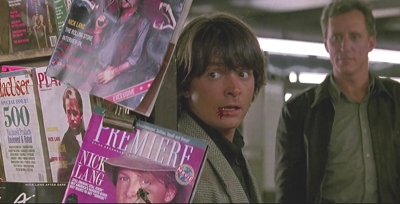
In this crime comedy from John Badham (WarGames, Short Circuit, Saturday Night Fever), a no-nonsense, anger-management challenged, borderline-rogue New York City detective (Woods) is forced to partner with a naïve Hollywood action hero (Fox) who pulled some strings to arrange the ride-along experience he needs in order to research a serious role he so desperately wants.

If you can get past the hard-to-swallow (but intentionally absurd) clip scenes of the diminutive and baby-faced Fox as an Indiana Jones’ style hero, and if you can believe that he can walk the streets of New York—where giant billboards featuring his face promote his latest movie—and not be recognized, this film has a lot to offer. There are taut action sequences, a solid plot, and a pairing that, however unlikely it seems, still makes you laugh out loud in a quite a few places. It’s every bit as good as films like Ride Along and Running Scared, better than Central Intelligence and Ride Along 2, and nearly as good as other films in the genre. More

Review of THE GREY FOX (1982) (Blu-ray)

Leave a comment

Grade: B+
Western-drama
Rated PG

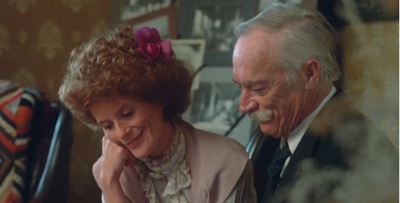
The Grey Fox is the kind of Western that holds some appeal for people who aren’t fans of the genre, because this independent Canadian film is about as far as you can get from the formula Western. Sure, there’s a little gunplay and a few robberies, but this 1982 film is a quiet Western, a character-based film—one that feels like a full-movie version of the “Raindrops Keep Fallin’ on My Head” montage from Butch Cassidy and the Sundance Kid. It’s a feature that feels every bit the indie film. There’s only the slightest bit of violence, sex, and language, with the focus on a grandfatherly figure that’s instantly sympathetic.

A number of revisionist Westerns—including Butch and Sundance, The Man Who Shot Liberty Valance, The Shootist, and The Wild Bunch—have embraced an elegiac tone and offered an aging hero who also stands as a symbol for the passing of a romantic Old West that’s now consigned to history. But The Grey Fox stands alone as a story that offers a character that’s stronger than the symbol he was meant to be. And it’s based on a true story, too.

Former stuntman Richard Farnsworth is compelling as the low-key, soft-spoken Bill Miner, who in Canada became as famous and oddly beloved by average people as Jesse James was south of the border. James robbed banks and Miner robbed the railroad—two institutions that were squeezing common people and were therefore resented. Miner was credited for first instructing people to put their “hands up,” and he became known as the Gentleman Bandit because of his politeness, gentility, and strict instructions that his men should never shoot or otherwise harm anyone. The Billy Miner Alehouse in Maple Ridge, British Columbiasd still celebrates this folk hero, not because he robbed from the rich to give to the poor, but because he only took from the hated Canadian Pacific Railway.

Writer John Hunter and director Phillip Borsos (who studied under Francis Ford Coppola) stay pretty close to the truthful parts of the Bill Miner story, choosing only to add their own bit of legend by giving Miner a low-key love interest (Jackie Burroughs) to match his personality—a strong, older woman who never married because she had other ambitions in life. More

Review of THE CAT AND THE CANARY (1939) (Blu-ray)

Leave a comment

Grade: B+
Comedy-Horror-Mystery
Not rated (would be PG)

If your family enjoyed Knives Out, you also might be entertained by an early entry in the self-conscious light mystery genre.

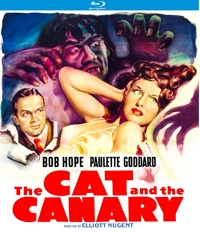
In The Cat and the Canary (1939)—based on a 1921 stage play by the same name—comedian Bob Hope plays it mostly straight, an actor without the ham in this tongue-in-cheek whodunit with a dash of horror. A year later, hitting the road with Bing Crosby and Dorothy Lamour, Hope would develop his famous persona as a bumbling coward of a second banana to Crosby’s straight man, but in this one he’s less goofy and more believable as a love interest for Paulette Goddard. Hope is a considerably more suave and in control than later characters he’ll play, and as a result viewers find themselves focused more on the atmosphere and plot.

The Cat and the Canary was so popular that Hope and Goddard would team up for a second haunted house picture in 1940—The Ghost Breakers, which isn’t recommended for family viewing because of offensive outdated cultural stereotypes. The sets and gimmicks from both films would provide the inspiration for Disney’s popular Haunted Mansion theme park attraction.

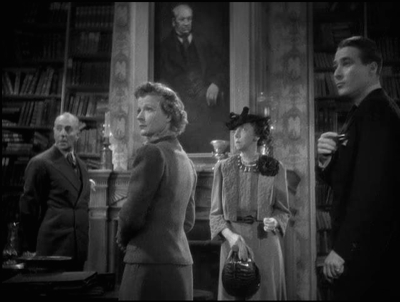
There are revolving bookcases, secret panels, and a Louisiana bayou mansion that wasn’t exactly prime real estate even before it fell into decrepit disrepair. Why would anyone visit now, especially when you have to be paddled there by various canoeists? As it turns out, all are relatives and named parties to attend the ceremonial reading of the will, according to instructions left by a reclusive millionaire who died 10 years ago. The deceased specified that his will must be read exactly at midnight, of course. One more thing: worried that insanity might run in the family, the eccentric recluse specified that the one bearing his surname (Norman) will inherit everything. But there’s a catch. If the named heir, Joyce Norman (Goddard), goes crazy before 30 days have passed, then a second replacement heir will be read from a second sealed envelope.

Kind of makes you want to run the other direction, right? Except that the canoe paddlers don’t operate late at night (they must have a strong union). But how else can you ensure that everyone has to spend the night in this spooky place? More

Review of BLOOD QUANTUM (Blu-ray)

Leave a comment

Grade: B-
Horror-thriller
Not rated (would be R)

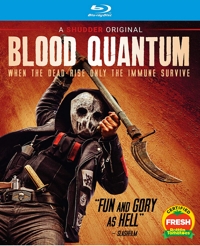
Blood Quantum isn’t a title that screams “family friendly”—just plain screams, is more like it, considering that this 2019 horror film finds a few inventive new ways to kill zombies. There’s blood and gore and f-bombs galore, but if we’re being honest it’s the kind of film that appeals to older teens and families that enjoy a good frightfest every now and then.

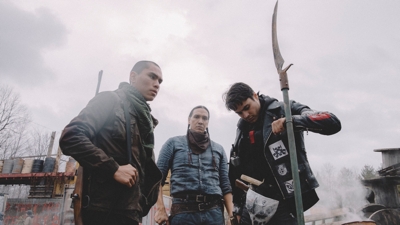
Plus, Blood Quantum deserves a shout-out because this 2019 Canadian film from Jeff Barnaby is that rare horror film made by a First Nations director. Barnaby, a Mi’gmaq, shot much of the film on the same reserve in Listuguj, Quebec where he was born and he spotlights a large cast of First Nations actors. The history of indigenous people in North America is a history of segregation and forced relocation, but this film gets its own symbolic revenge (a theme suggested by two animated segments) by having the reserve be a place where all of the whites now want to go. The film’s key concept is that indigenous people are immune to the zombie plague. While they can be killed, they can’t be turned into zombies themselves. That is, they are immune to whatever zombie virus is being transmitted through zombie bites. As a result, the reserve, ironically, has become the only safe haven in the world.

The title itself is also ironic, because “blood quantum” or “Indian blood” laws were enacted by the U.S. government as a way of legally defining racial groups—too often a first step toward isolation and persecution. Here, blood quantum is a saving grace, and the political statement that Barnaby makes in his second full-length feature (the politically charged Rhymes for Young Ghouls was his first) is unmistakable. More