Home

Review of BLUE HAWAII (4K) (1961)

Leave a comment

Grade:  B-
Musical comedy
Rated PG

How do you explain the Elvis Presley phenomenon?  You start with the music. Until Elvis, rock and roll was an evolving synthesis of blues, gospel, jazz, boogie woogie, and western swing. As a type of music that was deliberately dance-oriented, it hooked America’s youths. But Elvis and his “rockabilly” variation made the new music sexy, with hip-swiveling gyrations that caused girls to scream and faint. In no time at all, he became the biggest rock-and-roll star of them all and is still recognized by Guinness as the best-selling solo musical artist of all time, with more than 500 million records sold worldwide.

If you saw Baz Luhrmann’s Elvis you learned that Col. Tom Parker, Elvis’s manager, was exploitive as a promoter. The big money was in movies, so he pushed Elvis away from giving concerts (some of which were banned or caused riots) and instead pointed him in the direction of Hollywood. From 1956-69, Elvis starred in 30 films. Since Elvis wasn’t doing concerts anymore, his movies were the only way fans could actually seehim perform, and they turned out in droves. As a result, Hal Wallis remarked, “A Presley picture is the only sure thing in Hollywood.”
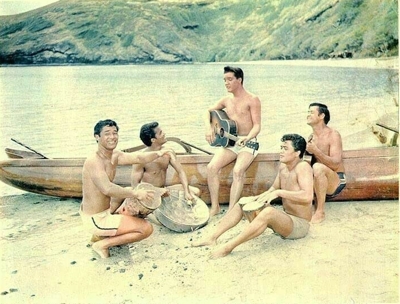
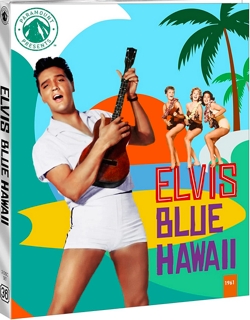
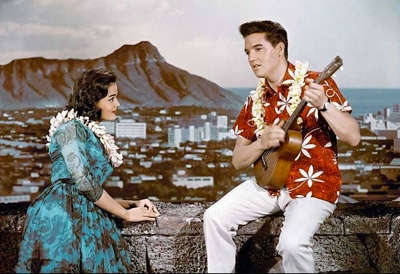
Variety called Blue Hawaii a “handsome, picture-postcard production,” and that’s what it was. With Hawaii becoming the 50th state on August 21, 1959, Americans wanted to see and learn more, and location filming added to the film’s interest—along with a tagline that promised “Ecstatic romance…Exotic dances…Exciting music in the World’s Lushest Paradise of Song.”

Elvis plays Chad Gates, the son of a wealthy pineapple plantation owner (Roland Winters) and a doting, suffocating mother (Angela Lansbury). Chad dreads seeing his parents after returning from military service and instead goes straight to his beach house to hang with his girlfriend (Joan Blackman as Maile) and local musicians. The premise was genius, since Elvis himself had only recently returned stateside after a stint in the Army. Blue Hawaii was his third post-service film, following Flaming Star and Wild in the Country. Not wanting to work at the family business, Chad instead proposes to start a tourist guide business with Maile. But their first client proves that Chad’s charm is both an asset and a liability as he is tasked with showing a schoolteacher and her four teenage charges a good time.

On a four-star scale, all Elvis movies fall in the 2-to-3 star range, but Blue Hawaii makes everyone’s Elvis Top 10 movie list because of the music. Some of the movies skimped on songs, but this one has 15 of them, including “Can’t Help Falling in Love,” which sold a million copies as a single release. The soundtrack album spent 20 weeks at the top of the Billboard Pop Albums chart. Some of the songs are throwaways, but there are some solid ones here too, like “Almost Always True” (though it’s a bit mind-boggling that Maile would smile and groove along with him as he fudges, in song, the question of whether he was faithful to her). Other upbeat songs that work as something more than soundtrack music include “Rock-a-Hula Baby,” “Beach Boy Blues,” and possibly “Slicin’ Sand,” while Elvis’s renditions of “Hawaiian Wedding Song,” “Aloha Oe,” and “Blue Hawaii” are serviceable enough.
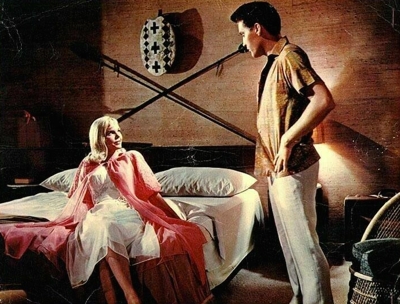
Blue Hawaii finished as the 10th top-grossing film of 1961—so successful that it would provide the formula for many of the Elvis films that followed. The image that these films cultivated was an Elvis meant to be everything to women. A nice guy and a perfect gentleman yet handy with his fists if need be, he also had a slight bad boy or rebellious streak. He was also good with kids and respectful of elders—the kind of guy that, despite the attitude, you could still bring home to meet Mom and Dad. The formula called for Elvis to have at least two women interested in him, at least one cutesy scene with children, one scene with elders, and one scene where he comes to the defense of a woman. And as much as the formula Elvis movie is ridiculed—Top Secret! offers a pretty wicked spoof!—it was still what fans seemed to want. Year after year.

Do the Elvis films still work? Probably not, unless you’re wanting to put yourself in the mindset of young people from the time period, or unless you’re an Elvis fan. If you are, this still ranks in the top third of his films.
This Paramount release contains a superior 4K feature and a Blu-ray version with special features that’s a little grainier.

Entire family:  Yes (pretty wholesome, overall)
Run time:  101 min. Color
Studio/Distributor:  Paramount
Aspect ratio:  2.35:1 widescreen
Featured audio:  Dolby TrueHD 5.1
Bonus features:  C
Includes: 4K Blu-ray, Blu-ray, Digital Copy
Amazon link
Trailer
Rated PG for mild sensuality

Language:  1/10—I didn’t catch anything

Sex:  3/10—Women come on to Elvis, and a girl who’s supposed to be 17 throws herself at him and flirts with others; a woman loses her top in the ocean but nothing is shown and nothing is sexualized

Violence:  2/10—Just a brief restaurant-bar fight

Adult situations:  3/10—One young woman acts up and ostensibly tries to drown herself and is subsequently “spanked” in a rather outdated sequence; flirting and suspicions of cheating

Takeaway:  It’s dizzying reading all of the movies, studio recordings, benefits, and other things that Elvis did, and you can’t help but wonder if he wasn’t so overworked if his personal outcome might have been different


Review of AINBO: SPIRIT OF THE AMAZON (DVD)

Leave a comment

Grade: B/C+
Animation
Not rated (would be PG)

Ainbo: Spirit of the Amazon follows the path of save-the-rainforest themed films like The Emerald Forest (1985, R-rated live action), Ferngully: The Last Rainforest (1992, G-rated animation), and James Cameron’s Avatar (2009). Its footsteps are more indigenous, though, which is a positive.

But having two 13-year-old girls who talk the way adult writers think 13-year-old girls talk, along with some seen-it-before characters and plot points, could narrow the audience. I’ll tell you this, though:  I’ve watched more than my share of animated features from small or start-up animation companies, and this one is far more interesting than any of them—though it too seems aimed at children first and families second.

Rather than spending their budget on big-name voice actors to try to attract an audience, the filmmakers trusted their narration and animation to do the job. It’s beautifully animated, with strong characters and plot.

Directed by José Zelada and Richard Claus, Ainbo is based on a story by Zelada, whose family spent the 1980s living in the Amazon basin, where Zelada heard stories his mother told him that he tried to incorporate into his screenplay. That’s as big of a plus as the film’s environmental and female empowerment themes.

Fittingly, this film about global concerns was an international production, with Tunche Films, Zelda’s Peruvian animation house, handling the bulk of the work in partnership with the Netherlands-based studio Cool Beans and the Dutch animation house Katuni. Produced. Distributed internationally (via TV and DVD) by Cinema Management Group, Ainbo became CMG’s biggest pre-sold animated feature since 2005’s Hoodwinked: The True Story of Little Red Riding Hood.

The dialogue isn’t quite as wink-wink smart as Hoodwinked, and the recognizable elements from other films don’t make any statements about the genre. Adults may or may not find it fun that Zelada decided to channel Disney’s Timon & Pumba in creating his own wild animal characters: a fast-talking armadillo named Dillo and his “spirit animal” pal Vaca, a tapir that, like Disney’s warthog, looks a bit like a big pig. In addition, the warrior-medicine man Atok has a build, features, and personality similar to the antagonist in the animated Road to El Dorado. Meanwhile, family members who have sat through any number of films for children will see two main characters that also seem familiar: the 13-year-old Ainbo, who dreams of becoming a great warrior-hero but is still a klutz, and her 13-year-old “bestie” Zumi, who happens to be the daughter of the chief that also raised Ainbo after her mother passed away. If it wasn’t happening in the Amazon, there would probably be a whole lot more giggling and hugging.

Ainbo is a member of a tribe named after the Candámo River in Peru, near the headwaters of the Amazon. Ainbo and Zumi are a bit more curvaceous than most 13-year-old girls, yet somehow not sexualized. The emphasis is on their friendship and their naiveté. Zumi doesn’t know how to be a king, though her ailing/aging father just passed the responsibility on to her, and Ainbo doesn’t know how to be a warrior.

More

Review of TOP GUN: MAVERICK (Blu-ray)

Leave a comment

Grade:  B+/A-
Action-Adventure Drama Romance
Rated PG-13

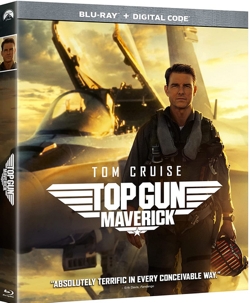
Top Gun: Maverick outgunned all other films at the box office so far in 2022, besting #2 Jurassic World: Dominion by nearly half-a-million dollars. It’s slick Hollywood action blockbuster filmmaking at its finest. 

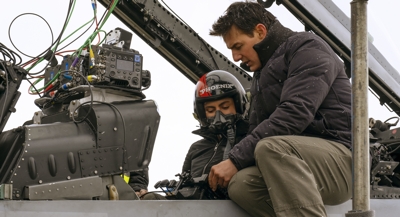
Critics thought it better than the first Top Gun because of the increased number and authenticity of the aircraft action sequences. With the cooperation of the U.S. Navy, a film crew spent over a year working with six cameras placed inside the cockpits and additional cameras mounted at various spots on the planes’ exteriors. Reportedly more than 800 hours of aerial footage was shot, so the sequences that made it into the film were really something special.

And the planes? The production crew used 20 functioning aircraft and modified them to have the look that they wanted, including the fictional “Darkstar” that was designed with the help of actual engineers from legendary aircraft manufacturer Lockheed Martin.

The 1986 Top Gun was so popular that composer Giorgio Moroder and performer Kenny Loggins probably expected to see a hastily produced sequel and earn residuals for their “Danger Zone” theme. But it took almost 25 years before Paramount announced a sequel with Cruise signed, Jerry Bruckheimer onboard to produce, and Top Gun director Tony Scott expected to work behind the cameras again. Then, later in 2012, Scott died and production didn’t begin until 2017, with Joseph Kosinski directing. Then came delays related to COVID-19 and the prolonged filming of those complicated action sequences. But the results speak for themselves. If you don’t already have a big TV, this might be a reason to splurge. Top Gun: Maverick was made for the big screen.

Cruise at 60 looks boyish as ever and because of his action roles has maintained his muscle tone and slender frame. In Top Gun he was paired romantically with Kelly McGillis, five years his senior, but McGillis said she wasn’t asked to be in the sequel. Instead, writers gave Cruise another love interest to take his breath away:  Navy hangout bar owner Penny (Jennifer Connelly, age 48), with whom it’s implied he had a previous relationship—the old heartbreaker.

More