

Grade: B
Action/Adventure
Rated PG-13
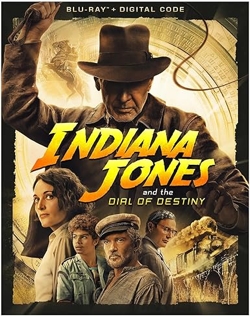
Let’s get one thing out of the way: Raiders of the Lost Ark (1981) was such a larger-than-life kickback to old-time serialized movie adventures that anything afterwards had to be judged by an unfair standard. So the snark came out after Indiana Jones and the Temple of Doom (1984) was released, and a collective sigh of relief could be heard following the addition of Sean Connery to the Indiana Jones and the Last Crusade (1989) father-son adventure that brought the franchise back to the level of the original.
Many fans think that Lucasfilm should have stopped with that trilogy, because a sequel made almost 20 years later—Indiana Jones and the Kingdom of the Crystal Skull (2008)—was the weakest of the bunch. But you get the feeling that George Lucas doesn’t have it in him to end anything on a low note, and neither does Harrison Ford, who played not only that iconic Lucas character but Star Wars’ Han Solo as well. When characters reach those kind of heights, there’s a need to give them the type of retirement party that they deserve, and Indiana Jones and the Dial of Destinydoes that.
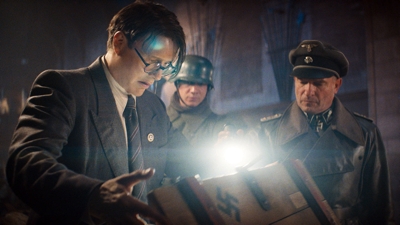
It’s a curtain call film, aimed at giving fans one last look at a favorite character and series, with a déjà vu familiarity that is deliberately cultivated through old characters from the earlier films (Karen Allen and John Rhys-Davies both appear) and trigger scenes that evoke memories of many others that fans have enjoyed over the years. The Nazis are here, of course, though in opening flashback featuring a younger CGI-generated Harrison Ford in sequences that look so good they’re bound to further alarm actors worried about AI taking away jobs.
James Mangold (Logan, Ford v Ferrari) seems like an odd choice to direct, but a fresh pair of eyes apparently helped. So did a return to the real object quest. The two most successful films in the series had plots spun from fictionalized takes on real ancient world objects—the Ark of the Covenant in Raiders and the Chalice that Christ drank from at the Last Supper in Last Crusade—and Mangold does a nice job of handling the pacing and the complicated fictional history constructed for the real object in this last installment: the Antikythera, a clock-like mechanical device attributed to Posidonius (but to Archimedes in the film) that was discovered off the coast of Antikythera in 1900. The real device isn’t a time machine, but that’s how it functions in this fifth and presumably final chapter of the Indy saga.
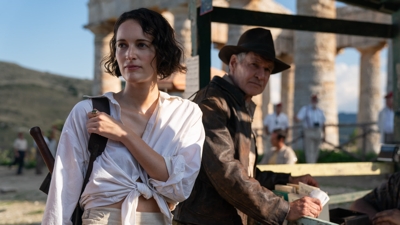
Mangold gets the pacing and tone right, and the special effects and visual effects are top-notch. But the plot can seem a bit far-fetched at times. I’m thinking here of a train scene where Indy and his less physically capable colleague both manage to climb onto the curved roof of a fast-moving train and run from car to car—something that, I can attest from my own experience hopping freight trains, is damn near impossible. And don’t think too long about how time travel plunks Indy down in ancient Greece, where he somehow instantly recognizes Archimedes. Thankfully, the pacing is crisp enough that it prevents you from thinking too much about any plot points that seem a bit too strained, and that pacing reminds you that you’re watching a contemporary version of the old campy silent and early talky era serials, the installments of which moviegoers saw weekly in neighborhood theaters. They were all far-fetched, and from the beginning the Indiana Jones films have sought to pay tribute to those films by having fun with the genre.
Indiana Jones plays best as a character that reacts to others, and award-winning actress Phoebe Mary Waller-Bridge (Fleabag, Crashing) is more than capable as a foil that frequently drifts across the line between ally and nemesis. In this installment she plays Helena, the daughter of a professor who was a close friend of Indy’s and whose life’s work revolved around the Antikythera.
There are age jokes, of course, but not nearly as many as you’d expect. The idea of the thin line between friend and foe is also walked by an astrophysicist (Mads Mikkelsen) who worked for the Nazis but now is employed by NASA . . . with his side hustle involving pursuit of the object that was within his grasp back in 1944, and using CIA agents to help him get it. Yeah, don’t think too much about that either.
Antonio Banderas appears as an Indy former friend who also walks that thin line, though as Banderas himself described it, his appearance is more of a cameo than anything fleshed out. There are plenty other minor characters to try to keep straight, but one that bears mentioning is Teddy (Ethan Isidore), who, like Short Round, provides some comic relief but is also well integrated into the plot.
Indiana Jones and the Temple of Doom started to grow on fans over time, while Indiana Jones and the Kingdom of the Crystal Skull remains a shrug. I suspect that Indiana Jones and the Dial of Destiny is one that fans will like more as time passes. Even now, it’s solid entertainment.
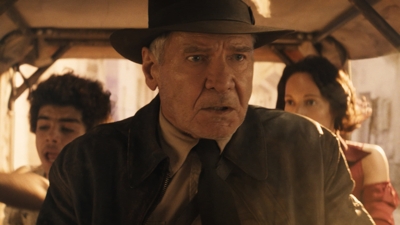
At a time when everyone knows ageism is wrong but the U.S. still remains a youth culture, Ford as Indy reminds us that it’s not too late to fight off the gravitational effects of aging. He reportedly took daily walks and also incorporated 40-mile bicycle rides into his routine in order to get in shape for the film. His vigorous onscreen presence is a shout-out for elder RESPECT.
Entire family: No (probably age 8 and older)
Studio/Distributor: LucasFilm
Aspect ratio: 2.39:1 widescreen
Featured audio: DTS-HDMA 7.1
Bonus features: B-
Rated PG-13 for sequences of violence and action, language and smoking
Language: 2/10—It’s funny, but thinking about it in retrospect I can’t recall any language to cite here; it’s not that kind of film
Sex: 1/10—Indy indulges in a rekindled relationship kiss that is tastefully filmed as a long shot, and he is also shown shirtless in at least one scene
Violence: 4/10—Characters are killed, others are speared, and there’s plenty of hand-to-hand fighting, but the tone of the film is tongue-in-cheek and so, therefore, is the violence
Adult situations: 2/10—There is some smoking and some drinking, but not to excess and the quick pacing and focus on action makes all of it recede into the background
Takeaway: Fans were pulling for Ford and Indy, hoping for a suitable send-off, and I think they got a respectable one—a film that should age well; for my money, Raiders is still tops, followed by Last Crusade and Temple of Doom, but Dial of Destiny isn’t far behind
 Family Home Theater
Leave a comment