Home

Review of THE HUNGER GAMES: THE BALLAD OF SONGBIRDS & SNAKES (4K Blu-ray)

Leave a comment

Grade:  B+/B

Action-Adventure

Rated PG-13
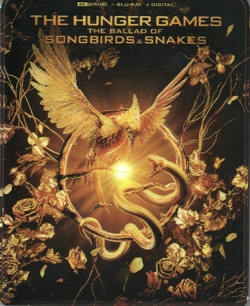
The fifth film in The Hunger Games series is a prequel that focuses on the back story of young Coriolanus Snow, who in the first four films is the tyrannical president of Panem—a post-apocalyptic nation in North America originally composed of 13 districts (like the U.S.) that correspond to U.S. regions and states. Is it like the book? Mostly. Minor characters are eliminated, as Hollywood typically does, and one memorable scene between the two main characters is MIA. But again, that’s Hollywood.

These days the most successful young adult authors are good at aggregation and know that to really hook an audience the whole series has to be relatable to the lives of today’s readers—and that includes “forecasting” a frightening future based on a metaphoric depiction of the present that, let’s face it, probably already frightens teens and tweens. With little imagination viewers can find parallels to people making headlines today.
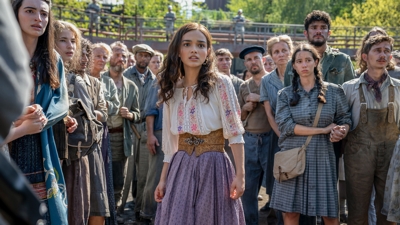
For the Harry Potter books, J.K. Rowling successfully combined various myths and mythological creatures with wizards and dragons and the trappings of medieval times in a cautionary tale about the abuse of power, including villains having a Hitlerian obsession with nationalism and purity of blood. For The Hunger Games dystopian novels, Suzanne Collins looked backward to a classic society that peaked and fell because of, well, a lot of factors.

That is, in The Hunger Games novels and films, there are echoes of the Imperial Roman Empire and the decadence and corruption that brought it to an end. It’s hard not to see such allusions when gladiator games are at the center of the books/films and characters are named for ancient Romans such as Crassus (Coriolanus’s empire-building father, who was killed prior to the start of this prequel—an allusion to the wealthy Roman military leader who was a member of the First Triumvirate that transitioned the democratic republic into an age of imperialism), Coriolanus (not just president, but in history a Roman general and the subject of a Shakespeare play), Casca (one of the assassins of Julius Caesar—in this film, dean of the academy and creator of the Hunger Games), and Volumnia (the mother of Coriolanus—in the film, the head gamemaker).
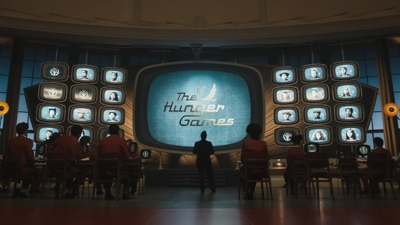
Viewers see an early, low-tech version of the games and a brand-new innovation: having the tributes from each of the 12 remaining districts “mentored” by one of the Capitol academy elite. With the emphasis on the poorest coal-mining District 12 and the games and mentors from the ruling class, it’s very much a haves versus have-nots kind of film.  

The Ballad of Songbirds & Snakes is set 64 years before the action of the first Hunger Games. Fans and critics were especially hot for its release. Then again, they’ve been hot and full of high expectations ever since Jennifer Lawrence starred as the bow-and-arrow wielding Katniss Everdeen in The Hunger Games (2012, 84% fresh on Rotten Tomatoes), followed by The Hunger Games: Catching Fire (2013, 90%—the highest rated film in the series), The Hunger Games: Mockingjay Part 1 (2014, 70%) and The Hunger Games: Mockingjay Part 2 (2015, 69%). The Ballad of Songbirds & Snakes received mixed reviews at 64% fresh, continuing the numerical slide. In fairness, though, when you look at numbers like these you need to realize that they’re generated largely by rabid überfans of the Collins’ series and by critics who can be curmudgeonly no matter what their age.
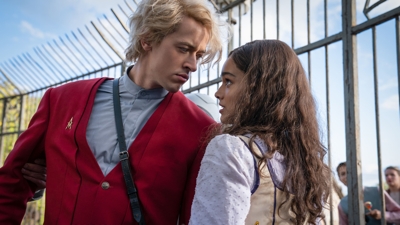
Just plain fans of the series ought to enjoy The Ballad of Songbirds & Snakes. The plot is twisty but not contorted, and the pacing is crisp. The costume, set design, and special effects are convincing. The music provided by Zegler is a welcome addition, and there’s enough action to qualify for an action movie. In fact, The Ballad of Songbirds & Snakes was the 2024 winner of a People’s Choice Award for The Action Movie of the Year and also helped Zegler, who plays coal-mining district songstress Lucy Gray Baird, to earn The Action Movie Star of the Year.

The rest of the cast is solid as anthracite. Tom Blyth (Coriolanus Snow) has the brooding intensity of Adam Driver on a Star Wars turn, while Viola Davis is pretty darned chilling as Volumnia, Jason Schwartzman is the games emcee, and Peter Dinklage brings to life the role of Casca. Seldom, when a film has this kind of cast with memorable performances, will mediocre ratings stick. I expect the audience appreciation for this film to rise over time, because Ballad has relatively few weaknesses. There could have been a few more scenes that suggest the dynamics of the Capitol and districts, and a few more featuring Coriolanus and Lucy to show their relationship progressions and regressions. In addition, this origin story could have used a tad more development to show how Coriolanus transitions from an ambitious but borderline decent member of the upper class to someone who aspires to the heights of his late general father—eventually becoming the ruthless, heartless dictator played by Donald Sutherland in the first four films.

Still, this film seemed much shorter than its run time, which is always a good indicator of quality and audience engagement. The Ballad of Songbirds & Snakes will get repeat play in our house, and I suspect it will in others’ as well.

Entire family:  No (tweens and older)

Run time: 157 min., Color

Studio/Distributor:  Lionsgate

Aspect ratio:  2.39:1 widescreen

Featured audio:  Dolby Atmos

Bonus features: A-/B+, lots here to satisfy

Trailer

Amazon link

Rated PG-13 for strong violent content and disturbing material

Language:  1/10—One loudly exclaimed minor swearword was the only thing that stood out

Sex:  0/10—This isn’t a sexual film; a kiss here and there, a few undergarment shots, and that’s it

Violence:  7/10—People are poisoned, blown up, shot, stabbed, punched, bitten by rabid bats, burned to death in a fire, and attacked by snakes (the latter the result of some pretty impressive CGI); while some of it is bloodless, quick-peddled, or offscreen, the onscreen deaths do pack an emotional punch

Adult situations:  3/10—Some drinking and references to teen drinking, and a man abuses morphine

Takeaway: If you let your kids watch the first four HG films, this one is comparable in terms of violence, etc.; but buckle up. There’s nothing official yet, but the buzz is that The Hunger Games franchise is gearing up for at least two more films

Review of THE CANTERVILLE GHOST (2023) (DVD)

Leave a comment

Grade:  B

Animation

Rated PG

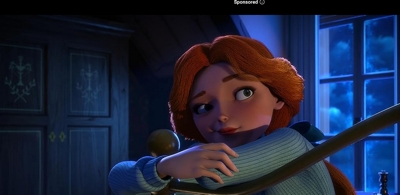
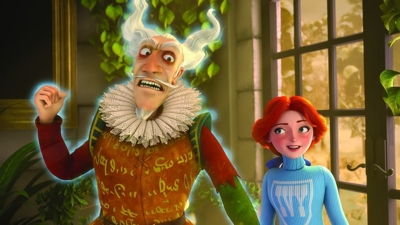
In the year of Barbenheimer, The Canterville Ghost—animated in a style similar to but more accomplished than the popular Barbie direct-to-video movies for youngsters—offers a strong female character that girls can identify with in a life-or-death adventure that prominently features science and progress. Think Scooby-Do! mysteries, but with a real ghost that, despite having a history of haunting people for hundreds of years, meets his match when an American family visits and isn’t a bit scared. In fact, they torment him.

Has he lost it, or are these Americans something quite different from Brits? And will this ghost sink into depression or be lifted up by the family’s brave and compassionate daughter?

Though aimed at children, this Shout! Studios release holds appeal for adults as well, since it’s a fairly close adaptation of an Oscar Wilde story.

Out of the 30 Canterville Ghost films and TV movies/episodes that have been made since 1944, only a literal handful have been animated. This entry is one of the best because it offers a more hardened and hearty version of the teenage daughter that drives the narrative, but softens the crime that’s at the center of Wilde’s 1887 story. In the original and in other film/TV versions, the genial and hapless ghost, Sir Simon, is doomed to haunt his mansion, Canterville Chase, because he killed his wife. In this UK version, he’s deeply in love with his wife, and related circumstances caused him to forever wander the grounds until someone like Virginia came along.

This animated version features distinctive characters and rich nonverbal depictions. Crisply paced, it holds no-scare appeal for all ages because the ghost encounters are played for laughs. It’s only toward the end of the film that the daughter, who has befriended the ghost, decides to fulfill the prophecy that will allow the Canterville ghost to rest in peace.

To tell the story, director Kim Burdon and co-director Robert Chandler enlisted top voice talent Stephen Fry (The Morning Show, Danger Mouse) to follow in the footsteps of such actors as Charles Laughton, Patrick Stewart, and David Niven in playing Sir Simon. Emily Carey (House of the Dragon) voices the other main role of Virginia, while additional voice talents include Imelda Staunton (The Crown, Harry Potter films), Hugh Laurie (House), and Freddie Highmore (Charlie and the Chocolate Factory).

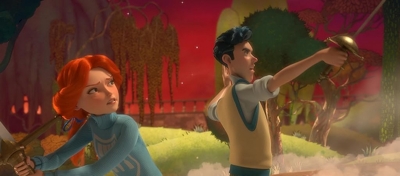
Released for Valentine’s Day, while laughs and mischief predominate, The Canterville Ghost does have a little romance in it:  Sir Simon’s centuries-old love for his wife, and a blossoming love between Virginia and the heir of Sir Simon’s rival.

Female characters in children’s movies have come a long ways, and Virginia emerges as a strong character who isn’t artificially so. Her actions and attitudes are a reflection of today’s young girls and teens who, at the very least, are the equal sex.

Entire family:  Yes

Run time:  94 min., Color

Studio/Distributor:  Shout! Studios

Aspect ratio:  1.85:1 widescreen

Featured audio:  Dolby Digital 5.1 Surround

Bonus features:  n/a

Trailer

Walmart link

Rated PG for thematic elements, peril and some violence

Language:  1/10—I didn’t catch anything offensive

Sex:  1/10—Nothing here kids can’t see

Violence:  3/10—Comic for the first two-thirds, after which there’s one party scene where guests are genuinely terrified and a third-act sequence where Virginia confronts Death personified; some swordfighting, objects hurled, etc.

Adult situations:  2/10—Some drinking in a social situation, the discovery of a skeleton, and a scene in which Virginia and Sir Simon both appear to be doomed

Takeaway:  The Canterville Ghost 2023 is a solid animated film that should get plenty of replays. Though not available on Blu-ray, you can get it at Walmart and other retailers and purchase/rent from digital platforms like AppleTV, Amazon, Google Play, YouTube, Vudu, Microsoft, DirecTV, DISH, et alia

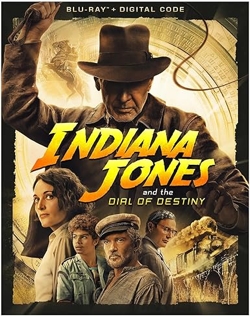
Review: INDIANA JONES AND THE DIAL OF DESTINY (Blu-ray)

Leave a comment

Grade:  B

Action/Adventure

Rated PG-13

Let’s get one thing out of the way:  Raiders of the Lost Ark (1981) was such a larger-than-life kickback to old-time serialized movie adventures that anything afterwards had to be judged by an unfair standard. So the snark came out after Indiana Jones and the Temple of Doom (1984) was released, and a collective sigh of relief could be heard following the addition of Sean Connery to the Indiana Jones and the Last Crusade (1989) father-son adventure that brought the franchise back to the level of the original.

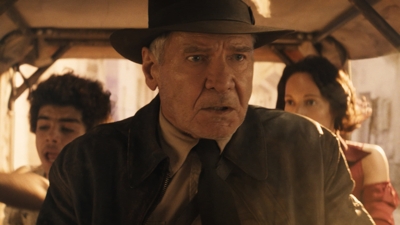
Many fans think that Lucasfilm should have stopped with that trilogy, because a sequel made almost 20 years later—Indiana Jones and the Kingdom of the Crystal Skull (2008)—was the weakest of the bunch. But you get the feeling that George Lucas doesn’t have it in him to end anything on a low note, and neither does Harrison Ford, who played not only that iconic Lucas character but Star Wars’ Han Solo as well. When characters reach those kind of heights, there’s a need to give them the type of retirement party that they deserve, and Indiana Jones and the Dial of Destinydoes that.

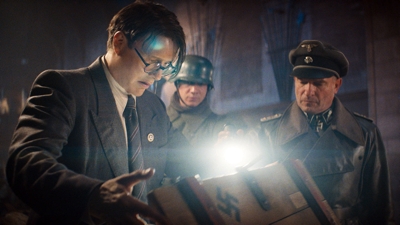
It’s a curtain call film, aimed at giving fans one last look at a favorite character and series, with a déjà vu familiarity that is deliberately cultivated through old characters from the earlier films (Karen Allen and John Rhys-Davies both appear) and trigger scenes that evoke memories of many others that fans have enjoyed over the years. The Nazis are here, of course, though in opening flashback featuring a younger CGI-generated Harrison Ford in sequences that look so good they’re bound to further alarm actors worried about AI taking away jobs.

James Mangold (Logan, Ford v Ferrari) seems like an odd choice to direct, but a fresh pair of eyes apparently helped. So did a return to the real object quest. The two most successful films in the series had plots spun from fictionalized takes on real ancient world  objects—the Ark of the Covenant in Raiders and the Chalice that Christ drank from at the Last Supper in Last Crusade—and Mangold does a nice job of handling the pacing and the complicated fictional history constructed for the real object in this last installment:  the Antikythera, a clock-like mechanical device attributed to Posidonius (but to Archimedes in the film) that was discovered off the coast of Antikythera in 1900. The real device isn’t a time machine, but that’s how it functions in this fifth and presumably final chapter of the Indy saga.

Mangold gets the pacing and tone right, and the special effects and visual effects are top-notch. But the plot can seem a bit far-fetched at times. I’m thinking here of a train scene where Indy and his less physically capable colleague both manage to climb onto the curved roof of a fast-moving train and run from car to car—something that, I can attest from my own experience hopping freight trains, is damn near impossible. And don’t think too long about how time travel plunks Indy down in ancient Greece, where he somehow instantly recognizes Archimedes. Thankfully, the pacing is crisp enough that it prevents you from thinking too much about any plot points that seem a bit too strained,  and that pacing reminds you that you’re watching a contemporary version of the old campy silent and early talky era serials, the installments of which moviegoers saw weekly in neighborhood theaters. They were all far-fetched, and from the beginning the Indiana Jones films have sought to pay tribute to those films by having fun with the genre.

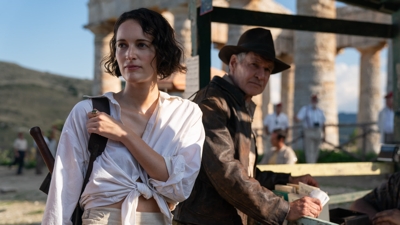
Indiana Jones plays best as a character that reacts to others, and award-winning actress Phoebe Mary Waller-Bridge (Fleabag, Crashing) is more than capable as a foil that frequently drifts across the line between ally and nemesis. In this installment she plays Helena, the daughter of a professor who was a close friend of Indy’s and whose life’s work revolved around the Antikythera.

There are age jokes, of course, but not nearly as many as you’d expect. The idea of the thin line between friend and foe is also walked by an astrophysicist (Mads Mikkelsen) who worked for the Nazis but now is employed by NASA . . . with his side hustle involving pursuit of the object that was within his grasp back in 1944, and using CIA agents to help him get it. Yeah, don’t think too much about that either.

Antonio Banderas appears as an Indy former friend who also walks that thin line, though as Banderas himself described it, his appearance is more of a cameo than anything fleshed out. There are plenty other minor characters to try to keep straight, but one that bears mentioning is Teddy (Ethan Isidore), who, like Short Round, provides some comic relief but is also well integrated into the plot.

Indiana Jones and the Temple of Doom started to grow on fans over time, while Indiana Jones and the Kingdom of the Crystal Skull remains a shrug. I suspect that Indiana Jones and the Dial of Destiny is one that fans will like more as time passes. Even now, it’s solid entertainment.

At a time when everyone knows ageism is wrong but the U.S. still remains a youth culture, Ford as Indy reminds us that it’s not too late to fight off the gravitational effects of aging. He reportedly took daily walks and also incorporated 40-mile bicycle rides into his routine in order to get in shape for the film. His vigorous onscreen presence is a shout-out for elder RESPECT.

Entire family:  No (probably age 8 and older)

Studio/Distributor:  LucasFilm

Aspect ratio:  2.39:1 widescreen

Featured audio:  DTS-HDMA 7.1

Bonus features:  B-

Trailer

Amazon link

Rated PG-13 for sequences of violence and action, language and smoking

Language:  2/10—It’s funny, but thinking about it in retrospect I can’t recall any language to cite here; it’s not that kind of film

Sex:  1/10—Indy indulges in a rekindled relationship kiss that is tastefully filmed as a long shot, and he is also shown shirtless in at least one scene

Violence:  4/10—Characters are killed, others are speared, and there’s plenty of hand-to-hand fighting, but the tone of the film is tongue-in-cheek and so, therefore, is the violence

Adult situations:  2/10—There is some smoking and some drinking, but not to excess and the quick pacing and focus on action makes all of it recede into the background

Takeaway:  Fans were pulling for Ford and Indy, hoping for a suitable send-off, and I think they got a respectable one—a film that should age well; for my money, Raiders is still tops, followed by Last Crusade and Temple of Doom, but Dial of Destiny isn’t far behind

Review of RIDE ON (2023) (Blu-ray)

Leave a comment

Grade:  C+/C

Action comedy

Not rated (would be PG)

These days the media is full of stories about writers, artists, and people working the film industry who are worried that their livelihoods might be threatened by the new AI technology.  But stunt actors everywhere whose demand has been diminished by CGI work have got to be thinking, Welcome to MY world. While this Larry Yang film is yet another vehicle for the ageless Jackie Chan and his creative martial arts sequences, it’s also a loving tribute to the Kung Fu stuntmen from Asian films, and, in fact, is dedicated to them. Yang was said to have begun working on this film after being inspired by the Kung Fu Stuntmen documentary.

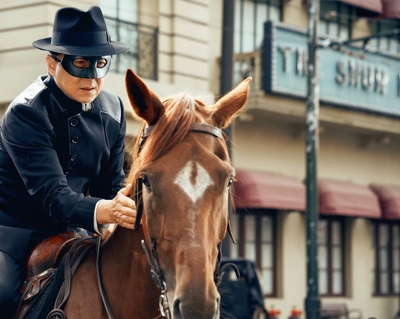
In Ride On, a sentimental action comedy in Mandarin with English subtitles (or dubbed English), Chan plays Lao Luo, a washed-up old stuntman who, along with his stunt horse from recent years, has been put out to pasture. He and the horse have been reduced to working studio lots trying to get tourists to pay money for a photo—money Luo needs to keep debt collectors from trying to break his legs. That’s only the tip of the manure pile that his life has become. Years earlier Luo lost custody of and contact with a daughter he hasn’t seen in forever. Now he’s in danger of losing the most important thing in his life:  the stunt horse he bought from his producer after the injury.  

A new businessman and his company have acquired Luo’s old studio and they’ve decided to auction off all of that studio’s assets—including Luo’s beloved Red Hare, a horse they say was owned by the studio since he has no paperwork to prove otherwise.

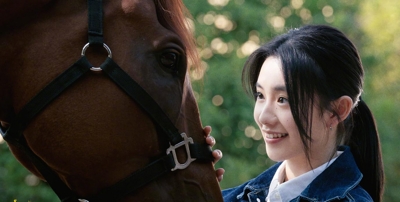
The X-factor in the film is Luo’s estranged college-age daughter, Bao (Liu Haocun), who with her boyfriend/fiancé (Guo Qilin) is studying law. Reluctantly she agrees to help her father, though she has all sorts of daddy issues, and understandably so. Things don’t get any better when her father has to meet her fiancé’s parents, nor when Lao battles a debt collector (Wu Jing) and talks him into helping him against the others. That fellow has a connection to a film in production that has need of a stuntman and stunt horse. We’ve already witnessed him putting the animal at risk because of his pride and his stuntman’s creed. And yes, some of his stunts involve the horse fighting with him. Will this end badly?

It does, if you ask me—and I don’t mean because of anything that happens to Lao or Bao or Red Hare. For me, what might have been a C+ all the way through loses at least a half-grade because of an ending that takes the sentimentalism running through the film and amplifies it in the third act so that you can’t help but think, Ok, stop tugging at the heartstrings, already.  

Perhaps it’s that sentimentality and the focus on rider-horse and father-daughter relationships that make Ride On feel like a family film. Aside from action that’s mostly comic, as has been the case with so many of Chan’s movies, this 2023 film is pretty tame and suitable for almost all ages.

In the end, just as Ride On pays tribute to Kung Fu stuntmen, it also honors the stunt-heavy career of Chan, and fans will revel in seeing people onscreen watching a compilation of “Lao’s” greatest stunts—all of which will be familiar to Chan buffs. It’s like watching an aging John Wayne play an aging gunfighter in The Shootist, where you realize that the actor and the character have much in common. There’s a poignancy to it all that would have been enough to create a powerful emotional reaction in viewers, even if Yang decided to dial back a bit on the sentimentality.

Entire family:  No (Age 8 and older?)

Run time:  126 min. 

Studio/Distributor:  Well Go USA

Aspect ratio:  16:9 widescreen

Featured audios:  Mandarin w/English subtitles, Dubbed English

Bonus features:  C-

Trailer

Best Buy link

Not rated (would be PG for fighting action and scenes of peril)

Language:  2/10—Mostly euphemistic

Sex:  0/10—Nada

Violence: 5/5—Mostly comic, as almost all recent Jackie Chan action movies have been

Adult situations:  4/10—Some drinking, but mostly moments of peril where youngsters with empathy might have a Dumbo’s mother moment

Takeaway:  Chan has had a remarkable career, and this film feels like a loving appreciation

Review: EVERYTHING EVERYWHERE ALL AT ONCE (Blu-ray)

Leave a comment

Grade:  B+/A-

Drama-Fantasy Adventure

Rated R

I’m beginning to wonder:  has a generation of gamers accustomed to living virtually on multiple levels led us to the point where many films going forward will also happen in multi-dimensions?

Although physicists and philosophers have been arguing about the possible existence of a multiverse (it’s not scientifically provable yet) since the 5th century BCE, and while the first mention of an alternate, simultaneous universe in pop culture seems to have been  back in 1961 when “Flash of Two Worlds” appeared in the Flash Vol. 1 No. 13 comic book, it has taken Hollywood decades to catch up.

But once Spider-Man: Into the Spider Verse caught a wave of public approval in 2018, we’ve since gotten two non-Hollywood films about the “multiverse” and also Legends of the Multiverse (2022), Doctor Strange in the Multiverse of Madness (2022), Teen Titans Go! & DC  Super Hero Girls: Mayhem in the Multiverse (2022), Spider-Man: Across the Spider-Verse (2023), and a 2023 TV series, Mila in the Multiverse.

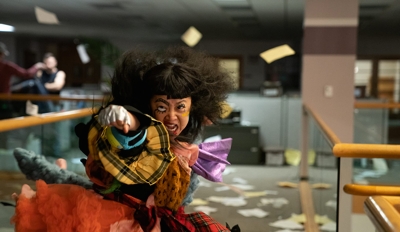
Everything Everywhere All at Once (2022)took the multiverse to another level, winning Oscars for Best Picture, Best Director, Best Original Screenplay, Best Actress, Best Supporting Actress, Best Supporting Actor, and Best Film Editing. That’s quite a haul for a film that won’t be for everyone. Some films are ahead of their time, but Everything Everywhere All at Once is a visual and narrative mind-blower that almost feels retro—like it could have come out of the late sixties and early seventies, if they had had the visual fx technology.

I’m not going to pretend that I understood everything the film threw at the wall to see if it would stick, but I think I got the gist of it.

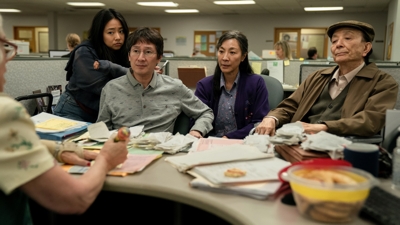
At one point Waymond Wang (Ke Huy Quan) says, “So even though you have broken my heart yet again, I wanted to say, in another life I would have really liked just doing laundry and taxes with you.” He’s speaking to his wife, Evelyn (Michelle Yeoh), with whom he runs a Laundromat and laundry service and lives above the business with her aged father (James Hong) and their daughter Joy (Stephanie Hsu), with whom Evelyn butts heads.

Evelyn is having an Uncle-Billy-lost-the-money crisis—and yes, there’s a noticeable reference to It’s a Wonderful Life, as there is to 2001: A Space Odyssey and other films. Evelyn’s system of accounting is all messed up, and her own system overloads when the family has to bring all their records to a tax audit with a no-nonsense tax examiner named Deirdre Beaubeirdre (Jamie Lee Curtis), and when her increasingly estranged daughter announces that she is a lesbian and introduces her to her “friend,” Becky (Tallie Medel).

That’s when, instead of a fantasy in which a guardian angel shows someone that his life is significant and special, a multiverse fantasy accomplishes the same purpose with Evelyn. Most multiverse movies are about superheroes, and that premise is used here to good effect, where we see Evelyn’s battles against the IRS and her daughter dramatized and explored in fantastic dimensions of alternate existence.

Is it for family viewing? The message is positive, if you can pick it out of the images and  actions that come at you as fast as the starscape in a Disney ride, and today’s youths see a similar level of violence in video games. But this film has gotten a lot of press and will spark the curiosity of a lot of children asking their parents if they can watch the film. If they’re ‘tweens and older, I would say, yes, because Everything Everywhere All at Once feels like a milestone.

I don’t know what was more impressive:  the acting, or the visual effects. The multiverse gimmick (yes, I went there) gives the main actors the chance to explore their characters across a wider range of emotions and personalities than a one-dimensional film, and all of them rise to the occasion. They go all out, and every scene is fun to watch because of that.

But this film doesn’t happen without the visual effects, and, hard as it is to believe, the team that created the effects wasn’t professionally trained. They taught themselves how to do it by looking at various Internet sources and tutorials. How impressive is that?

Then again, the film is such a wild ride with strobe-like effects and multiple cuts that the editing was just as impressive as everything else.

Daniel Kwan and Daniel Scheinert won a well-deserved Oscar for their rock solid  (ahem) direction, pulling career performances out of Curtis and Quan, for whom the film was the first since he appeared in Indiana Jones and the Temple of Doom and The Goonies as a child actor. My only complaint is that some of the fantasy battles that Evelyn faces with her demons and nemeses can start to feel a bit long and repetitive as the third act of this 139-minute film rolls downhill to its conclusion. But that’s my only criticism.

As I said, Everything Everywhere All at Once won’t be for everyone. It’s a strange film that pulls so many visual images, pop culture allusions (hot dog fingers? pet rocks?), and alternate selves (and therefore, realities) out of Evelyn that you can fully imagine people in the psychedelic sixties “grooving” on it. But ultimately the film left me (and no doubt others) with one impression:  if we are the heroes of our own stories, then maybe, just maybe, the multiverse is different for each of us . . . and a product of our own imaginations.

Entire family:  No (‘tweens and older)

Run time:  139 min., Color

Studio/Distributor:  Lionsgate

Aspect ratio:  1.85:1

Featured audio: Dolby Atmos

Bonus features:  B+

Includes:  Blu-ray, Digital

Amazon link

Trailer

Rated R for some violence, sexual material and language

Language: 5/10—close to double-digit occurrences of the f-word, plus some lesser swearwords, though they frankly don’t stand out with all the frenetic action and images

Sex:  510—Phallic symbols and dildos, some object humping in the background of one shot, and a comic scene with a sex dungeon that isn’t explicit except for the props; the most extreme scene is a dildo-shaped trophy that ends up inside a man who sits on it, while others insert one manually and any nudity is pixelated (though bizarre)

Violence: 5/10—Lots of fantasy fighting and plenty of blood, but the images are often comic or surreal (a man’s head blows up into confetti? another person gives themselves deliberate paper cuts? an animal is punted like a football?), which blunts the violence

Adult situations:  3/10—Some smoking and vaping

Takeaway:  The pace of this film is breakneck, and if that’s any indication of how the upcoming TV series Star Wars: Skeleton Crew is going to play out, you’d better yourselves; with Daniel Kwan directing, it could be a wild ride

Review: The Truth About Spring (Blu-ray)

Leave a comment

Grade:  C+/B-

Family Adventure-Romance

Not rated (would be PG)

In the late ‘50s and early ‘60s, two young Disney stars were among the most popular on the planet: Mouseketeer Annette Funicello and British actress Hayley Mills, whose debut with Disney (Pollyanna, 1960) earned her the last special Juvenile Oscar awarded. A year later she starred as separated twins trying to reunite their divorced parents in The Parent Trap, and a song she performed, “Let’s Get Together,” reached No. 1 on the charts in the U.S.

For a decade, Hayley was big—even bigger than Annette. Stanley Kubrick offered her the title role in Lolita (which her father, Sir John Mills, turned down), and her performance in the 1961 British film Whistle Down the Wind (an adaptation of a novel written by her mother) earned her a BAFTA Best British Actress nomination. She also was voted the biggest star in Britain that year.

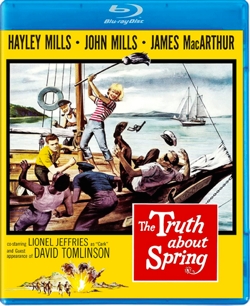
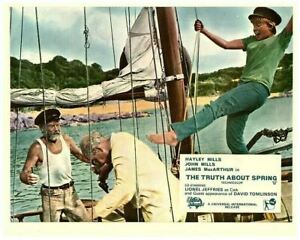
The Truth About Spring(1965) was the third film Mills made with her famous thespian father—fourth, if you count the elder Mills cameo as a golf caddy in The Parent Trap—and this star vehicle plays very much like an affectionate last daddy-daughter hurrah before the later leaves the nest, as Hayley would. Just a year later her father would direct her Sky West and Crooked and she would marry adirector 33 years her senior from The Family Way, in which John Mills had only a minor rle. So there’s something inherently poignant in the Mills pairing in The Truth About Spring.

If you don’t look at the credits, you’d swear that this film was made by Disney, with the familiar musical cues, structure, characters, tone, and direction—except that it’s not. Universal made this one and tried the Disney formula, with disappointing effects.

In his autobiography, John Mills wrote, “If the picture had turned out to be half as good as the food, the wine, the time and the laughs we had on that location it would have been a sensation—unfortunately it wasn’t.”

Though it’s also an adventure with some romance involving a young girl initially dressed as a boy, The Truth About Spring wasn’t nearly as successful as Disney’s Swiss Family Robinson (1960), in which the elder Mills played the father of a family marooned in the early 1800s on an island paradise. That film had real pirates and a lush tropical setting full of all sorts of animals and a cast of characters that provided plenty of side stories.

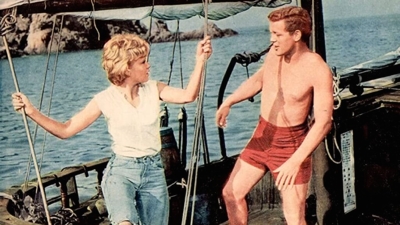
This adventure allegedly took place in the Caribbean. But the scenery was actually the barren rocky coast of southern Spain, and the pirates are contemporary—pirate in spirit and function, not dress.  There may be a treasure hunt, but it somehow seems nothing more than a plot device.

Other than two groups of “pirates,” The Truth About Spring also has only the two Mills and Swiss Family Robinson veteran James MacArthur (perhaps most famous for his role as Danno on TV’s Hawaii Five-O) for plot possibilities. For much of the film they’re aboard a small sailing vessel where the free-spirited con-artist Tommy Tyler (J. Mills) lives with his daughter, Spring. Into their lives comes William Ashton (MacArthur), a newly minted young lawyer who’s on his uncle’s yacht for a vacation before starting his job in Philadelphia.

Looking to work another con, Tommy invites him to jump ship to do a little fishing on their sailboat, and the next thing you know Ashton is accepting an invitation to spend a few weeks on their boat. Contrived? Certainly. But once you get past a hokey title sequence, there’s a wholesome charm to this coming-of-age film that remains all these years later.

Entire family:  Yes

Run time:  102 min. Color

Studio/Distributor:  Universal / Kino Lorber

Aspect ratio:  1.85:1 anamorphic widescreen

Featured audio:  DTS 2.0

Bonus features:  C+

Amazon link

Not rated (would be PG for some peril and social drinking)

Language: 1/10—I didn’t hear a single word, but I’m listing it as a 1 just in case . . .

Sex: 1/10—A first and second kiss, and a playboy uncle surrounded by cougars

Violence:  2/10—Guns are pulled, but no one is shot; there’s an explosion, but no one is hurt; and the fight against pirates involves punching, pushing, and whacking them with a mop

Adult situations: 1/10—Cocktails are held aboard the yacht, and Tommy channels his inner Popeye by smoking a pipe (and cigars)

Takeaway:  Hayley Mills still has a loyal following, and that fan base will be happy to have this seldom-broadcast film in their Blu-ray collections

Review of DOUBLE CROSSBONES (Blu-ray)

Leave a comment

Grade:  B-/C+

Adventure Comedy

Not Rated (would be PG)

Today’s audiences know Donald O’Connor mostly as the third wheel in the 1952 Gene Kelly and Debbie Reynolds musical romance Singin’ in the Rain—you know, the “Make ‘Em Laugh” guy?

But O’Connor, a former vaudevillian, also had his share of top billings, starting with 1938’s Tom Sawyer, Detective and continuing with a series of romantic leads and Francis the Talking Mule pictures. Typecast as a mild-mannered nice guy / funny man, he became Universal’s version of Bob Hope. 

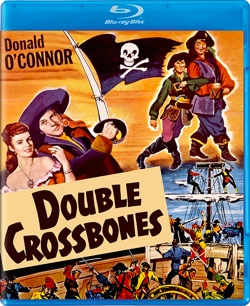
Hope made a Western comedy-musical in 1950 (Fancy Pants), and so did O’Connor (Curtain Call at Cactus Creek). Double Crossbones, which followed a year later,is Universal’s answer to the Hope comedy The Princess and the Pirate, in which a bumbling non-pirate finds himself at sea pretending to be one.

While the Hope film is a classic comedy that was frequently televised and released for home video, Double Crossbones got buried somehow—a forgotten little treasure that was recently dug up by Kino Lorber and released for the first time on Blu-ray for family home theaters. Like many films from the ‘50s, it’s a fun costumed romp that’s heavy on light entertainment, with a plot that’s just complicated enough to keep it interesting.

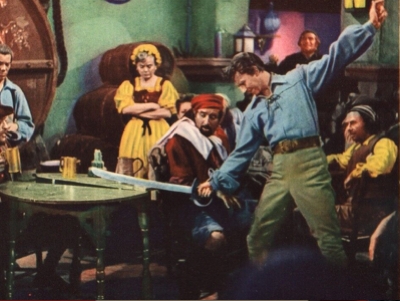
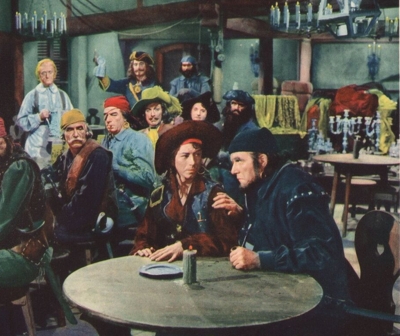
O’Connor is engaging as always, but surprisingly up to the task of shivering a few timbers and slitting a few gullets—far less cowardly than Hope’s characters. He plays shopkeeper’s apprentice Davy Crandall, whose boss turns out to have been selling stolen merchandise bought from pirates. When he’s wrongfully accused of being one of the pirates, Davy ironically takes to the high seas with his newfound sidekick (Will Geer) and bumbles his way across the Spanish Main to the top of the brotherhood (and sisterhood—pirate Anne Bonny makes an appearance).

Double Crossbones is directed by Charles Barton, who would later direct Disney’s The Shaggy Dog (1959), and in both films the comedy is mostly situational. Fans of classic TV will recognize Geer as the grandpa from The Waltons and Hayden Rorke as the suspicious Dr. Bellows from I Dream of Jeannie. And if the actor playing Captain Kidd looks familiar, it’s because Alan Napier would go on to play Bruce Wayne’s butler, Alfred, in the campy sixties Batman series.

There’s action, but the violence is minimal compared to films today.

There’s comedy, but the jokes aren’t as clever or in-your-face as in films today.

There’s drama, but not the melodrama of most films of the era or the anxiety-driven films of today.

As I said, Double Crossbones is light entertainment, but fun and watchable light entertainment that manages to sneak in a comic dance routine from O’Connor . . . who indeed makes his cutlass-and-pistol-wielding audience laugh.

Will he have the same effect on audiences today? Probably not. Hope’s The Princess and the Pirate (1944) is still the better movie of the two, and The Crimson Pirate, Treasure Island, and Against All Flags are the best of the pirate movies that Hollywood made in the fifties. Everything else falls somewhere in the 2-2 ½ star range out of 4, and Double Crossbones lands near the higher end of those colorful genre films. It’s guilty pleasure pirate booty that still makes for an entertaining family movie . . . perhaps as the warm-up for one of Disney’s Pirates of the Caribbean movies?

Entire family:  Yes

Run time:  76 minutes Color

Studio/Distributor:  Universal / Kino Lorber

Aspect ratio:  1.37:1

Featured audio:  DTS 2.0

Bonus features:  C

Amazon link

Trailer

Not rated (would be PG for some violence)

Language:  1/10—Squeaky clean, but I might have missed something

Sex:  0/10—Tepid, not torrid, love interest, with an occasional embrace

Violence:  3/10—There are swordfights (uh, “Pirate!”) and brawls, but nothing cringeworthy

Adult situations:  2/10—Pirates hang out in pubs in Tortuga, and so there’s drinking and smoking in such scenes

Takeaway:  Disney’s Treasure Island sparked several dozen pirate movies in the fifties, more than were made in the previous decades, and Double Cross is an artifact of that era

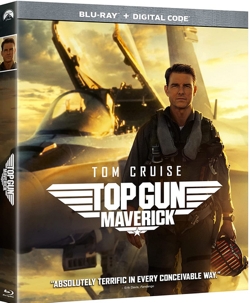
Review of TOP GUN: MAVERICK (Blu-ray)

Leave a comment

Grade:  B+/A-
Action-Adventure Drama Romance
Rated PG-13

Top Gun: Maverick outgunned all other films at the box office so far in 2022, besting #2 Jurassic World: Dominion by nearly half-a-million dollars. It’s slick Hollywood action blockbuster filmmaking at its finest. 

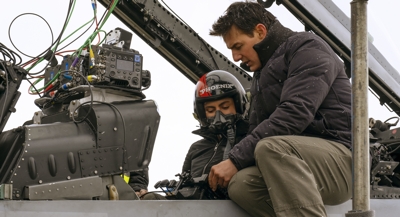
Critics thought it better than the first Top Gun because of the increased number and authenticity of the aircraft action sequences. With the cooperation of the U.S. Navy, a film crew spent over a year working with six cameras placed inside the cockpits and additional cameras mounted at various spots on the planes’ exteriors. Reportedly more than 800 hours of aerial footage was shot, so the sequences that made it into the film were really something special.

And the planes? The production crew used 20 functioning aircraft and modified them to have the look that they wanted, including the fictional “Darkstar” that was designed with the help of actual engineers from legendary aircraft manufacturer Lockheed Martin.

The 1986 Top Gun was so popular that composer Giorgio Moroder and performer Kenny Loggins probably expected to see a hastily produced sequel and earn residuals for their “Danger Zone” theme. But it took almost 25 years before Paramount announced a sequel with Cruise signed, Jerry Bruckheimer onboard to produce, and Top Gun director Tony Scott expected to work behind the cameras again. Then, later in 2012, Scott died and production didn’t begin until 2017, with Joseph Kosinski directing. Then came delays related to COVID-19 and the prolonged filming of those complicated action sequences. But the results speak for themselves. If you don’t already have a big TV, this might be a reason to splurge. Top Gun: Maverick was made for the big screen.

Cruise at 60 looks boyish as ever and because of his action roles has maintained his muscle tone and slender frame. In Top Gun he was paired romantically with Kelly McGillis, five years his senior, but McGillis said she wasn’t asked to be in the sequel. Instead, writers gave Cruise another love interest to take his breath away:  Navy hangout bar owner Penny (Jennifer Connelly, age 48), with whom it’s implied he had a previous relationship—the old heartbreaker.

More

Review of DC LEAGUE OF SUPER-PETS (Blu-ray combo)

Leave a comment

Grade:  B-/B
Animation
Rated PG

You know how you have to make up a list of positives and negatives when you’re undecided about something? That’s what I had to do in order to review DC League of Super-Pets.

Right about now, any children or fans of the DC Universe who are reading this are shaking their heads and muttering Loser or something to that effect. And I get it. My take might go against the grain, because this 2022 Warner Bros. picture earned a 73 percent “fresh” rating at Rotten Tomatoes and an 88 percent favorable audience rating.

Don’t get me wrong. This is an entertaining film—one that I think puts it in the low-to-mid B range. But it took the ledger method for me to reach that conclusion.

I felt conflicted from the very beginning, when a somewhat sappy scene featuring a giggling baby and his perky puppy set against a minimalist background seemed designed to go straight for the heart. All films manipulate viewers’ emotions, but this was a little too obvious and clichéd for me. But very quickly it’s revealed that the baby is Kal-El, and as his conflicted parents put him in a mini-spaceship and wave goodbye, the baby beckons . . . and the puppy obliges, sliding under the closing door as slick and in a nick of time as Indiana Jones. And I thought, How clever!

Throughout the film, I found myself similarly conflicted, but the positives far outweigh the negatives, so let’s start there.

+ It makes sense that if Superman has powers on Earth, so does his dog, Krypto. But the writers did a good job coming up with a logical explanation for how and why the pets in a shelter come to Toy Story life with powers of their own:  Orange Kryptonite. It causes a tough-looking, gruff dog named Ace to become so super strong he can shield others from all sorts of weapons and explosions. Meanwhile, a potbelly pig nicknamed PB can balloon to various gigantic sizes, while an elderly poor-sighted turtle named Merton (a playful allusion to Dr. Seuss?) of course becomes suddenly super fast, and a squirrel named Chip (take that, Dale), whose eyes already look plugged-in, turns into someone that can channel electrical charges. And how clever is it to turn the idea of shelter animals on its head—to have those creatures normally rescued by humans doing the rescuing . . . of super-humans?

More

Review of THOR: LOVE AND THUNDER (Blu-ray)

Leave a comment

Grade:  B/B-
Action-Fantasy-Adventure
Rated PG-13

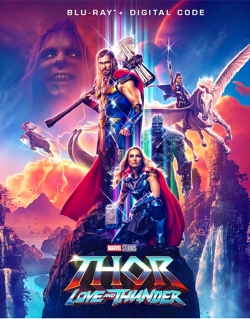
As with the James Bond franchise, the tone of superhero films can vary significantly depending on who’s directing. Kenneth Branagh was no doubt hired to direct Thor in 2011 so he could put his own quirky stamp on the Marvel character, which turned out to be a brooding Adonis; meanwhile, Alan Taylor’s TV background (Lost, Six Feet Under, The Sopranos, Deadwood) was reflected in the action intensity and darker tone of Thor: The Dark World (2013). When Taika Waititi was hired to direct Thor: Ragnarok (2017) and a sequel, you knew the series was moving away from the darkness and into the light . . . and, as it turns out, lighter.

With humor, you never know when you cross the line until you actually step over it.  Director John Glen did so with the pre-title sequence to the Bond film A View to a Kill when he turned a ski chase scene into a one-ski snowboarding adventure with a Beach Boys surfing song playing in the background. And Marvel fans might think that director Taika Waititi did so by including more silly gags and comic dialogue in Thor: Love and Thunder (2022) than he did in Ragnarok.

It’s Waititi’s own fault, really, because he created such a tough act to follow. Thor: Ragnarok earned a 93 percent “fresh” rating from critics and an 87 from the audience at Rotten Tomatoes. Though he’s been a consistent master of subtlety when it comes to infusing serious topics with humor, as he did with his masterwork Jojo Rabbit (2019), maybe Waititi felt he had to push his Thor sequel even further into the broadly comic atmosphere of the Guardians of the Galaxy films to keep the franchise moving forward. And yeah, Love and Thunder gets pretty silly at times, which is why critics gave it their lowest mark (64/100) since The Dark World (66/100). Audiences, however, who liked this one in spite of the silliness. So did our family.

More

Older Entries