Home

Review: THE ANDY GRIFFITH SHOW: COMPLETE SERIES (Blu-ray)

Leave a comment

Grade:  B+/A-

TV comedy

Not rated (would be PG)

It’s hard to believe people ever lived slower lives—especially at a time when folks can’t seem to spend a single moment without multitasking or yakking on cell phones in walk-and-talks that, despite their content (“I’m on my way to the grocery store now”), are conducted with West Wing importance. If you need a refresher course in slowing down, watch The Andy Griffith Show.

If Frank Capra had worked in television, I’m guessing he would have produced something along the lines of this folksy, feel-good, homespun situation comedy that offered an idealized portrait of small-town life. Never once during its eight-season run did the series finish outside the Nielsen Top 10, and its final season the show ended as the No. 1 watched show in America. I Love Lucy and Seinfeld were the only other shows to accomplish that feat.

The series, which ran on CBS from 1960-68, was ranked No. 9 on TV Guide’s list of 50 Greatest TV Shows of All Time. One thing that contributed to the show’s success was that it appealed to both rural and (sub)urban people, and white-collar as well as blue-collar workers. The writing was much sharper than other rural comedies that aired on television before or after it, and the aw-shucks sheriff without a gun solved problems with common sense and wit that was broadly entertaining.

The Town of Mayberry, North Carolina was a sleepy little backwater where Sheriff and Justice of the Peace Andy Taylor (Griffith) doesn’t drink, refrains from using harsh language, and seldom raises his voice. Before The Cosby Show got all sorts of love for modeling a kinder, gentler parenting style, the widowed Sheriff Taylor was showing an earlier generation a better way to raise kids and relate to people. With an aw-shucks demeanor, a bushel full of aphorisms, and a smile that could disarm all but the most hardened criminals, Andy spent much of his time dispensing common-sense advice to family, friends, residents, visitors, and yes, sometimes even criminals.
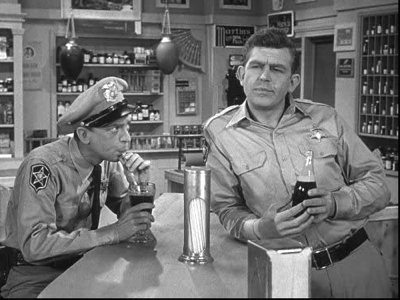
The writing for this character-driven comedy also featured some very funny lines, and a killer ensemble cast delivered them with verve. When you saw bumbling Deputy Sheriff Barney Fife (Don Knotts) and Floyd the Barber (Howard McNear) week after week, it was almost like living in a small town. You felt as if you knew them, and the show had a comfortable feel to it. Andy’s son, Opie, is played to perfection by a very young Ron Howard, while Aunt Bee (Frances Bavier) is introduced in the first episode as the one who raised Andy and will now do the same with Opie. Fans of Father Knows Best were treated to Elinor Donahue (“Princess” from that earlier TV series) as a druggist and possible love interest for Andy in a five-episode arc.

This first season Griffith played Sheriff Taylor more folksy than he would in later years, and more than a few episodes ended with him sitting on the front porch with his guitar, serenading his “kinfolks.” In one classic episode, a state police task force uses the sheriff’s office as headquarters for an operation to catch an escaped convict, and they exclude Andy and Barney. But Andy plays a hunch and he and Barney end up catching the fellow, with the help of Andy’s leaky rowboat. Of course, the state officer in charge changes his tune about Andy and small town “sheriffin’.” That pattern would repeat itself with fun variations over the next seven years.

It’s tobacco country, so there’s occasional smoking, and fictional Mayberry is in the foothills of Appalachia, so there are poor folks who are accustomed to making their own liquor, no matter what the law says. But to underscore how relatively innocent it all is, in an episode titled “Alcohol and Old Lace” Barney and Andy follow a moonshine trail that leads them straight to a pair of sweet little old ladies. Meanwhile, town drunk Otis lets himself in and out of the jail, and Andy treats him as he is: a friendly neighbor who happens to have a problem with alcohol. Over time, even Otis becomes more than a town drunk, and viewers begin to embrace him as much as the other characters in this endearing ensemble.
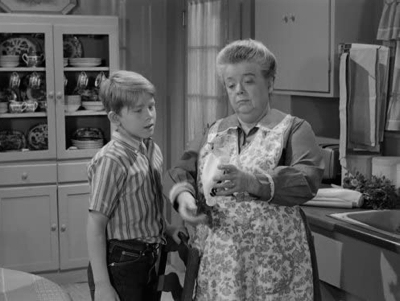
For the first several seasons the producers clearly tried to give the show a boost by featuring a string of guest stars that included Bill Bixby (The Incredible Hulk), Buddy Ebsen (The Beverly Hillbillies), Barbara Eden (I Dream of Jeannie), Alan Hale Jr. (Gilligan’s Island), Edgar Buchanan (Petticoat Junction), and Arte Johnson (Laugh-In). They were interesting, but in truth unnecessary. Fans would have kept tuning in regardless, just to see the Mayberry regulars.

After two solid seasons, CBS added more Mayberry characters, among them dim-witted mechanical wizard Gomer Pyle (Jim Nabors), schoolteacher/love interest Helen Crump (Aneta Corsaut), the rowdy, bluegrass-playing Darlings (real-life bluegrass band The Dillards), and rock-throwing, poetry-spouting nut-case Ernest T. Bass (Howard Morris).

The 249 half-hour episodes (plus a faux pilot episode of Andy on The Danny Thomas Show and Opie on Gomer Pyle: USMC) are on 32 discs, with each season having it’s own Blu-ray case and a slipcase holding them all together. The first five seasons aired in black-and-white, and that’s how they’re presented here. The introduction of color coincided with Knotts’ departure, so it felt like an attempt to compensate fans for the loss of the three-time Emmy winner. As if to reinforce how much he meant to the series, Knotts earned two more Emmys for a pair of guest appearances that he made, bringing his total—and the show’s—to five.  

This show would easily have been an A-/B+ had Knotts stayed and had Nabors not left the show to star in his own spin-off, replaced by a game George Lindsay as Goober, not nearly as interesting a character as Gomer. But the series had a knack of elevating minor characters so that they had the kind of depth that made people care about them, and that helped the show continue to evolve and stay relatively fresh over the years.

For fans, it will be a real pleasure to pop in a disc and sit back and watch 6-9 episodes per disk, plus eclectic bonus features that include behind-the-scenes clips, the Howards’ home movies on the set, opening clips, and original sponsor ads. Blu-ray is a visible improvement over the DVDs, and can be enjoyed even when streaming signals or Internet connections are spotty.  I have only two complaints, and they have nothing to do with the show or quality of presentation. One is that the boxed set includes no master list of episodes or any annotated descriptions. All we get are lists of hard-to-read titles on the discs themselves. That’s it. My other complaint is that the plastic “pages” that hold each disc have pretty flimsy points of attachment. When my set arrived, at least two discs from each season case were loose. When you pay over $100 for a set, you expect better. Paramount/CBS, are you listening?

When you watch these episodes you’ll see so many that you don’t remember, simply because relatively few of the episodes are shown on TV in rerun. It’s like discovering the show all over again.

Entire family:  Yes

Run time:  6343 min. (249 episodes, 105.7 hours), Black-and-white (Seasons 1-5) / Color (Seasons 6-8)

Studio/Distributor:  CBS Home Entertainment

Aspect ratio:  1.37:1

Featured audio:  LPCM 2.0 (Season 1) / DTS-HDMA 2.0 (Seasons 2-8)

Bonus features:  B+

Amazon link

Not rated (would be G or PG for adult drinking and smoking)

Language:  1/10—Only occasional sanitized versions, like “dad gum it”

Sex:  1/10—Wholesome as can be, though there is a bathing suit contest in one episode

Violence:  1/10—Some “wrasslin’” and scufflin’, some black eyes, but the actual violence is mostly off-screen, just as guns are pulled but fired only occasionally

Adult situations:  2/10—Some adult smoking, drinking, and drunkenness

Takeaway:  This complete set came on the heels of the Blu-ray release of The Andy Griffith Show: Season 1; while those who bought that set might think they wasted their money, savvy classic TV fans know that when a studio tests the waters, if fans don’t respond there might not be another Blu-ray release
Review: The Truth About Spring (Blu-ray)

Leave a comment

Grade:  C+/B-

Family Adventure-Romance

Not rated (would be PG)

In the late ‘50s and early ‘60s, two young Disney stars were among the most popular on the planet: Mouseketeer Annette Funicello and British actress Hayley Mills, whose debut with Disney (Pollyanna, 1960) earned her the last special Juvenile Oscar awarded. A year later she starred as separated twins trying to reunite their divorced parents in The Parent Trap, and a song she performed, “Let’s Get Together,” reached No. 1 on the charts in the U.S.

For a decade, Hayley was big—even bigger than Annette. Stanley Kubrick offered her the title role in Lolita (which her father, Sir John Mills, turned down), and her performance in the 1961 British film Whistle Down the Wind (an adaptation of a novel written by her mother) earned her a BAFTA Best British Actress nomination. She also was voted the biggest star in Britain that year.

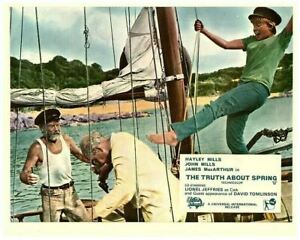
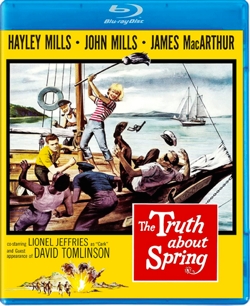
The Truth About Spring(1965) was the third film Mills made with her famous thespian father—fourth, if you count the elder Mills cameo as a golf caddy in The Parent Trap—and this star vehicle plays very much like an affectionate last daddy-daughter hurrah before the later leaves the nest, as Hayley would. Just a year later her father would direct her Sky West and Crooked and she would marry adirector 33 years her senior from The Family Way, in which John Mills had only a minor rle. So there’s something inherently poignant in the Mills pairing in The Truth About Spring.

If you don’t look at the credits, you’d swear that this film was made by Disney, with the familiar musical cues, structure, characters, tone, and direction—except that it’s not. Universal made this one and tried the Disney formula, with disappointing effects.

In his autobiography, John Mills wrote, “If the picture had turned out to be half as good as the food, the wine, the time and the laughs we had on that location it would have been a sensation—unfortunately it wasn’t.”

Though it’s also an adventure with some romance involving a young girl initially dressed as a boy, The Truth About Spring wasn’t nearly as successful as Disney’s Swiss Family Robinson (1960), in which the elder Mills played the father of a family marooned in the early 1800s on an island paradise. That film had real pirates and a lush tropical setting full of all sorts of animals and a cast of characters that provided plenty of side stories.

This adventure allegedly took place in the Caribbean. But the scenery was actually the barren rocky coast of southern Spain, and the pirates are contemporary—pirate in spirit and function, not dress.  There may be a treasure hunt, but it somehow seems nothing more than a plot device.

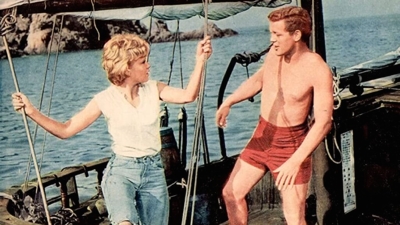
Other than two groups of “pirates,” The Truth About Spring also has only the two Mills and Swiss Family Robinson veteran James MacArthur (perhaps most famous for his role as Danno on TV’s Hawaii Five-O) for plot possibilities. For much of the film they’re aboard a small sailing vessel where the free-spirited con-artist Tommy Tyler (J. Mills) lives with his daughter, Spring. Into their lives comes William Ashton (MacArthur), a newly minted young lawyer who’s on his uncle’s yacht for a vacation before starting his job in Philadelphia.

Looking to work another con, Tommy invites him to jump ship to do a little fishing on their sailboat, and the next thing you know Ashton is accepting an invitation to spend a few weeks on their boat. Contrived? Certainly. But once you get past a hokey title sequence, there’s a wholesome charm to this coming-of-age film that remains all these years later.

Entire family:  Yes

Run time:  102 min. Color

Studio/Distributor:  Universal / Kino Lorber

Aspect ratio:  1.85:1 anamorphic widescreen

Featured audio:  DTS 2.0

Bonus features:  C+

Amazon link

Not rated (would be PG for some peril and social drinking)

Language: 1/10—I didn’t hear a single word, but I’m listing it as a 1 just in case . . .

Sex: 1/10—A first and second kiss, and a playboy uncle surrounded by cougars

Violence:  2/10—Guns are pulled, but no one is shot; there’s an explosion, but no one is hurt; and the fight against pirates involves punching, pushing, and whacking them with a mop

Adult situations: 1/10—Cocktails are held aboard the yacht, and Tommy channels his inner Popeye by smoking a pipe (and cigars)

Takeaway:  Hayley Mills still has a loyal following, and that fan base will be happy to have this seldom-broadcast film in their Blu-ray collections

Review: LITTLE MISS MARKER (1934) (Blu-ray)

Leave a comment

Grade: B-/C+

Comedy-Drama

Not rated (would be PG)

Child actor Shirley Temple became a household name in the 1930s and was considered to be 20th Century-Fox’s greatest asset. When she was only seven years old, the studio assigned a team of 19 writers to develop original stories for her. Discovered at age three, she became the inspiration for stage mothers all across America who pushed their own small children to become singers and dancers. Her signature song (“On the Good Ship Lollipop”) sold 500,000 copies on sheet music—presumably to those same stage mothers—while her likeness was used to sell such merchandise as dolls, clothing, plates, and glassware. She even had a drink named for her, and was the first performer to receive a special Juvenile Oscar.

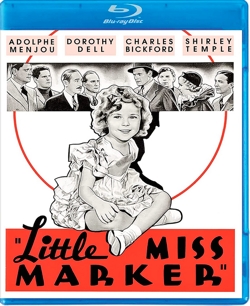
By the time a six-year-old (but looking younger) Temple appeared in Little Miss Marker (1934)—the film that established her as a star—she had already acted in 13 film shorts and nine feature films. By contrast, Dorothy Bell, the female lead who plays a nightclub singer in this Damon Runyon adaptation, had only one film short and a single feature to her credit.

Runyon was a journalist whose published short stories celebrated the denizens of Prohibition-era Broadway: hard-boiled newsmen, gamblers, bookies, singers, racketeers, reformers, and other colorful characters that inhabited his little corner of Brooklyn. They were people who frequented racetracks and clubs, had colorful nicknames, yet had a soft spot. If you’ve seen Guys and Dolls, you’ve seen the most famous adaptation of two of his short stories. But “Little Miss Marker” comes in second, having spawned this film and three remakes.

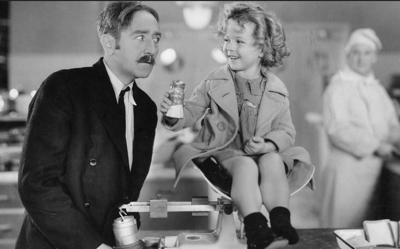
In Little Miss Marker, bookie Sorrowful Jones (Adolphe Menjou) accepts an unusual I.O.U. “marker”: the daughter of a desperate man looking to get back on track with a racing win. When the man never returns to get her and pay his debt, the bookie is forced to take the child home. Soon he, his associates, and everyone under the thumb of racketeer Big Steve (Charles Bickford) find themselves being charmed by her. That includes the racketeer’s girlfriend, club singer Bangles (Dell), who envisions a more respectable life when she looks at the orphan.

Of Temple films, then-President Franklin D. Roosevelt said, “It is a splendid thing that for just 15 cents, an American can go to a movie and look at the smiling face of a baby and forget his troubles.” But not everyone could forget their troubles. America wasn’t exactly equal, and films from this era, with their unfortunate racial stereotypes, are a reminder of that. Willie Best, like Stepin Fetchit, played a lazy, simpleminded, easily spooked character whose eyes bug out and words meander in a slow exaggerated drawl. But at least he received credit for his work, as did Wong Chung for a single walk-on line spoken again as an stereotypical caricature of what white America thought Asians sounded like when they spoke English. Mildred Gover, who plays the club singer’s maid, isn’t even credited . . . though at least her delivery seems less caricatured as the film progresses. At one point we even catch her having a drink and putting her feet up on the furniture when the missus isn’t home.

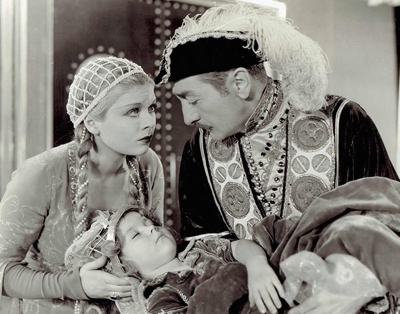
So yeah, a few unfortunate cultural stereotypes mar a film that otherwise is entertaining in a hokey sort of way. Hardened men and women become like putty in the hands of “Marky.” When they realize they’re having as much of a negative effect on her as the positive effect she’s having on them, they resolve to do something about it—even if it involves sabotaging Big Steve’s plan to use the girl as “owner” of a racehorse that they plan to use to fix a race, or holding an elaborate dress-up party to refuel the child’s belief in fairy tales. And even if it means kidnapping a doctor when, like Pollyanna, Marky needs emergency care.

Shirley Temple was America’s screen orphan and her movies were a mainstay on family-oriented TV movie series of the ‘50s and ‘60s. But these days the safest ones to watch with your small children remain those that are the least outdated and have the fewest unsavory characters in need of transformation.

Those would be Heidi (1937), The Little Princess (1939), Bright Eyes (1934, “The Good Ship Lollipop” film), and Captain January (1936), in that order. But Wee Willie Winkie (1937, Temple’s favorite) and Little Miss Marker aren’t far behind. While this Little Miss Marker might lose by a nose to Bob Hope’s Sorrowful Jones (1949), it remains far superior to the 1980 adaptation or looser remakes like Little Big Shot (1935) or Forty Pounds of Trouble (1962).

Entire family:  Yes

Run time:  80 min. Black & White

Studio/Distributor:  Universal/Kino Lorber

Aspect ratio:  1.37:1

Featured audio:  DTS 2.0 Mono

Bonus features:  C+

Amazon link

Clip (spoiler)

Rated “Passed” (would be G today)

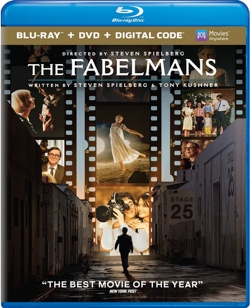
Review: THE FABELMANS (Blu-ray combo)

Leave a comment

Grade:  A-

Drama

Rated PG-13

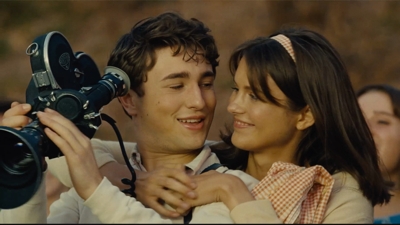
The Fabelmans was promoted as a “semi-autobiographical story loosely based on Spielberg’s adolescence,” but after Steven Spielberg’s November 2022 New York Times interview, the term “biopic” seems more appropriate. As it turns out, all of the major and memorable events happened pretty much as they were depicted in this 2022 film, which earned seven Oscar nominations. That includes a memorable scene where a timed young aspiring filmmaker meets the great, gruff John Ford in his office.

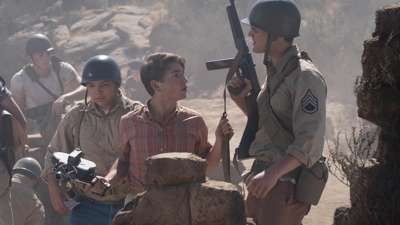
Even without labeling, audiences would have picked up on at least one similarity between the boy in the film and the famous director’s work:  a scene with boy scouts reminiscent of a sequence from the third Indiana Jones film. In fact, Spielberg recreated exactly the first short films that he made, including one he made with his boy scout troop to earn his photography merit badge.

The Fabelmans (fable-man’s) are an eccentric Jewish family that’s split down the middle of their collective brain. The mother, Mitzi (Best Actress nominee Michelle Williams), is a creative right-brained talent ruled by passion and imagination. A concert pianist, she’s also a free spirit who loves life, loves to laugh, and loves to play-act. The father, Burt (Paul Dano), is a left-brained tech genius who does his best to go with the flow, despite wanting his son to make useful things, as he does does. In their own way, both parents are  creative, so it’s no wonder that Spielberg turned out to be a creative genius. The fun of this film comes from seeing how that genius was nurtured in his adolescent and teen years.

As one of Sammy Fabelman’s three younger sisters (Keeley Karsten, Julia Butters, Sophia Kopera) observes, the youth is most like his mother.

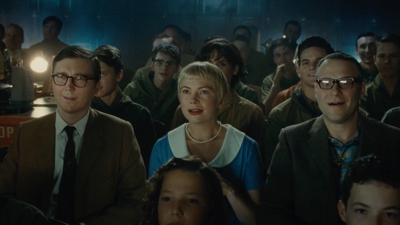
Sammy (Gabriel LaBelle) is immediately drawn to filmmaking after his parents take him to see Cecil B. DeMille’s The Greatest Show on Earth—alternately mesmerized and traumatized by the film’s storytelling and realistic depiction of a train crash.

Mitzi is drawn to her husband’s partner and best friend, Bennie (Seth Rogen), who does everything with the family except spend the night in the same house. Bennie is silly and a bit of a free spirit himself. Early on the audience can detect that their mutual attraction is a train wreck in the making.

What results is a fascinating coming-of-age film with a twist:  as Sammy teaches himself how to make movies, the audience learns all the ingenious things that young Spielberg did with a little budget and big ambitions. His special effects and utilization were a marvel, and he learns early that the power that a film can have—especially when it captures people in a way that can be missed or overlooked in daily life. Film can be a means of expression, it can evoke emotions in the audience, and it can reveal truths—some of them painful.

Michelle Yeoh deserved to win the Best Actress Oscar, but so, frankly, did Michelle Williams, who captivates the audience as much as she does her family . . . and Bennie. She brings life to the film in every frame she’s in. Gabriel LaBelle is also convincing as the young hero who copes with anti-Semitic taunts, bullying, parents who are drifting apart, an uncle (Judd Hirsch) who tells him he was meant to pursue his art at the expense of his family, and a first crush that ends up being a Pray-the-Jew-Away comedy in two acts.

Hirsch leans a little too close to familiar stereotypes in his performance as Uncle Boris, a former actor and circus performer, but the rest of the cast blends seamlessly into the landscapes of ‘50s and ‘60s Arizona and California. They were no doubt helped considerably by watching the home movies that Spielberg showed them and the recollections he shared so they could get a handle on how to play them. As Paul Dano said, “For somebody like Steven to share that much of himself with us—with the audience too—it was really a profound experience.

Knowing that this is the life story of one of the great directors of all time—the man who gave us Jaws, Close Encounters of the Third Kind, Raiders of the Lost Ark, E.T. the Extra-Terrestrial, The Color Purple, Jurassic Park, Schindler’s List, Saving Private Ryan, War Horse, Lincoln, The Post, and West Side Story—makes an already compelling film even more so. The average viewers will make connections to many of their favorite Spielberg films, and appreciate them (and this biopic—there, I said it) all the more.

The late Roger Ebert once said, “No good film is too long,” and that almost applies to The Fabelmans, a 2.5 hour film that might prompt many people to head for the snack counter or restrooms or just stretch their legs. Some of the scenes might go on a bit long, but it’s an interesting, episodic story that covers a lot of ground: the breakup of a marriage, prejudice, a painful relocation, a first love, and, most of all, the development of a filmmaker. In the end, you’re apt to forgive Spielberg his one excess:  trying to make a biopic that does justice to his own interesting life and amazing career.

Entire family:  No (junior high age and older)

Run time:  251 min. Color

Aspect ratio:  1.85:1 anamorphic widescreen

Featured audio:  Dolby TrueHD 7.1

Bonus features:  B

Includes:  Blu-ray, DVD, Digital Code

Amazon link

Trailer

Rated PG-13 for some strong language, thematic elements, brief violence and drug use

Language: 5/10—1 f-bomb plus a peck of lesser swearwords

Sex:  3/10—Just the start of a teen make-out session, an embrace and hand-holding as signs of an affair, plus Sammy’s mom dances nude in a see-through dress (though all the audience sees is the outline of her shape)

Violence: 3/10—A character is pushed and punched in the face (nose bloodied), and an adult slaps a teen across the face; it hardly counts, but the young director films a war movie with realistic blood and gore from his high school “actors” not that severe because we see the secret behind the screen magician’s tricks

Adult situations:  3/10—Social drinking and smoking, plus the sadness of anti-Semitic bullying and a marriage on the rocks

Takeaway:  Spielberg said he almost abandoned his dream of being a filmmaker after seeing Lawrence of Arabia, thinking he could never reach the heights that David Lean did in that film. But he has done so a number of times, even if he fell just shy of perfection with this one

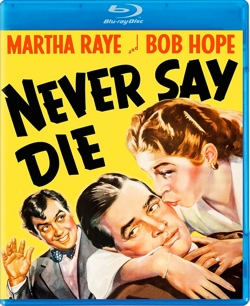
Review of NEVER SAY DIE (1939) (Blu-ray)

Leave a comment

Grade:  B/B-

Comedy

Not rated (would be PG)

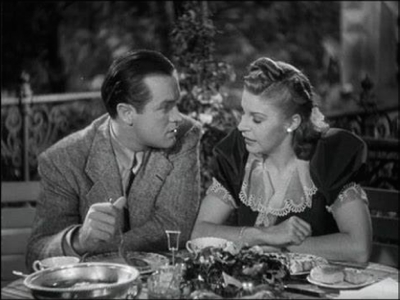
Bob Hope comedies have been entertaining families for generations, perhaps because Hope’s onscreen persona is a likable, somewhat bumbling and cowardly, non-threatening kid version of an adult. Before Hope took his vaudeville shtick on the road with Dorothy Lamour and Bing Crosby, he was paired with “Big Mouth” Martha Raye in a pair of screwball comedies. They had the leading roles in Give Me a Sailor (1938) and Never Say Die (1939), both of which involved multiple possible couples in a comedy where romance for the leads happened unexpectedly.

Never Say Die, which was based on a long-running Broadway play, is the better of the two. The writing is crisper and Raye and Hope (they were billed in that order) relate to each other so wholesomely and with a certain amount of naiveté that you begin to realize Universal might have been hoping they’d become the studio’s version of Judy Garland and Mickey Rooney. They’re not—probably because Raye and Hope don’t quite have the chemistry that Garland and Rooney did. But Never Say Die is still a fairly solid early comedy for both of them.

It’s a tale of two fortunes (and two fortune hunters), as wealthy hypochondriac John Kidley (Hope) gets a diagnosis intended for a dog and thinks he has only a month to live. He decides to put his fiancée, Juno (Gale Sondergaard) on hold while he runs off to the fabled spa of Bad Gaswasser, half hoping for a miracle but more practically wanting to go out in style.

Meanwhile, Texas heiress Mickey Hawkins (Raye) has her own problems. She’s in love with a bumpkin bus driver from home (Andy Devine) and wants nothing to do with Prince Smirnov (Alan Mowbray), to whom she’s been betrothed. Turns out the Prince, like Juno, is also a golddigger.

Screwball comedies from the late thirties and early forties often involved class clashes, disguises and mistaken identities, fast-clipped dialogue, romantic mix-ups, and farcical rotations of characters. This one works as well as it does partly because it was based on a successful play by William H. Post and William Collier Sr.— but also because one of the screenplay writers was none other than Preston Sturges, who elevated the screwball comedy to a sub-genre with his intelligent writing.

Never Say Die never reaches the same heights as the Sturges-directed The Lady Eve or The Palm Beach Story, though, because it doesn’t have the same level of sophistication. It’s a screwball comedy for the masses, without the subtly withering embedded commentary on the upper classes. While it’s also not quite as madcap as another Sturges comedy for the masses—the WWII-era The Miracle of Morgan’s CreekNever Say Die does manage to do a lot with the cliché that “three’s a crowd.”

Never Say Die is directed by Elliott Nugent, whose best film might just be Nothing But the Truth (1941), another one in which he directed Hope, that time opposite Paulette Goddard. Nugent is a storyteller first and a satirist second, and that’s evident in Never Say Die. Though the film isn’t one of the great screwball comedies, it’s still fun enough and wholesome enough for the entire family to watch—if the kids are so inclined.

More

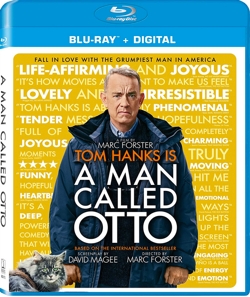
Review of A MAN CALLED OTTO (Blu-ray)

Leave a comment

Grade:  B-

Drama-Comedy

Rated PG-13

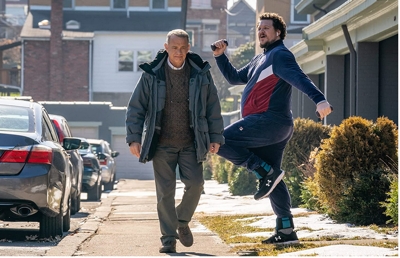
A Man Called Otto (2022) offers another serving of a Hollywood trope we’ve seen many times over: the grumpy widower whose life is brightened somehow by a younger person.

In Finding Forrester the old man was a Salinger-like recluse dogged by a young wannabe writer. In Gran Torino it was a crusty racist war veteran softened by a teenage Lao Hmong refugee. In About Schmidt it was a still-numb and rudderless old coot that found some sense of purpose by corresponding with a Tanzanian boy through a Plan USA program. In Murphy’s Romance it was a widowed druggist who found an unlikely romance with a young single mom. And in Disney’s animated Up it was a gruff old codger with a cane who became stuck with an overly talkative boy scout insisting he help the elderly man in order to earn a merit badge.

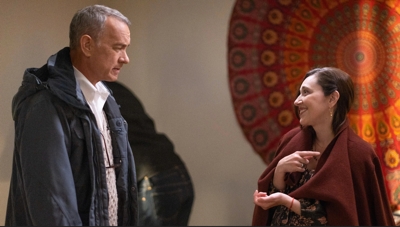
There are many more examples to cite, but this Tom Hanks film tweaks the trope to make it both schmaltzier and darker. Otto (“O-T-T-O”) is so lost and depressed after losing his beloved wife to cancer that he tries to take his life onscreen—multiple times, and by multiple means. If this were a Taika Waititi film, those attempts would have been rendered more comically. But director Marc Forster (Finding Neverland, The Kite Runner) goes for a deadpan blend of dark humor and pathos that doesn’t quite scream “Don’t try this at home,” the way broader humor might have done.

A Man Called Otto is a bit of a Hanks family affair, with Hanks’ wife, Rita Wilson, sharing a producing credit and son Truman playing a younger Otto in flashbacks. In the early going those flashbacks with Sonya (Rachel Keller) keep the film from being a total downer, like a film version of “Bolero” that plays over and over again because Forster tends to overstate Otto’s grumpiness, anger, and unexplained Barney Fife-like mission of guarding a gated cul-de-sac block of row houses in the Pittsburgh, Pa. area. The average viewer will, at some point, think, Okay, I get it. He’s an angry old bird. Move on. The film runs six minutes past two hours, so it could certainly have used a heavier hand in the editing room.

Though Hanks—like Sean Connery, Clint Eastwood, Jack Nicholson, James Garner, and Ed Asner before him—is the focal character and the one who grows and changes, the heart of the film belongs to a pregnant Mexican woman named Marisol (Mariana Treviño), her two young daughters, and her bumbling husband (Manuel Garcia-Rulfo). Without this family, Otto is a dead man, and without Treviño the film is a train wreck. Treviño has been acting for 10 years, but A Man Called Otto has to be considered her breakout role for U.S. audiences. She received no nominations for her performance, but Marisol’s exhuberance, honesty, and literal foot-in-the-door no-nonsense approach to life and relationships model the kind of virtues and values that parents might hope their children could attain. And her onscreen daughters Abbie (Alessandra Perez) and Luna (Christiana Montoya) get the assist. Scenes with them and Otto can seem cloying at times because they’re so purposefully intended to show Otto beginning to soften, but the young actresses channel their screen mother’s knowing enthusiasm along with their own characters’ innocence and naiveté to make those scenes funny.

Is it manipulative? Heck yeah. You’ll find yourself near tears one minute and laughing the next, and you know it’s because most of the scenes seem shot with the sole purpose of moving the audience. Some viewers will resent that, while others will appreciate a roller coaster ride that dips down for much of the first half and climbs throughout most of the second.

But if you give it any thought, Otto’s depression and anger would have been plenty to pull at audience’s heartstrings without the filmmakers adding a seemingly tacked-on side plot about a friendship that dissolved over automobile makes and a parallel sad medical situation. All of that feels like unnecessary piling on. The film would have been helped by fewer downer subplots, fewer trips to the cemetery, and more diverse characters like Malcolm (a transgender kid who had Otto’s wife for a teacher) and Jimmy (a neighbor whose fitness walking style will crack you up). There’s no happy ending here, only a happy transformation.

Is it family fare?  Perhaps, for families with tweens and older children. I’m a film critic, not a mental health professional, but a UCLA study reported that suicide is the second-leading cause of death among people age 15-24, with nearly 20 percent of high school students admitting that they’ve had serious thoughts of suicide. That’s a crazy statistic. Would it help them to watch a depressed and angry man who thinks he has nothing to live for find his way? Parents who know their children might have the answer. I don’t. I do know this: a film isn’t a substitute for professional evaluation and treatment, but it could very well be a starting point for a discussion that could lead to seeking outside help.

Entire family:  No

Run time:  126 min. Color

Studio/Distributor:  Columbia/Sony

Aspect ratio:  1.85:1

Featured audio:  DTS-HDMA 5.1

Bonus features:  C

Includes:  Blu-ray, Digital Copy

Amazon link

Trailer

Rated PG-13 for mature thematic material involving suicide and language

Language:  7/10—Some audience members seem to bristle at the mere mention of “transgender,” and that word is spoken, along with an f-bomb, a few profane God damns, shits, hell, SOB, etc.; turns out that angry old men have a potty mouth

Sex:  1/10—Nothing here, even in flashbacks, which are intended to be tender; just a few kisses

Violence:  3/10— Otto loses it with a honking driver, physically manhandling the guy and threatening him, and there are lesser examples of physicality

Adult situations:  7/10—Aside from the multiple suicide attempts, two of which have him experiencing a near-death vision of his wife, there’s some alcohol and smoking, and one death

Takeaway:  A Man Called Otto is based on a best-selling novel by German writer Fredrik Backman, so given the number of aging male actors in Hollywood I would say there’s a pretty big incentive for future novelists to keep feeding this trope

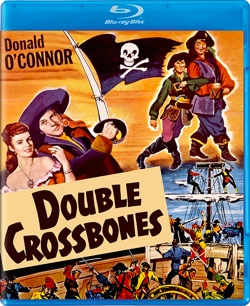
Review of DOUBLE CROSSBONES (Blu-ray)

Leave a comment

Grade:  B-/C+

Adventure Comedy

Not Rated (would be PG)

Today’s audiences know Donald O’Connor mostly as the third wheel in the 1952 Gene Kelly and Debbie Reynolds musical romance Singin’ in the Rain—you know, the “Make ‘Em Laugh” guy?

But O’Connor, a former vaudevillian, also had his share of top billings, starting with 1938’s Tom Sawyer, Detective and continuing with a series of romantic leads and Francis the Talking Mule pictures. Typecast as a mild-mannered nice guy / funny man, he became Universal’s version of Bob Hope. 

Hope made a Western comedy-musical in 1950 (Fancy Pants), and so did O’Connor (Curtain Call at Cactus Creek). Double Crossbones, which followed a year later,is Universal’s answer to the Hope comedy The Princess and the Pirate, in which a bumbling non-pirate finds himself at sea pretending to be one.

While the Hope film is a classic comedy that was frequently televised and released for home video, Double Crossbones got buried somehow—a forgotten little treasure that was recently dug up by Kino Lorber and released for the first time on Blu-ray for family home theaters. Like many films from the ‘50s, it’s a fun costumed romp that’s heavy on light entertainment, with a plot that’s just complicated enough to keep it interesting.

O’Connor is engaging as always, but surprisingly up to the task of shivering a few timbers and slitting a few gullets—far less cowardly than Hope’s characters. He plays shopkeeper’s apprentice Davy Crandall, whose boss turns out to have been selling stolen merchandise bought from pirates. When he’s wrongfully accused of being one of the pirates, Davy ironically takes to the high seas with his newfound sidekick (Will Geer) and bumbles his way across the Spanish Main to the top of the brotherhood (and sisterhood—pirate Anne Bonny makes an appearance).

Double Crossbones is directed by Charles Barton, who would later direct Disney’s The Shaggy Dog (1959), and in both films the comedy is mostly situational. Fans of classic TV will recognize Geer as the grandpa from The Waltons and Hayden Rorke as the suspicious Dr. Bellows from I Dream of Jeannie. And if the actor playing Captain Kidd looks familiar, it’s because Alan Napier would go on to play Bruce Wayne’s butler, Alfred, in the campy sixties Batman series.

There’s action, but the violence is minimal compared to films today.

There’s comedy, but the jokes aren’t as clever or in-your-face as in films today.

There’s drama, but not the melodrama of most films of the era or the anxiety-driven films of today.

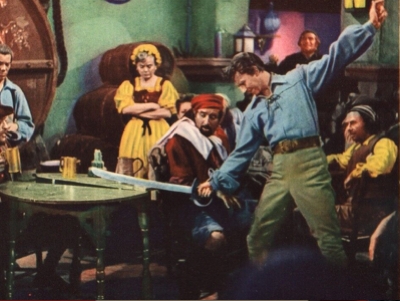
As I said, Double Crossbones is light entertainment, but fun and watchable light entertainment that manages to sneak in a comic dance routine from O’Connor . . . who indeed makes his cutlass-and-pistol-wielding audience laugh.

Will he have the same effect on audiences today? Probably not. Hope’s The Princess and the Pirate (1944) is still the better movie of the two, and The Crimson Pirate, Treasure Island, and Against All Flags are the best of the pirate movies that Hollywood made in the fifties. Everything else falls somewhere in the 2-2 ½ star range out of 4, and Double Crossbones lands near the higher end of those colorful genre films. It’s guilty pleasure pirate booty that still makes for an entertaining family movie . . . perhaps as the warm-up for one of Disney’s Pirates of the Caribbean movies?

Entire family:  Yes

Run time:  76 minutes Color

Studio/Distributor:  Universal / Kino Lorber

Aspect ratio:  1.37:1

Featured audio:  DTS 2.0

Bonus features:  C

Amazon link

Trailer

Not rated (would be PG for some violence)

Language:  1/10—Squeaky clean, but I might have missed something

Sex:  0/10—Tepid, not torrid, love interest, with an occasional embrace

Violence:  3/10—There are swordfights (uh, “Pirate!”) and brawls, but nothing cringeworthy

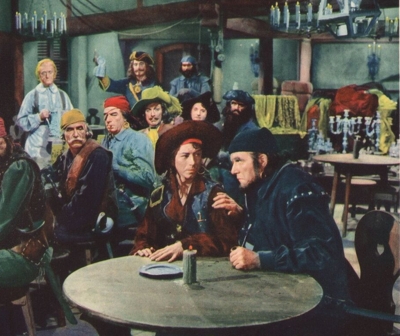
Adult situations:  2/10—Pirates hang out in pubs in Tortuga, and so there’s drinking and smoking in such scenes

Takeaway:  Disney’s Treasure Island sparked several dozen pirate movies in the fifties, more than were made in the previous decades, and Double Cross is an artifact of that era

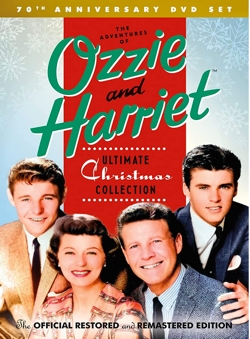
Review of THE ADVENTURES OF OZZIE AND HARRIET ULTIMATE CHRISTMAS COLLECTION (DVD)

Leave a comment

Grade:  B-

TV sitcom

Not rated (would be G)

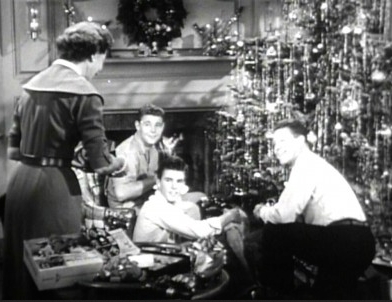
Some Christmas movies are best seen as a run-up to the holiday, while a few special ones become part of our family holiday traditions. Others, like The Adventures of Ozzie and Harriet Ultimate Christmas Collection, are best seen after the letdown of Christmas, when everyone is feeling slightly sad that the extended family that gathered has gone back to their own separate, hectic lives. This two-disc 70th anniversary DVD set is guaranteed to spark nostalgic feelings and thoughts, especially if you’re a fan of classic TV, old enough to remember television before streaming, or feeling nostalgic already about Christmases past.

For 14 years, Americans tuned in to watch The Adventures of Ozzie and Harriet, a sitcom featuring former bandleader Ozzie Nelson, his singer-turned-wife Harriet, and their two boys, David and Ricky. It wasn’t exactly reality TV, but it wasn’t a straight fictional sitcom, either. Their TV house on 822 Sycamore Road was built to look like an exact replica of the Nelsons’ Hollywood home, and the episodes were mostly inspired by the Nelsons’ real lives, especially young Ricky’s, who had a propensity for lowering his head and driving full speed ahead, no matter what was involved.

Like today’s reality shows, the Nelsons played themselves and ad-libbed a certain amount, but there were still scripts that shaped each episode and you always suspected that when the cameras stopped rolling there was a side to this TV family that you never saw. I mean, name two siblings in America other than David and Ricky that never really fought! These guys were as polite to each other as they were to their teachers or parents, whom they addressed as “ma’am” or “sir.” As in “No, ma’am,” or “Yes, sir.” But I can’t think of a better way to get a feel for the Fifties than by watching The Adventures of Ozzie and Harriet, and this Christmas collection will get more play and appeal to a wider audience than the regular episodes because of people’s natural curiosity about how families celebrated Christmas in earlier decades.

Ozzie and Harriet remained pretty much the same throughout this squeaky clean-cut series. Ozzie was the ever-smiling, often bumbling or hapless father who had a good relationship with his wife and sons, and who never raised his voice or got angry.  There seemed to be no secrets with this group, and no topic that was too small or too taboo to bring up. Ozzie always seemed to talk on a level that would have made him a great kiddie show host, especially when he wore those cardigan sweaters that Mr. Rogers later would discover. Harriet, meanwhile, was the always perfectly coiffed and poised matron who was the quiet voice of reason and the apron-wearing expert on social graces.

It’s the boys who did all the changing, Ricky especially. Viewers first saw him as a milder, 11-year-old version of Dennis the Menace–that twinkle-in-the-eye mischief-maker who was basically a good kid but had some pretty definite ideas about how to have fun.  Then, before you knew it, Ricky was caught up in the brand new rock ‘n’ roll craze and dressed like Elvis Presley for one Halloween episode. The pre-teens went nuts. The family had always been musical, with the boys playing multiple instruments, so it was a no-brainer for Ozzie to figure out how to incorporate Ricky’s playing into the show. His first musical outing aired on April 10, 1957, with “Ricky the Drummer.” Quickly, Ricky Nelson became a teen idol, and his father, who had the same sort of control over this show as Lucille Ball and Desi Arnaz had over theirs, found ways to incorporate every single song somehow in the episodes. If there wasn’t a way to work in the song during the show, then it was tacked on at the end, like an epilogue or a bonus scene.

More

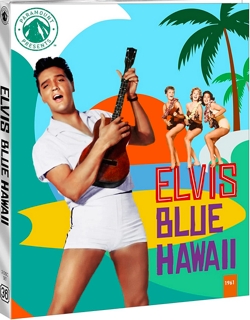
Review of BLUE HAWAII (4K) (1961)

Leave a comment

Grade:  B-
Musical comedy
Rated PG

How do you explain the Elvis Presley phenomenon?  You start with the music. Until Elvis, rock and roll was an evolving synthesis of blues, gospel, jazz, boogie woogie, and western swing. As a type of music that was deliberately dance-oriented, it hooked America’s youths. But Elvis and his “rockabilly” variation made the new music sexy, with hip-swiveling gyrations that caused girls to scream and faint. In no time at all, he became the biggest rock-and-roll star of them all and is still recognized by Guinness as the best-selling solo musical artist of all time, with more than 500 million records sold worldwide.

If you saw Baz Luhrmann’s Elvis you learned that Col. Tom Parker, Elvis’s manager, was exploitive as a promoter. The big money was in movies, so he pushed Elvis away from giving concerts (some of which were banned or caused riots) and instead pointed him in the direction of Hollywood. From 1956-69, Elvis starred in 30 films. Since Elvis wasn’t doing concerts anymore, his movies were the only way fans could actually seehim perform, and they turned out in droves. As a result, Hal Wallis remarked, “A Presley picture is the only sure thing in Hollywood.”

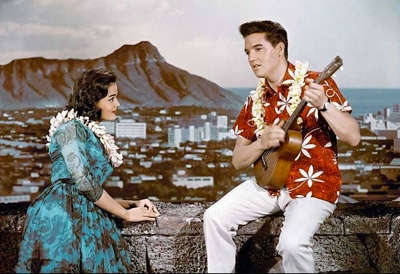
Variety called Blue Hawaii a “handsome, picture-postcard production,” and that’s what it was. With Hawaii becoming the 50th state on August 21, 1959, Americans wanted to see and learn more, and location filming added to the film’s interest—along with a tagline that promised “Ecstatic romance…Exotic dances…Exciting music in the World’s Lushest Paradise of Song.”

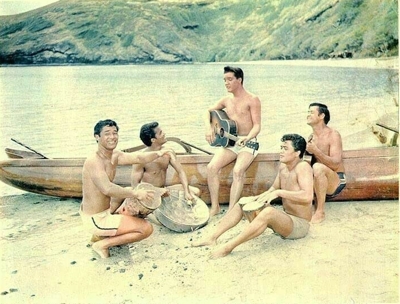
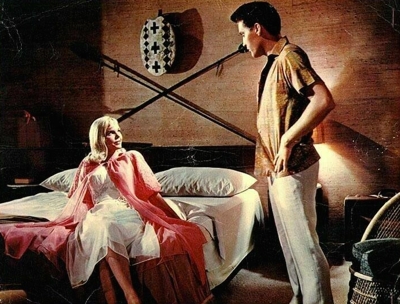
Elvis plays Chad Gates, the son of a wealthy pineapple plantation owner (Roland Winters) and a doting, suffocating mother (Angela Lansbury). Chad dreads seeing his parents after returning from military service and instead goes straight to his beach house to hang with his girlfriend (Joan Blackman as Maile) and local musicians. The premise was genius, since Elvis himself had only recently returned stateside after a stint in the Army. Blue Hawaii was his third post-service film, following Flaming Star and Wild in the Country. Not wanting to work at the family business, Chad instead proposes to start a tourist guide business with Maile. But their first client proves that Chad’s charm is both an asset and a liability as he is tasked with showing a schoolteacher and her four teenage charges a good time.

On a four-star scale, all Elvis movies fall in the 2-to-3 star range, but Blue Hawaii makes everyone’s Elvis Top 10 movie list because of the music. Some of the movies skimped on songs, but this one has 15 of them, including “Can’t Help Falling in Love,” which sold a million copies as a single release. The soundtrack album spent 20 weeks at the top of the Billboard Pop Albums chart. Some of the songs are throwaways, but there are some solid ones here too, like “Almost Always True” (though it’s a bit mind-boggling that Maile would smile and groove along with him as he fudges, in song, the question of whether he was faithful to her). Other upbeat songs that work as something more than soundtrack music include “Rock-a-Hula Baby,” “Beach Boy Blues,” and possibly “Slicin’ Sand,” while Elvis’s renditions of “Hawaiian Wedding Song,” “Aloha Oe,” and “Blue Hawaii” are serviceable enough.

Blue Hawaii finished as the 10th top-grossing film of 1961—so successful that it would provide the formula for many of the Elvis films that followed. The image that these films cultivated was an Elvis meant to be everything to women. A nice guy and a perfect gentleman yet handy with his fists if need be, he also had a slight bad boy or rebellious streak. He was also good with kids and respectful of elders—the kind of guy that, despite the attitude, you could still bring home to meet Mom and Dad. The formula called for Elvis to have at least two women interested in him, at least one cutesy scene with children, one scene with elders, and one scene where he comes to the defense of a woman. And as much as the formula Elvis movie is ridiculed—Top Secret! offers a pretty wicked spoof!—it was still what fans seemed to want. Year after year.

Do the Elvis films still work? Probably not, unless you’re wanting to put yourself in the mindset of young people from the time period, or unless you’re an Elvis fan. If you are, this still ranks in the top third of his films.

This Paramount release contains a superior 4K feature and a Blu-ray version with special features that’s a little grainier.

Entire family:  Yes (pretty wholesome, overall)
Run time:  101 min. Color
Studio/Distributor:  Paramount
Aspect ratio:  2.35:1 widescreen
Featured audio:  Dolby TrueHD 5.1
Bonus features:  C
Includes: 4K Blu-ray, Blu-ray, Digital Copy
Amazon link
Trailer
Rated PG for mild sensuality

Language:  1/10—I didn’t catch anything

Sex:  3/10—Women come on to Elvis, and a girl who’s supposed to be 17 throws herself at him and flirts with others; a woman loses her top in the ocean but nothing is shown and nothing is sexualized

Violence:  2/10—Just a brief restaurant-bar fight

Adult situations:  3/10—One young woman acts up and ostensibly tries to drown herself and is subsequently “spanked” in a rather outdated sequence; flirting and suspicions of cheating

Takeaway:  It’s dizzying reading all of the movies, studio recordings, benefits, and other things that Elvis did, and you can’t help but wonder if he wasn’t so overworked if his personal outcome might have been different

Review of AINBO: SPIRIT OF THE AMAZON (DVD)

Leave a comment

Grade: B/C+
Animation
Not rated (would be PG)

Ainbo: Spirit of the Amazon follows the path of save-the-rainforest themed films like The Emerald Forest (1985, R-rated live action), Ferngully: The Last Rainforest (1992, G-rated animation), and James Cameron’s Avatar (2009). Its footsteps are more indigenous, though, which is a positive.

But having two 13-year-old girls who talk the way adult writers think 13-year-old girls talk, along with some seen-it-before characters and plot points, could narrow the audience. I’ll tell you this, though:  I’ve watched more than my share of animated features from small or start-up animation companies, and this one is far more interesting than any of them—though it too seems aimed at children first and families second.

Rather than spending their budget on big-name voice actors to try to attract an audience, the filmmakers trusted their narration and animation to do the job. It’s beautifully animated, with strong characters and plot.

Directed by José Zelada and Richard Claus, Ainbo is based on a story by Zelada, whose family spent the 1980s living in the Amazon basin, where Zelada heard stories his mother told him that he tried to incorporate into his screenplay. That’s as big of a plus as the film’s environmental and female empowerment themes.

Fittingly, this film about global concerns was an international production, with Tunche Films, Zelda’s Peruvian animation house, handling the bulk of the work in partnership with the Netherlands-based studio Cool Beans and the Dutch animation house Katuni. Produced. Distributed internationally (via TV and DVD) by Cinema Management Group, Ainbo became CMG’s biggest pre-sold animated feature since 2005’s Hoodwinked: The True Story of Little Red Riding Hood.

The dialogue isn’t quite as wink-wink smart as Hoodwinked, and the recognizable elements from other films don’t make any statements about the genre. Adults may or may not find it fun that Zelada decided to channel Disney’s Timon & Pumba in creating his own wild animal characters: a fast-talking armadillo named Dillo and his “spirit animal” pal Vaca, a tapir that, like Disney’s warthog, looks a bit like a big pig. In addition, the warrior-medicine man Atok has a build, features, and personality similar to the antagonist in the animated Road to El Dorado. Meanwhile, family members who have sat through any number of films for children will see two main characters that also seem familiar: the 13-year-old Ainbo, who dreams of becoming a great warrior-hero but is still a klutz, and her 13-year-old “bestie” Zumi, who happens to be the daughter of the chief that also raised Ainbo after her mother passed away. If it wasn’t happening in the Amazon, there would probably be a whole lot more giggling and hugging.

Ainbo is a member of a tribe named after the Candámo River in Peru, near the headwaters of the Amazon. Ainbo and Zumi are a bit more curvaceous than most 13-year-old girls, yet somehow not sexualized. The emphasis is on their friendship and their naiveté. Zumi doesn’t know how to be a king, though her ailing/aging father just passed the responsibility on to her, and Ainbo doesn’t know how to be a warrior.

More

Older Entries Newer Entries