Home

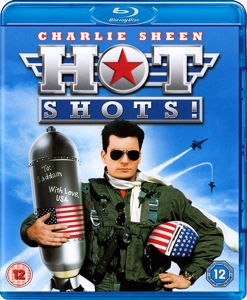
Review of HOT SHOTS! and HOT SHOTS! PART DEUX (Blu-ray)

Leave a comment

Grade:  C+ and B-
Comedy
Rated PG

With Maverick raking in close to $600 million in total gross and drawing praise from critics and viewers, many fans have started re-watching the original Top Gun. But if you’re also a fan of silly parodies, why stop there? You might as well add the Top Gun parody to your home video library. It’s available with the sequel (Hot Shots! Part Deux) on both domestic and imported Blu-rays.

Hot Shots! (1991) was the first parody Jim Abrahams directed without Jerry and David Zucker after the three parted ways following silly successes like Airplane!, The Naked Gun, and Top Secret! As far as parodies go, you should be warned that none of the three found the same level of success as when they worked as a team. But there are still some laughs to be had. Many of the laughs here come from Lloyd Bridges’ performance as Admiral Tug Benson, who is hilariously clueless and never present, though he’s standing right there. Hot Shots! is mostly a takeoff on Top Gun, but other films that get spoofed include An Officer and a Gentleman, 9 1/2 weeks, Dances with Wolves, Superman, and The Fabulous Baker Boys. And Bridges plays a version of a character fans will recognize from Airplane!
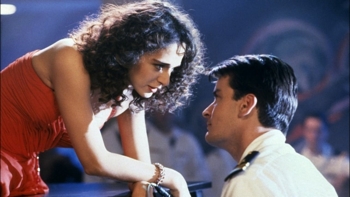
Charlie Sheen does a pretty good job of deadpanning the leather-jacketed, bike-riding role Tom Cruise made famous, with Cary Elwes (The Princess Bride) serving as his main fighter-pilot rival, Kent Gregory. The film follows Harley’s reluctant return to flying—reluctant because, like his father before him, he was responsible for another flier’s death. And things don’t bode well for his new partner, “Dead Meat” (William O’Leary). When things heat up “somewhere in the Mediterranean,” Harley and Kent are picked to join the mission to knock out Saddam Hussein’s nuclear weapons factory, with secondary targets being an accordion factory and a mime school (one of the funnier lines from co-writers Pat Proft and Abrahams). Complicating matters? Harley’s fragile psychological state and an evildoer of the capitalist kind (Efrem Zimbalist, Jr.) who is trying to sabotage the planes for personal gain.

More
Review of THE NAKED SPUR (Blu-ray)

Leave a comment

Grade:  B+/B
Western
Not rated (would be PG)

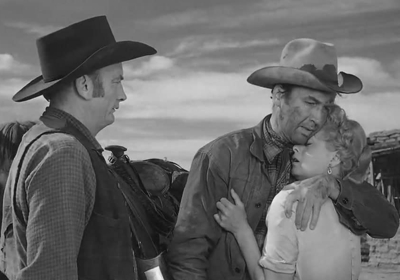
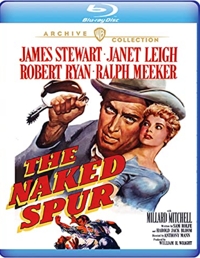
Some people consider classic Westerns to be paint-by-numbers, but the numbers are pretty darned good for Jimmy Stewart and director Anthony Mann. Of the 18 Westerns that Stewart appeared in, five were made with Mann, and four of those rank among Stewart’s top eight. Not bad, considering that Stewart also made four Westerns with the legendary John Ford and one with genre wizard Delmer Daves. The Naked Spur (1953) was the third film that Stewart and Mann made together, following Winchester ’73 (1950) and Bend of the River (1952) and preceding The Far Country (1954) and The Man from Laramie (1955).

Winchester ’73 is the best of the bunch, but The Naked Spur isn’t far behind. Mann got some great performances out of Stewart because he encouraged him to play characters that went against type. Sure, they’re basically nice guys, but they’re not meek, they’re not befuddled, and they’re not so darned goody-goody sure of themselves all the time. Under Mann’s direction, Stewart played characters with a tormented past that is kept tightly lidded, with occasional breakthroughs—rougher, rawer, darker characters than people were used to seeing, yet still one that’s likable, whom you root for and want to see win.   

Mitchell and Stewart

In terms of storytelling, Mann manages to have it both ways. He showcases the raging rivers and formations of the Rocky Mountains and San Juan Mountains, while also zeroing in on five characters who, because they are together the whole time, feel as if they could be on a stage, the drama is so contained and psychological. The assist for making the scenery feel like a sixth character goes to cinematographer William C. Mellor, who won Oscars for his black-and-white work in A Place in the Sun and The Diary of Ann Frank and captures both the stage-like intimacy on the trail and also the grand location scenery in glorious Technicolor.

More

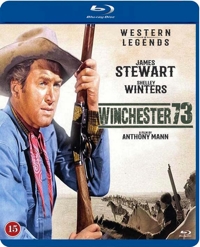
Review of WINCHESTER ’73 (1950) (Blu-ray Import)

Leave a comment

Grade:  B+
Western
Not rated (would be PG)

One of Anthony Mann’s most highly regarded Westerns, Winchester ’73 feels like the perfect film for this year’s Fourth of July celebration. Not only does it take place around the Fourth and show a 100-year celebration in that most fabled of American towns, Dodge City, but it also helps to explain the paradox of America’s gun-crazy culture.

The 1950 film stars James Stewart in one of his best Westerns . . . and that’s saying something, because he’s made quite a few good ones. Winchester ’73 was the first that Stewart made since 1939’s Destry Rides Again, and it started a string of Westerns he would star in over the next half-decade:  Broken Arrow, Bend of the River, Carbine Williams, The Naked Spur, The Far Country, and The Man from Laramie. Five of those films were with director Anthony Mann, whom The Guardian called a “master of the genre.”

Winchester ’73 is set just after the battle that was popularly known as Custer’s Last Stand. Indians now have repeating rifles, thanks to gunrunners who have no qualms about selling weapons that will be used on settlers and U.S. Cavalry . . . as long as they can make a tidy profit. The Indians that wiped out Custer and his command had better rifles than the cavalry, and America was just learning about Little Bighorn shortly before the nation’s big Centennial celebration. It threw a damper on celebrations in the East, but not in Dodge City, where a genial Wyatt Earp confiscates the guns of newcomers Lin McAdam (Stewart) and Frankie “High-Spade” Wilson (Millard Mitchell, who would play the big studio boss in Singin’ in the Rain). Lin is tracking down Dutch Henry Brown, with whom he has a personal beef—one that will result in gunplay. As they reluctantly hand over their weapons, the audience is shown the inside of the lawmen’s office that’s completely packed with rifles and handguns and gun belts full of ammunition. Earp explains, it’s impossible to keep law and order in a wild town like Dodge if they allow people to keep their guns. “You’ll get them back when you leave town,” he says.

More

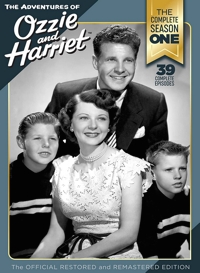
Review of THE ADVENTURES OF OZZIE AND HARRIET: COMPLETE SEASONS ONE & TWO (DVD)

1 Comment

Grade:  B-/B
TV Comedy
Not rated (would be G)

Until It’s Always Sunny in Philadelphia pushed past them in 2021, with its 14 seasons The Adventures of Ozzie and Harriet held the record for longest-running live-action television sitcom. And it still holds the record for most live-action sitcom episodes, with 435 filmed between October 1952 and April 1966. 

That’s pretty amazing, considering that the rival family sitcom I Love Lucy got all the love back in the day. Lucy earned 25 Primetime Emmy nominations and eight wins, while Ozzie and Harriet got justthree nominations and no wins. Lucy became the most watched TV show in America for four out of its six seasons, while Ozzie and Harriet managed to crack the Nielsen Top 30 just once (in 1963-64).

Call it another case of slow-and-steady wins the race. Lucy relied on manic, slapstick situations and comedy of character, while Ozzie and Harriet offered the kind of gentle everyday situational family-life comedy that made The Adventures of Ozzie and Harriet a popular radio show from 1944-54. Looking back, it was as close as early classic TV programming came to the kind of loosely scripted reality shows that are popular now. Almost all of the episodes were scripted variations of real incidents from the lives of the Nelson family:  father Ozzie, mother Harriet, and sons David and Ricky. The opening title shot of a home exterior was actually the Nelsons’ home, and though interior shots had to be filmed on a soundstage, producers meticulously recreated the look of the interior of the Nelsons’ home. Ozzie was a stickler for realism, and the plots that viewers watched were often reenactments of family incidents or situations, with Ozzie directing 382 episodes and also writing 261 of the show’s scripts. The boys were 16 and 12 years old when the TV show began, so America watched David and Ricky grow up.

More

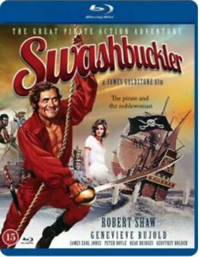
Review of SWASHBUCKLER (1976) (Blu-ray)

1 Comment

Grade:  B+
Action-Adventure/Comedy
Rated PG (see below)

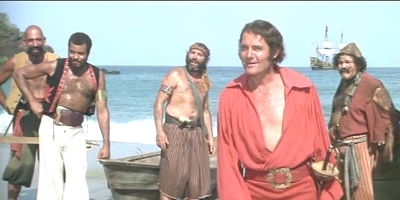
Pirates of the Caribbean fans who are looking toward the future and wincing at the prospect of Margot Robbie replacing Johnny Depp might find some comfort in looking backwards. I didn’t know it until I watched this all-region Blu-ray import, but the 1976 pirate movie Swashbucker was an obvious influence on Disney’s theme-park-ride-turned-film-franchise. 

The first third of Swashbucker has the same comic tone and breakneck action of the first Pirates of the Caribbean film. The basic premise for the opening scene is here too:  Drums beat as a pirate is about to be hanged. But then a pirate ship comes around the corner, a pirate captain swings onto the hanging platform to rescue his second in command, and as they escape you almost expect one of them to say “You will always remember today as the day you almost caught . . . Nick Debrett, who sails with Captain Ned Lynch.”

Elements of the basic premise and structure are here, too. The kindly and fair governor of Jamaica has been deposed by an ambitious man and now is imprisoned. His daughter would have been as well, had she not fought and escaped. After that the three main characters who interact and drive the film are Jane Barnet (Genevieve Bujold), Nick Debrett (James Earl Jones), and Ned Lynch (Robert Shaw)—just as Disney’s films would depend upon the triangle of Elizabeth Swan, Will Turner, and Jack Sparrow.

More

Review of TURNING RED (Blu-ray)

1 Comment

Grade:  B+
Animation
Rated PG

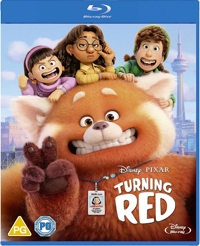
Turning Red is film that can seem uncharacteristically strident for Disney-Pixar. You’ve already heard the complaints: it deals with a young girl’s first menstruation, it “glorifies” juvenile disobedience, and the main character can be a bit much to take.

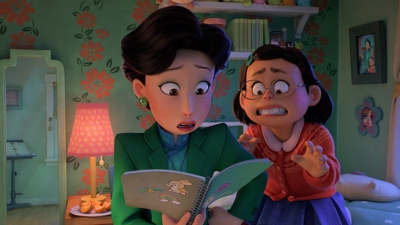
The first period criticism is way overblown, because it’s really just a mother’s assumption that briefly pops up. When Meilin “Mei” Lee is embarrassed, she does what many kids do:  she turns red. But her red is a giant version of the red panda.  It confuses her. It frightens her. She tries to hide it, especially from her over-protective and aggressive mom. That’s when Ming assumes her daughter is having her first period, but quickly learns it’s an animal transformation instead. 

So the “period” thing is nothing more than a brief blip on the radar screen. Parents worried about young children “getting an education” prematurely can relax. It’s subtle enough that the very young ones won’t even pick up on what’s happening, and those old enough to perceive what Meilin’s mother is talking about are old enough to ask their parents about it. Or maybe the parents would prefer to do things the old-fashioned American way and refrain from talking about something until it actually happens? You know, like Stephen King’s Carrie in the shower, who loses her mind thinking she’s dying?

I personally think any film that give families the chance to talk about important life changes and events is a good thing, and that includes the minutiae. In Turning Red, for example, Meilin has a crush on a boy, and that might be a conversation-starter for parents to talk to their children about crushes.

As for glorifying juvenile disobedience, I’m going to go out on a limb here and say that Meilin isn’t the first adolescent to sneak out of the house. I mean, even Disney’s Pollyanna did that, and her name is always equated with a goody-goody attitude.

More

Review of LICORICE PIZZA (Blu-ray combo)

1 Comment

Grade:  C+/B-
Comedy-Drama
Rated R

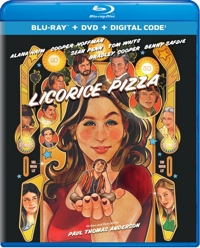
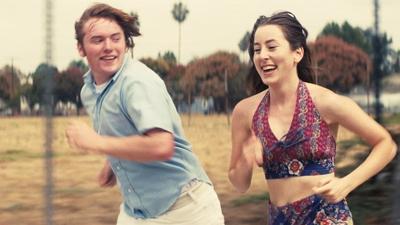
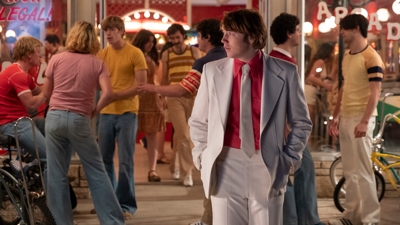
Sometimes hype can be the kiss of death. It was for me, as far as Licorice Pizza was concerned. All the way through this self-consciously quirky film from Paul Thomas Anderson (Boogie Nights), I kept getting wannabe Almost Famous vibes but found myself thinking, when is this going to end?

That’s not the reaction I expected, given that the coming-of-age film Licorice Pizza, even at a sprawling 133 minutes, was the darling of the 2022 awards season. It earned Oscar, BAFTA, and Golden Globe nominations for Best Picture and Screenplay and won Best Screenplay at the BAFTAs. Licorice Pizza was also touted as the first MGM picture produced and distributed since Rain Man to earn a BP Oscar nod. Smaller film critics associations loved it too, but I kept wondering if maybe that was proof of how starved everyone has been for another small pebble to make a big splash, as Little Miss Sunshine, Napoleon Dynamite, and Juno did.

I didn’t find myself as engaged by the characters or their situation as I wanted to be, and the quirkiness level was ramped up so high that it all felt absolutely contrived. As for the plot, Little Miss Sunshine, Napoleon Dynamite and Juno all had strong narrative trajectories, by comparison. Licorice Pizza felt meandering, but not in a way that seemed terribly organic. Small annoyances kept popping up, like why was one character arrested but then quickly released? Why was one character’s world so random? And why wasn’t the developing “love” more perceptible in its development?

Ninety-one percent of Rotten Tomatoes critics loved the film, as did critics on the aggregate site Metacritic, which scored it a 90 out of 100. In other words, just about every critic out there says I’m wrong. If I am, so is the rest of my family, who also wanted more than the quirkiness Licorice Pizza had to offer. More humor, maybe. Or more believable attraction. Or a plot that seemed less aimless. Or a more tightly edited story.

More

Review of UNCHARTED (Blu-ray)

1 Comment

Grade:  C+/B-
Action-Adventure
Rated PG-13

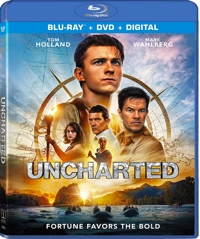
I’m a big fan of the Indiana Jones and National Treasure movies, so I wanted Uncharted and its treasure hunt to have the same energy level and quality.

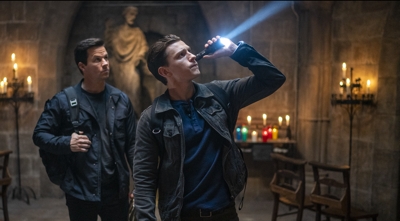
But it doesn’t. The writing isn’t as crisp, the plotting isn’t as complex-yet-understandable, and the whole film tonally just doesn’t feel as if the writers could agree on the level of tongue-in-cheekiness vs. serious adventure vs. video game style. Then there’s this nagging feeling that the stars aren’t having as much fun as they should be, all things considered. Tom Holland is engaging. Mark Wahlberg is engaging. But they feel separately engaging, and not consistently so.

When it hit theaters in 2022, Uncharted quickly became the fourth highest grossing film of 2022—which, given the mixed reviews, pretty much hints at how badly fans wanted to like this film in spite of what critics may have been saying.

I mean, when you cast Holland fresh off his latest Spider-Man success and pair his built-in naiveté and nice-guy affability with someone like Wahlberg and the world-weary cynicism he seems to drag behind him like a bag of complaints, you’d think something more fun would happen—or at least more than what the film provides.

You almost feel like the film is in trouble in the early going when the attempt to establish a backstory for Nate (Holland) feels a bit clumsy and confusing. So how is it that orphans Nate and brother Sam are somehow accomplished enough to try to steal a map from a Boston museum and can come and go as they please? And why, when the orphanage kicks Sam out and he leaves through a window, doesn’t brother Nate go with him if they’re legitimately a treasure-hunting team with that kind of capability? Whether Sam is using or protecting his brother, the sequence felt rushed and paint-by-numbers.

More

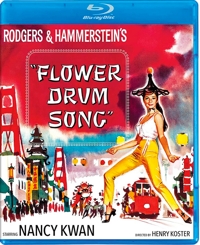
Review of FLOWER DRUM SONG (Blu-ray)

Leave a comment

Grade:  B-
Musical
Not rated (would be PG)

I am not Asian or Asian American, so I’m not in a position to comment on what has lately been called “outdated cultural stereotypes” or “depictions.” But I can spot a song in this overlooked Rodgers & Hammerstein musical that feels more like it came out of South Pacific than San Francisco’s Chinatown, where this film version of the Broadway play is set. And I can look up who’s singing and see that, surprise, it’s the same woman who played Pacific Islander Bloody Mary in that earlier R&H musical. And that actress was of African and Irish American descent—not Asian American. 

Hollywood has a history of casting white. Marlon Brando as Japanese? That’s what audiences were supposed to believe when he played one of the leads in The Teahouse of the August Moon (1956). From 1957-58, TV’s The New Adventures of Charlie Chan featured Irish American actor J. Carrol Naish as the Chinese American detective. Of the 12 billed actors in The World of Suzy Wong (1960), only five in that “world” were Asian. In 1965, a remake of Genghis Khan replaced the laughably cast John Wayne from an earlier film with Omar Sharif in the title role—but Sharif was Egyptian. Even as late as 1980, British actor Peter Sellers starred as Fu Manchu in The Fiendish Plot of Dr. Fu Manchu (1980). All of which is to say, Hollywood may have experienced a come-to-Jesus revelation when it came to casting whites as Native or African Americans, but they have been much slower to do so with Asian roles.

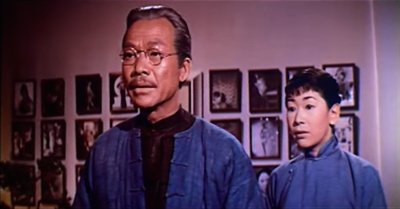
So it must have come as a pleasant shock to audiences that Flower Drum Song (1961), apart from Juanita “Bloody Mary” Hall, featured all Asian actors in the main roles—especially since that same year Breakfast at Tiffany’s presented Mickey Rooney as a buck-toothed nearsighted Asian caricature worthy of a WWII propaganda film. Also to its credit, Flower Drum Song was based on a novel by Chinese American C.Y. Lee. But while the film gets one thing right—telling an Asian American story from an Asian American perspective and using mostly Asian American actors—it lapses into the kind of flat characterizations that tend to accompany any attempt at humor. Often, unfortunately, that translates into outdated cultural stereotypes. Veteran character actor Benson Fong, who was forced into that straitjacket when he played Charlie Chan’s “Number 1 son,” is called upon for such service. And an outdated and corny routine featuring the children ends up in a See, hear, speak no evil pose.

More

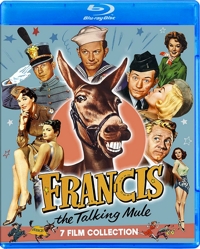
Review of FRANCIS THE TALKING MULE 7 FILM COLLECTION (Blu-ray)

Leave a comment

Grade:  B-/C+
Comedy
Not rated (would be G)

If you’re receptive to older black-and-white movies, this wonderful new Francis the Talking Mule 7 Film Collection from Kino Lorber will strike you as surprisingly entertaining. The three-disc set features all of the Francis movies that were popular in the ‘50s, with an audio commentary for each film. I’ve reviewed thousands of films since 2000, and it says something that I could binge-watch the first five of these light comedies without wanting to skip ahead or quit.

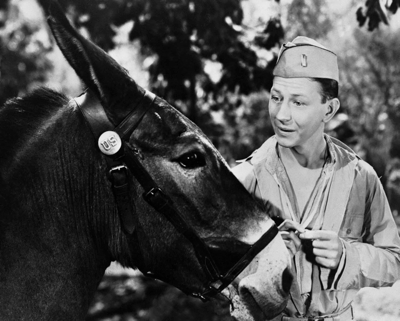
There’s a formula at work here, but it’s still fun seeing it play out:  Francis only talks to Peter Stirling (Donald O’Connor), unless Peter is really in a jam. Then Francis will speak to others, reminding them that if they say anything about it to anyone he’ll remain quiet and they’ll end up in the “psych” ward with Peter, who is such a gosh-darned honest guy that he has to give credit where credit is due. Which is to say, Francis doesn’t just talk. He’s a know-it-all, whether it’s the location of the enemy, the time of a planned raid, which horses will win at the racetrack, or who killed Cock Robin. 

Francis

Like the Smithsonian Institution, “America’s attic,” there’s a surprise to be found at almost every turn. Maybe the biggest surprise is O’Connor, who’s most famous for being the third wheel to Gene Kelly and Debbie Reynolds in Singin’ in the Rain. As the likable Peter he plays everybody’s best friend, modeling character traits like honesty (to a fault), earnestness, humor, loyalty, decency, and dependability. He also displays a refreshing naiveté that makes him sometimes innocent or clueless but never stupid. “Did they take x-rays of your head?” “Yes Sir.” “And what did they show?” “Nothing.” O’Connor stars in all but the seventh film, which features Mickey Rooney—Universal’s first choice for the lead. But seeing them both in the role, I think Universal was fortunate that things turned out as they did. As much as the mule, O’Connor is responsible for the series’ success.

People who served in the military, fans of classic television, and children young enough to be tickled by the situations a talking mule can get into (and out of) will be especially delighted by the Francis films.

Four of the seven films have a military backdrop and were filmed with the cooperation of the Army, Navy, and Women’s Army Corps. Veterans and military enthusiasts will appreciate seeing vintage shots of military academies, bases, training, and mishaps. The word “SNAFU” is an acronym for “situation normal all f***ed up,” a description and attitude that has been used by generations of service men and women to describe the military. Veterans will smile at some of the subtle jokes about military protocols and officers, because Francis was based on a book of stories written by David Stern while he was at Officer Candidate School in Hawaii. In these stories, which were published in Esquire, he created a talking mule—a “jackass” that allowed him to use the pejorative to satirize the people in the Army who were running things. “Francis is afraid to talk. He’s worried if the Army finds out they’ll send him to officer’s candidate school.”

More

Older Entries Newer Entries