Home

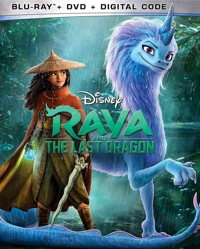
Review of RAYA AND THE LAST DRAGON (Blu-ray combo)

Leave a comment

Grade:  A-/B+
Animation
Rated PG

Some twelve weeks after its theatrical debut, Raya and the Last Dragon is the third highest grossing film in the U.S., behind Spiral and Wrath of Man. With a domestic box office of $49.3 million and another $60.6 million international box office revenue, it’s exceeding expectations, and I’d like to suggest one reason why:  Disney animators always seem to up their game, and they did so again with Raya.

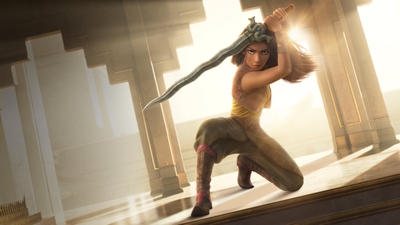
The martial arts swordfights in this 59th full-length feature from Disney are the most accomplished I’ve seen so far in the world of animation—presented at a speed you’d normally encounter in the best Ip Man, Bruce Lee, and Jackie Chan movies. Combine that with gorgeous backgrounds and character animations, and Raya and the Last Dragon is another solid effort from the House of Mouse—though the plot itself can seem a bit familiar.

Set in a dystopian fantasy world, Raya and the Last Dragon begins with the backstory of a fictional land (Kumandra) where dragons and people once thrived together until evil spirits (that look a bit like the smoke monster on Lost)terrorized the land and turned dragons and people to stone—except for some people and one dragon, who focused the magic she and other dragons had on a single gem. But you do the math: one gem and five tribes? Of course they fight over it, and the pieces are eventually scattered among those tribes. Hundreds of years later, the Druun return and wreak havoc on the now-separate sections of what was once Kumandra. Raya is the daughter of Chief Benja of the Heart tribe, while her once friend and now rival, Namaari, is the princess of the Fang tribe. But like any fantasy, the story itself seems more complicated than the visual action. Relax and enjoy this simple quest story, as Raya tries to find the last dragon, recover the jewel pieces, and defeat the Druun once and for all. Unless Namaari beats her to it.

Give Disney credit, though, for creating strong female characters without drawing attention to it, without adding a Prince or love interest, and for not making a big deal out of adding two more princesses to the merchandising Pantheon. Give them credit, too, for giving Asians and Asian Americans feisty princesses that look like them—even if Disney took a little flak (what else is new?) for not featuring enough South Asian actors among the voice talents.

More

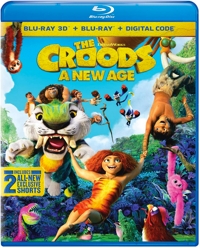
Review of THE CROODS: A NEW AGE (Blu-ray combo)

Leave a comment

Grade: B-/C+
Animation
Rated PG

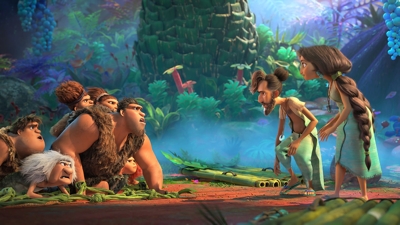
They say you’re only tall or short compared to who’s standing alongside you, and the Croods seem a little cruder in The Croods: A New Age.

When this prehistoric family meets the Bettermans, who live a better existence that feels like a cross between the Garden of Eden and The Flintstones’ Bedrock, the Croods’ lack of couth really stands out. Kind of like the Clampetts in swanky Beverly Hills. In fact, what could have been a clever commentary on evolution instead becomes more of a familiar poor/rich, rural/urban comedy.

DreamWorks animators have produced another visual feast, with typically stellar animation. But, as is often the case with full-length features that come from big studios who don’t have a mouse and a history of animation evolution that traces back to the beginning of cartoon time, there’s something just slightly off.

It’s not a bad movie, mind you, and the kids actually will love this one because of the bright colors, the crazy characters, and the manic antics that tend to dominate. There are some fun creatures and thrill-ride sequences. But adults may find themselves trying to put their finger on what’s missing—what keeps this okay-to-good movie from being a truly good one.

Endearing characters? Maybe. I don’t know if it’s the way they’re drawn, the dialogue, or the way the actors were directed, but everyone seems to be overwrought this outing and there’s as much constant jabbering and conflict as there is in a typical Real Housewives episode.

Heart? Possibly. There’s a touching family-first love-who-you-are message embedded here, but sometimes the decision to DO EVERYTHING BIG AND LOUD AND MANIC short circuits the feelings that those messages are intended to create. The warm-and-fuzzy moment feels tacked on when everything else is 50 Shades of Crazy. More

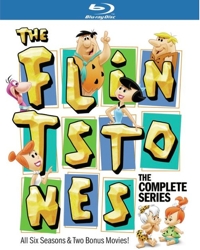
Review of THE FLINTSTONES: THE COMPLETE SERIES (Blu-ray)

Leave a comment

Grade: B+
Animated TV Series
Rated G

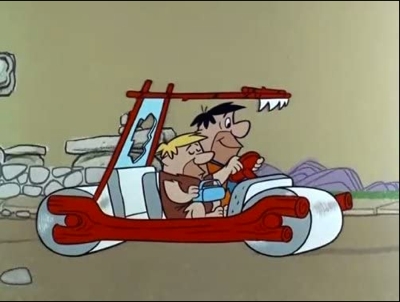
Crab lawn mowers, a dinner of roast pterodactyl leg, triceratops wheelbarrows, birds using their wings to cover red and green stoplights to coordinate traffic—it’s all part of an average day in Bedrock, the pre-historic community where one of TV’s most famous animated families lived from 1960-66. Fred Flintstone was a blue-collar working stiff, the operator of a dinosaur-powered crane at the Rock Head & Quarry Cave Construction Co. Like everyone else, when the end-of-day whistle blew, he hurried home in a foot-powered car so he could be with his wife, their pet “dog” that was really a small dinosaur, and later, a baby girl named Pebbles who would inspire a fruity breakfast cereal.

As the first prime-time animated TV series, The Flintstones was both beloved and wildly profitable through six seasons and two spin-off full-length movies. All six seasons, both films, and the original pilot and bonus features are included in this Complete Series set that really has a lot of visual pop because of the high-def transfer to Blu-ray. It makes all the small details even more pleasurable—like the paintings hanging in the home that are in the style of cave drawings.

Fans of the all-time most popular cartoon, The Simpsons, will recognize that the show about America’s “nuclear family” owes a debt to The Flintstones, which TV Guide named the second all-time most popular cartoon—one that earned a primetime Emmy nomination in 1961 for outstanding TV comedy. Simpsons fans will get déjà vu from the beginning as they watch a work-to-home title sequence that ends with a garage door closing and a character heading for the furniture in front of the TV. The Flintstones was also big on pop-culture allusions and celebrity guest stars—all staples of the later Matt Groening series. Instead of Cary Grant, Ann-Margret, Tony Curtis, and James Darren, audiences encountered Cary Granite, Ann-Margrock, Stony Curtis, and Jimmy Darrock. TV’s Bewitched stars make an appearance, and the Hanna-Barbera writers had fun spinning versions of shows like My Favorite Martian (with the appearance of a little spaceman called The Great Gazoo) and The Munsters and The Addams Family (with their bizarre family The Gruesomes).

The Flintstones also trailblazed the half-hour animated cartoon that took its format from TV sitcoms and would be the lifeblood of The Simpsons years later. The stone-age gadgets were fun for the kids, but adults also enjoyed seeing the Rube Goldberg contraptions that were a part of daily life for this “modern Stone Age family.” Even more fun for adults was the but even more fun was Hanna-Barbera’s riff on the classic ‘50s sitcom The Honeymooners.

The Honeymooners starred Jackie Gleason and Audrey Meadows as the Cramdens, a New York City couple who palled around with their neighbors, the Nortons (Art Carney and Joyce Randolph). Here we get Fred and Wilma Flintstone, whose neighbors and best friends are Barney and Betty Rubble. As with The Honeymooners, many an episode revolves around a mild battle of the sexes and mishaps that Ralph Cramden and Fred Flintstone get themselves into. Like Ralph, Fred is a bully and a loudmouth, but he’s easily put in his place. In the #MeToo era it’s probably important to mention that the beefy and blustery Ralph, a bus driver by trade, was forever shouting and often threatened to sock his wife. He never did, of course, because Alice knew, as Wilma Flintstone did, that her husband was all bark and no bite. If there’s any hitting that happens, it’s more often the wife or someone else that administers the blow, all for comic effect, of course. The Flintstones softened the gender sparring of The Honeymooners for family audiences, but the sitcom formula was still apparent in every half-hour episode. More

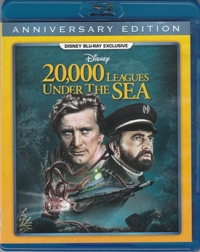
Review of 20,000 LEAGUES UNDER THE SEA (1954) (Blu-ray)

Leave a comment

Grade: B
Adventure
Rated G

20,000 Leagues Under the Sea is available now on DisneyPlus, but since it came out on Blu-ray last year as a Disney Movie Club exclusive copies are also turning up on eBay now, if your family is building a Blu-ray library.

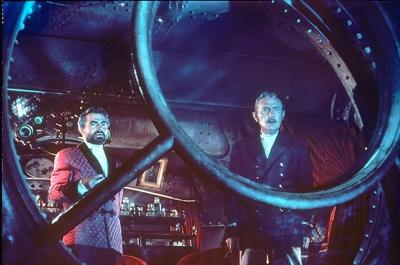
With Treasure Island (1950) and 20,000 Leagues Under the Sea (1954), Disney made it clear that they were going to be big-time players in the live-action filmmaking business. How big? Well, to do the Jules Verne undersea adventure justice, Disney decided to shoot it in CinemaScope and Technicolor, which was so brand new that this was one of the first major films to get the vivid colors and ultra-widescreen treatment. Disney also spent a half-million dollars to reshoot the famous squid scene in order to get it right, and back in the 1950s that was a lot of Mickey money.

But it paid off. Anyone who’s been to one of the Disney theme parks knows that it’s all about attention to detail, and that holds true with the live-action adventures as well. It’s also about family and a certain level of wholesomeness. Though 20,000 Leagues Under the Sea features sci-fi elements, slave exploitation, and a mad captain who wants to destroy humanity to save it, this remarkable adventure is perhaps even more remarkable because it’s rated G. Ships explode and it’s known that lives are lost, but nothing graphic is shown except for that epic giant squid battle, a shark encounter, and a large- and small-scale fight where one main character is shot. Apart from several characters smoking, the use of the word “hell,” one character getting drunk, and some outdated cultural depictions of cannibals, it’s all pretty sin-free. Yet it remains exciting nearly 70 years later.

Verne was a visionary who was ahead of his time, but that also makes it last into the future, where some of his predictions came true and others remain to be discovered or implemented. It’s quite fascinating climbing aboard the uranium-powered Nautilus and witnessing how he’s able to derive everything from the sea. More

Review of GEORGE OF THE JUNGLE (1997) (Blu-ray)

Leave a comment

Grade: B
Comedy
Rated PG

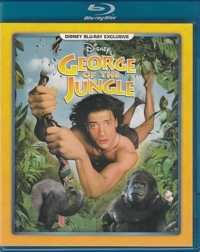
Not long ago Disney Movie Club released an exclusive Blu-ray version of the live-action adventure-comedy George of the Jungle, and even if you’re not a member there are copies to be had on eBay—many of them reasonably priced and still in shrink-wrap

Popular when it debuted in 1997 ahead of the original Jay Ward cartoon’s 30th anniversary, George of the Jungle grossed close to $175 million worldwide. It features a rare blend of comedy: humor that appeals to kids, but also humor that’s clever enough for adults. Fans of the cult-classic ‘60s TV series will appreciate that director Sam Weisman got the tone and treatment right. It’s one the most entertaining live-action film versions of an animated TV series—though admittedly that’s kind of a backhanded compliment, given such feature-length disappointments as The Flintstones, Casper, Dudley Do-Right, Fat Albert, and Inspector Gadget.

Still, I wouldn’t pay attention to the 5.5 out of 10 rating that close to 80,000 readers gave it at the Internet Movie Database, and I’d ignore the 56 percent “rotten” critics’ rating at Rotten Tomatoes. Legendary reviewer Roger Ebert was more on the money when he pronounced George of the Jungle a three-star movie (out of four). As he wrote when it was first released, this live-action film starring Brendan Fraser (The Mummy) “tries for the look and feel of a cartoon,” with the results being that it’s “sort of funny some of the time and then occasionally hilarious.”

It’s true. George of the Jungle is amusing throughout, but then you get these surprise laugh-out-loud moments—so many that I’d have to say the film borders on being consistently funny. There are clever one-liners, pop-culture allusions, running gags, pratfalls and physical comedy (even a banana peel joke), and yes, some mild scatological humor. And don’t worry about outdated cultural jungle stereotypes. They’re met head-on, and it’s the “native bearers” and super-intelligent talking Ape who get the last laugh.

After an animated title sequence that features the theme song and establishes the backstory of how George came to be raised by apes—and is a little clumsy when it comes to vine-swinging (“Watch out for that tree!”)—the film switches to live action, melding Jay Ward’s original characters, theme song and concepts with the Tarzan/Greystoke legend. More

Review of THE SECRET GARDEN (2020) (Blu-ray combo)

Leave a comment

Grade: B-
Family Drama
Rated PG

There seems to be just one rule for adapting a classic of children’s literature: stay close to the book. It’s a wonder more filmmakers don’t follow that unwritten rule.

The Secret Garden is a case in point. The 1949 release starring Margaret O’Brien earned a 7.5 out of 10 from audiences at the Internet Movie Database, while a 1987 TV version and 1993 big-screen remake were equally popular (7.2 and 7.3, respectively). All three films were faithful to the book. But a 2017 steampunk treatment got the cold shoulder (4.5), and two 2000 faquels (fake sequels)—Back to the Secret Garden and Return to the Secret Garden didn’t fare much better, with scores of 5.7 and 5.3.

Is it any wonder that audiences tagged this 2020 “reimagined” incarnation with a 5.6 rating? The weight of audience expectation was dropped like a piano from a rooftop on an otherwise beautifully filmed version, most likely because it dared to change things a bit.

Frances Hodgson Burnett’s 1911 novel followed a sickly 10-year-old girl who lived in India with wealthy parents that both ignored and spoiled her. Cared for by Indian servants, she awakened one day to find her parents dead of cholera and the staff long gone. Eventually she was sent to England to live with a hunchbacked uncle and his servants in an isolated mansion on the moors. As it happened, Archibald Craven had sealed off a private walled garden after his wife had died there. But Mary grew ever curious about the garden and also the cries she heard in the house at night. Eventually she found the key that unlocked the garden, hung out with the maid’s younger brother, and discovered a cousin she never knew she had, shuttered away in a hidden room because of a spinal illness that had kept him bedridden. He quickly became a diversion for Mary, who took him (secretly) to see the secret garden.

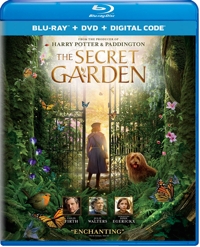
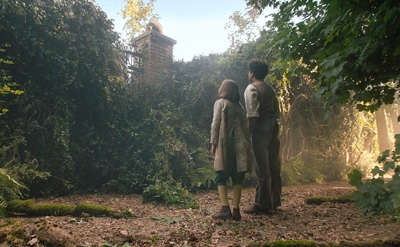
Writer Jack Thorne and BAFTA-winning director Marc Munden decided to mix things up a bit. They made the garden magical. Plants are ginormous, and far more tropical More

Review of THE GREY FOX (1982) (Blu-ray)

Leave a comment

Grade: B+
Western-drama
Rated PG

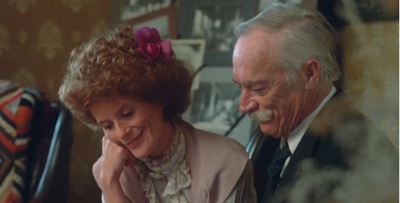
The Grey Fox is the kind of Western that holds some appeal for people who aren’t fans of the genre, because this independent Canadian film is about as far as you can get from the formula Western. Sure, there’s a little gunplay and a few robberies, but this 1982 film is a quiet Western, a character-based film—one that feels like a full-movie version of the “Raindrops Keep Fallin’ on My Head” montage from Butch Cassidy and the Sundance Kid. It’s a feature that feels every bit the indie film. There’s only the slightest bit of violence, sex, and language, with the focus on a grandfatherly figure that’s instantly sympathetic.

A number of revisionist Westerns—including Butch and Sundance, The Man Who Shot Liberty Valance, The Shootist, and The Wild Bunch—have embraced an elegiac tone and offered an aging hero who also stands as a symbol for the passing of a romantic Old West that’s now consigned to history. But The Grey Fox stands alone as a story that offers a character that’s stronger than the symbol he was meant to be. And it’s based on a true story, too.

Former stuntman Richard Farnsworth is compelling as the low-key, soft-spoken Bill Miner, who in Canada became as famous and oddly beloved by average people as Jesse James was south of the border. James robbed banks and Miner robbed the railroad—two institutions that were squeezing common people and were therefore resented. Miner was credited for first instructing people to put their “hands up,” and he became known as the Gentleman Bandit because of his politeness, gentility, and strict instructions that his men should never shoot or otherwise harm anyone. The Billy Miner Alehouse in Maple Ridge, British Columbiasd still celebrates this folk hero, not because he robbed from the rich to give to the poor, but because he only took from the hated Canadian Pacific Railway.

Writer John Hunter and director Phillip Borsos (who studied under Francis Ford Coppola) stay pretty close to the truthful parts of the Bill Miner story, choosing only to add their own bit of legend by giving Miner a low-key love interest (Jackie Burroughs) to match his personality—a strong, older woman who never married because she had other ambitions in life. More

Review of THE CAT AND THE CANARY (1939) (Blu-ray)

Leave a comment

Grade: B+
Comedy-Horror-Mystery
Not rated (would be PG)

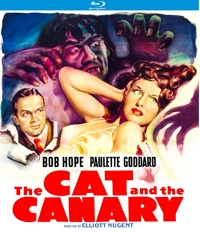
If your family enjoyed Knives Out, you also might be entertained by an early entry in the self-conscious light mystery genre.

In The Cat and the Canary (1939)—based on a 1921 stage play by the same name—comedian Bob Hope plays it mostly straight, an actor without the ham in this tongue-in-cheek whodunit with a dash of horror. A year later, hitting the road with Bing Crosby and Dorothy Lamour, Hope would develop his famous persona as a bumbling coward of a second banana to Crosby’s straight man, but in this one he’s less goofy and more believable as a love interest for Paulette Goddard. Hope is a considerably more suave and in control than later characters he’ll play, and as a result viewers find themselves focused more on the atmosphere and plot.

The Cat and the Canary was so popular that Hope and Goddard would team up for a second haunted house picture in 1940—The Ghost Breakers, which isn’t recommended for family viewing because of offensive outdated cultural stereotypes. The sets and gimmicks from both films would provide the inspiration for Disney’s popular Haunted Mansion theme park attraction.

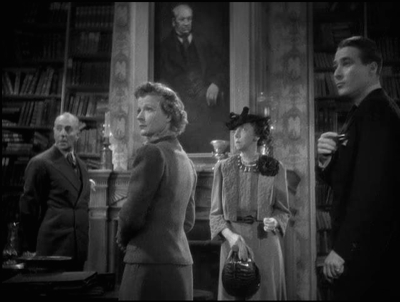
There are revolving bookcases, secret panels, and a Louisiana bayou mansion that wasn’t exactly prime real estate even before it fell into decrepit disrepair. Why would anyone visit now, especially when you have to be paddled there by various canoeists? As it turns out, all are relatives and named parties to attend the ceremonial reading of the will, according to instructions left by a reclusive millionaire who died 10 years ago. The deceased specified that his will must be read exactly at midnight, of course. One more thing: worried that insanity might run in the family, the eccentric recluse specified that the one bearing his surname (Norman) will inherit everything. But there’s a catch. If the named heir, Joyce Norman (Goddard), goes crazy before 30 days have passed, then a second replacement heir will be read from a second sealed envelope.

Kind of makes you want to run the other direction, right? Except that the canoe paddlers don’t operate late at night (they must have a strong union). But how else can you ensure that everyone has to spend the night in this spooky place? More

Review of ALI BABA AND THE FORTY THIEVES (1944) (Blu-ray)

Leave a comment

Grade: B-/C+
Action-Adventure
Not rated (would be PG)

“Open Sesame!”

Who hasn’t heard that phrase before, or immediately recognized it as the voice of Ali Baba? For that we can thank French translator Antoine Galland, who in the 1700s added “Ali Baba and the Forty Thieves” to One Thousand and One Nights. Over time it became one of the collection’s most popular tales, but it gets a revisionist spin in this 1944 color film starring Jon Hall, who’s best known to Baby Boomers as Ramar of the Jungle and the director-star of the campy ‘60s sci-fi flicks The Beach Girls and the Monster and The Navy vs. the Night Monsters.

In the original tale, Ali is a common woodsman who happens upon a thieves’ hideout, discovers the secret of gaining entrance, and sneaks a bag of gold coins. But his sister-in-law learns about it and forces Ali to reveal where he got the gold from, so his brother can follow suit. That brother is killed, but with the help of a slave girl Ali gets revenge and emerges victorious.

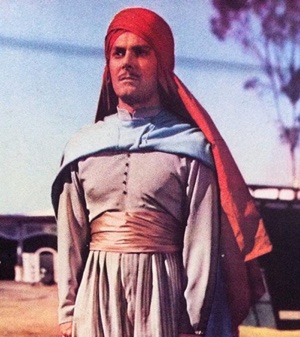
In this film version, Ali is the rich son of the Caliph of Baghdad who escapes being killed with his father after Mongols seize the kingdom. Ali is taken in by the thieves and becomes the adopted son of their leader, Baba. Instead of a plot revolving around thievery and wealth, Ali and his band are freedom fighters dedicated to killing the Khan (Kurt Katch) and retaking Baghdad for their people.

Though it’s the kind of solid-but-generic sword-and-sandal film that Hollywood loved to make during the Golden Age, Ali Baba and the Forty Thieves also has a campy feel to it because of the presence of veteran character actor Andy Devine, who made a career out of being the Western hero’s sidekick and delivering comic relief. It’s hard to see his rotund frame in Arab garb and hear his familiar raspy high-pitched voice without thinking of him in buckskin as Jingles in TV’s Adventures of Wild Bill Hickok, or Cookie from the Roy Rogers feature films. Others will recognize him as the driver in John Ford’s Stagecoach, but regardless, seeing him in a different costume adventure or seeing him for the first time is enough to make you smile. More

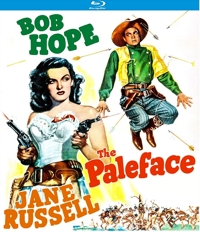
Review of THE PALEFACE (Blu-ray)

Leave a comment

Grade: B
Comedy
Not rated (would be PG)

Over a 60-year film career, comedian Bob Hope starred in 54 features, but the former vaudevillian was also known for the USO shows he emceed from 1941-91, performing for American military personnel in times of war and peace. He received the Congressional Gold Medal in 1962 and also received the Medal of Merit from Gen. Dwight D. Eisenhower, the Presidential Medal of Freedom from President Lyndon Johnson, the Medal of Liberty from President Ronald Reagan, the National Medal of Arts from President Bill Clinton, and the Spirit of Hope Award (named for him) from the U.S. Department of Defense.

In other words, Bob Hope, who died at age 100 in 2003, is a national treasure. Since only one of his films (Road to Morocco) has been included in the National Film Registry, the public is dependent upon studios like Kino Lorber to preserve and release the old classics that are worth watching and rewatching. And The Paleface is a good one.
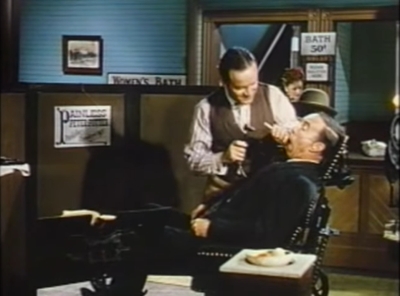
Of Hope’s films, the historical costume comedies are as much fun as the Road pictures he did with Bing Crosby and Dorothy Lamour. While The Princess and the Pirate is the best of the powdered wig era comedies, The Paleface is tops among the Westerns that Hope made. In it, we see Hope at the height of his career, both as an actor and as a comedian. The hard-working comic had appeared in four feature films in 1947, and a year later The Paleface teamed him with Jane Russell—the WWII pin-up “girl” who famously debuted five years earlier in Howard Hughes’ The Outlaw and had only appeared in one other soapy drama. Surprisingly, the two play well off each other, with Russell the straight man, of course.

It’s good to finally get this title on Blu-ray, though the timing is probably unfortunate. As monuments are being toppled and even Mount Rushmore has come under fire, this film’s title and treatment of Native Americans is racist—there’s no other way to put it. But this was the ‘40s, and all of America was thinking along the lines of what talented writer Frank Tashlin incorporated into the screenplay. No one thought anything of having just two Native Americans playing Indians and the rest played by Caucasians, and no one bristled when Native Americans were depicted as stern-faced chiefs (“How!”) or wacky medicine men. Wrong as we now know it to be, it was all part of the stereotypical humor of the era.
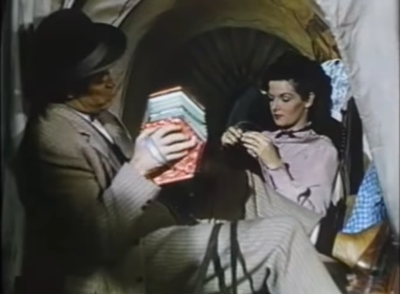
So where does that leave us? I personally think that it’s wrong to deny or erase history. Instead, America needs to own up to that history, and you don’t do that by burying it and forgetting it. America needs to learn from the past and learn to appreciate artwork and cultural artifacts from previous eras for what they are. You can enjoy a film for its performances and comedy and also be aware that what you’re seeing is no longer appropriate. And Hope’s historical comedies—the Westerns especially—are a good place to start if you want to teach your children about racism and racial stereotypes. They’ll find the films amusing, but then you can also talk about what you just saw and educate them on the reality of Native Americans in the U.S.

Hope plays “Painless” Peter Potter, who picks a peck of trouble when he pulls the wrong tooth and has to skip town. As he’s leaving, Calamity Jane (Russell) hops aboard his wagon following a shootout. She’s a government agent on secret assignment: discover who’s supplying weapons and explosives to the Indians and stop them before they start another war. And what better way to blend in than by joining a wagon train with a “husband” who’s as clueless as they come?

Even the violence (and that includes people shot to death) is played for laughs in The Paleface. Some of the gags involve several Indians clueless as Potter as well as laughing gas that Potter uses to numb patients, but the bulk of them revolve around his bumbling ineptitude and cowardice—especially compared to his rough-and-tough sharpshooting “wife.” There’s a surprising amount of character development in this comedy, which also stars American Indian actors Iron Eyes Cody and Chief Yowlachie, and frequent “heavy” Jeff York.
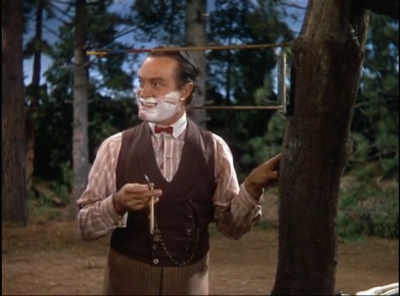
Hope often found a way to sing in his films, and in The Paleface he’s in peak form performing “Buttons and Bows,” which won the Oscar that year for Best Original Song. Mostly, though The Paleface is just good old-fashioned slapstick and one-liner fun, with a plot that’s strong enough to pull the whole wagon.

Entire family: Yes
Run time: 91 min., Color
Studio/Distributor: Kino Lorber
Aspect ratio: 1.37:1
Featured audio: DTS 2.0
Trailer
Amazon link
Not rated (would be PG for hints of innuendo and comic violence)

Language: 0/10—Nothing here of consequence

Sex: 2/10—Women in pantaloons, repeated hints of romance, comic kisses and one passionate one

Violence: 3/10—All violence is comic, including fistfights, shootings, and running gags of being dragged by horses and the number of Indians killed by a proclaimed hero

Adult situations: 0/10—Nothing not already mentioned

Takeaway: Kino Lorber did an excellent job on the transfer, with crisp audio and Technicolor presentation sharp and vivid as can be. Would it be too much to hope for The Princess and the Pirate, Monsieur Boucaire or another Hope Western, Fancy Pants (with Lucille Ball) next?


Older Entries Newer Entries