Home

Review of WHALE RIDER (15th Anniversary) (Blu-ray)

Leave a comment

Grade: A-
Entire family: No
2002, 101 min., Color
Drama
Rated PG-13 for brief language and a momentary drug reference
Shout! Factory
Aspect ratio: 2.35:1
Featured audio: DTS-HDMA 5.1
Bonus features: B
Includes: Blu-ray, Digital Copy
Trailer
Amazon link

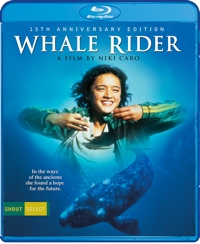
This word-of-mouth hit about a 12-year-old Maori girl captured audience-favorite awards at the Toronto, Rotterdam, and Sundance international film festivals. It’s a feel-good movie that makes you feel a little bad along the way, a “girl power” coming of age story that also involves the girl’s patriarchal-minded grandfather who comes to understand that the best way to preserve the past is to embrace a gender-equal future.

Like Hoosiers, where you know a ragtag bunch of basketball losers are going to somehow win, the plot in Whale Rider is somewhat formulaic. But as with that Indiana roundball saga, the ride itself is really something, and not just because of the fantastic performances or the beautiful cinematography and New Zealand landscape. Just when you begin to think the outcome is predictable, writer-director Niki Caro manipulates a change in current or plumbs the emotional depths to take the performances to another level.

More

Review of WITH GREAT POWER: THE STAN LEE STORY (DVD)

Leave a comment

Grade: A-/B+
Entire family: Yes
2010, 80 min., Color
Documentary
Not rated (would be G)
MPI Home Video
Aspect ratio: 1.37:1
Featured audio: Dolby Digital 2.0
Bonus features: A-/B+ (includes second disc of extras)
Trailer
Amazon link

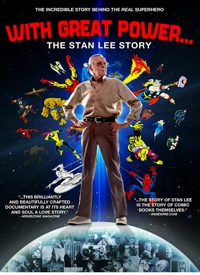
If your family is like ours, the kids don’t exactly clamor for documentaries. But when the subject of a documentary is Marvel comics legend Stan Lee, and when the documentary employs graphics that remind you of comic books, suddenly there’s interest. Enough for them to watch the whole thing, in fact.

Even years after the hey-day of comic books, when kids could indulge themselves for just 12 or 15 cents, the low-culture genre still holds plenty of fascination. Back then, Lee says, they created a comic per day, and most of the kids I knew purchased at least one per week. It was our pulp fiction. “I learned to read because of Spider-Man comics,” one of the many celebs on this documentary confesses. But a new generation has come to know the Marvel characters mostly through TV and movies—and in this, too, we discover, Lee played a pivotal role.

Since the age of 19, Lee has been the driving force behind and larger-than-life face of Marvel, a genius who co-created more than 500 distinctive characters over his long career as a story man. Teaming with legendary comic-book artist Jack Kirby and others, he absolutely owned the Sixties, coming up with nine characters who would become major Marvel success stories: Fantastic Four (Nov. 1961), Ant-Man (Jan. 1962), Hulk (May 1962), Thor (Aug. 1962), Spider-Man (Aug. 1962), Iron Man (Mar. 1963), The Avengers (Sept. 1965), Daredevil (April 1964), and Silver Surfer (Oct. 1966). “I just put the words in the people’s mouths and I may have come up with the original idea, but after that it was a partnership,” Lee says.

More

Review of EVERYTHING, EVERYTHING (Blu-ray combo)

Leave a comment

Grade: C+
Entire family: No
2017, 96 min., Color
Romantic drama
Rated PG-13 for thematic elements and brief sensuality
Warner Bros.
Aspect ratio: 1.85:1
Featured audio: DTS-HDMA 5.1
Bonus features: C
Includes: Blu-ray, DVD, Digital Copy
Trailer
Amazon link

The Fault in Our Stars (2014) was such a huge hit that you knew other sick teen romantic dramas would follow, even if you were unaware of what books were out there to inspire the screenplays. And sure enough, along comes Everything, Everything (2017), starring Amandla Stenberg (The Hunger Games) and Nick Robinson (The Kings of Summer).

If there’s a teen in your family, they’ve no doubt seen trailers or heard of it. But they may not know about the one big difference between the two “sick teen” romantic dramas: The Fault in Our Stars aims high, for an adult audience as well as teens, with believable dialogue and situations and an edginess that comes from a healthy cynicism that comes from a realistic optimism in a hopelessly pessimistic situation. It’s a little like Hemingway for teens, where grace under pressure and how well you face tragedy becomes more important than the outcome. It’s about finding consolation in an impossible situation.

Everything, Everything is the flip side of that—a film that doesn’t just look for a silver lining, but manufactures one. It’s made for the people who wept during The Fault in Our Stars thinking, Why? Why couldn’t there have been just a slightly happier outcome?

More

Review of KING ARTHUR: LEGEND OF THE SWORD (Blu-ray combo)

Leave a comment

Grade: C+
Entire family: No
2017, 126 min., Color
Fantasy-Adventure
Rated PG-13 for sequences of violence and action, some suggestive content, and brief strong language
Warner Bros.
Aspect ratio: 2.40:1
Featured audio: Dolby Atmos TrueHD
Bonus features: B-
Trailer
Amazon link

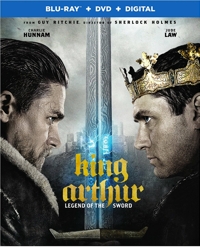
Guy Ritchie and the King Arthur legend? Sounds like a match made in heaven, doesn’t it? After all, the director who gave us Lock, Stock, and Two Smoking Barrels and The Man from U.N.C.L.E. sure breathed new life into another legendary but staid franchise, Sherlock Holmes, reinvigorated and reinvented in partnership with star Robert Downey Jr.

For King Arthur: Legend of the Sword he had hunky and charismatic Sons of Anarchy alum Charlie Hunnam to work with, and Jude Law playing the bad guy on the throne. So what could possibly go wrong?

Well, when a film begins with giant elephants with pyramids on their backs filled with soldiers and all of them attacking a castle, it certainly gets your attention—kind of like those rock monsters did in the otherwise believably biblical epic of Noah. Then there’s more action, and people talking quickly about things you’re not grasping, and more outrageous things happening, and scenes quickly changing, and before you know it you’re feeling like some of those soldiers in the opening battle, falling hundreds of feet into a moat below and drowning in confusion.

There are some absolutely marvelous sequences in King Arthur: Legend of the Sword, but because confusion reigns with an even tighter fist than King Vortigern (Law), you don’t have enough context to really appreciate what’s happening. It probably doesn’t help that Ritchie employs some of the self-conscious techniques he used in his smart crime dramas: like guys telling a story and we see it in narrative flashback as they speak, then someone will ask a question and the story will change or something will happen that’s even more visually outrageous, like the flashback reversing when one of the listeners says, “Whoa, back up.” It’s clever and postmodern and fun and all, but it also adds to the confusion rather than helping to resolve it. Ritchie’s technique often involves throwing a lot at viewers and then later explaining what they saw, but even the explanations fall short when you watch this film for the first time. I suspect it will take two or three viewings to make complete sense of the film.

More

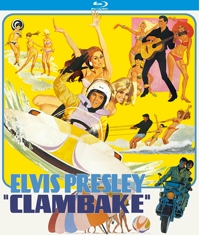
Review of CLAMBAKE (Blu-ray)

Leave a comment

Grade: B-
Entire family: Yes
1967, 99 min., Color
Musical comedy-romance
Not rated: Would be PG (for smoking, drinking, and some suggestive scenes)
Kino Lorber
Aspect ratio: 2.35:1 widescreen
Featured audio: DTS-HDMA 2.0
Bonus features: B- (an audio commentary from Videodrome video rental store)
“Clambake” clip
Amazon link

It started with Jailhouse Rock (1957), the film that established the Elvis film character as a brooding James Dean, often with a chip on his shoulder, but with a good guy hiding under the facade. That character would appear with only minor alterations in most of his 23 films made between 1962 and 1969. By comparison, during that same period John Wayne made 17 films. Both were box-office giants.

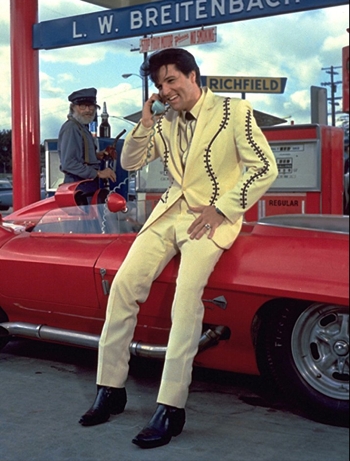
Many of the films from this period are “a-go-go” films, and if you’re a fan of the Zucker-Abrahams-Zucker spoof Top Secret! you’ll see in the formula Elvis movies what they were making fun of. Today’s families will find these lightweight musical comedy-romances fun to watch, but also fun to make fun of. Some of the dancing, some of the clothes, some of the antics are just plain hilarious now, though they were intended, like the Frankie Avalon and Annette Funicello “beach” movies, to be campy and fun even back then. They feature plenty of mod and mini-skirted and bikinied women and goofy guys doing the swim, the frug, the monkey, the jerk, and all those dances that were so cool then but look so silly now. What will seem even sillier to modern audiences are the backgrounds that were clumsily and unapologetically used (like the mountains in the background of this film set in Miami), or the far-fetched ways in which the writers sought to bring Elvis in contact with children.

Yes, children. You see, the Elvis film persona was meant to be everything to women: a bad boy, a nice guy, a singing romantic, a tough guy when he had to be, a clean-living guy who usually refrained from alcohol and tobacco, and a good-looking guy who was so good with kids that women saw him as father material. Despite the attitude, Elvis was the kind of guy you could bring home to meet Mom and Dad.

More

Review of ROARING ABYSS (DVD)

Leave a comment

Grade: A-/B+
Entire family: Yes (though small children may tire)
2015, 87 min., Color
Music documentary
Not rated: Would be G
IndiePix Films
Aspect ratio: 16×9 widescreen
Featured audio: Dolby Digital Stereo
Bonus features: n/a
Trailer
Amazon link

Roaring Abyss is an unfortunate title, and the cover art just as unfortunate. Both give a false impression of turbulence, pain, struggle, or a profound feeling of being trapped. That couldn’t be more misleading. Roaring Abyss is a feel-good film, a start-to-finish musical journey across Ethiopia, where, we’re told, “Ninety million people in the second most populated African country” are “singing in eighty different languages on both sides of the Rift Valley.”

This 2015 documentary from Quino Piñero could very well do for traditional music from Ethiopia what Buena Vista Social Club did for Cuban music and musicians. The musicians celebrate their lives through music, and Piñero celebrates that too, along with celebrating their talent, passion, and dedication to preserving traditional music.

You don’t have to be a music lover to enjoy this film, but it certainly helps, since music is a constant. From the terrific opening song you know what sort of journey awaits. A pattern unfolds: you see film of everyday life in a section of Ethiopia while you hear music, then a cut to the musicians so you can see the source of the sound and watch the rest of the performance—and in a sense, every one of these songs, no matter where it was recorded, is a performance because they have been recorded in front of microphones for posterity. After the performance we get more of the same, with that pattern occasionally interrupted by interviews with some of the performers.

“A song is not only for dancing,” one of them remarks. “It reminds you of your dear ones, it brings back memories of far relatives, it reminds you of those who passed away, it reminds you of the love you experienced in your life. Indeed, songs are rarely made for dancing only.”

More

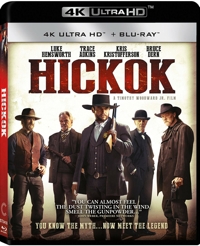
Review of HICKOK (4K Ultra HD combo)

Leave a comment

Grade: B-/C+
Entire family: No
2017, 88 min., Color
Western
Not Rated: Would be PG-13 for brief nudity, sexual situations and strong language
Cinedigm
Aspect ratio: 2.35:1 matted widescreen
Featured audio: English DTS-HDMA 5.1
Bonus features: B- (nice making-of feature)
Includes: 4K Ultra HD, Blu-ray
Trailer
Amazon link

Timothy Woodward Jr. grew up loving Hollywood Westerns, and now he’s living the dream—he’s directing them. And he’s getting better.

Woodward’s first effort, Traded (2016), starred music legends Kris Kristofferson and Trace Adkins, both of whom look rugged enough to play a convincing cowboy in the American Wild West of the 1870s and ‘80s. Traded was basically a Western version of Taken, and though Westerns have more clichés than cacti have needles, this one was hemorrhaging hokey dialogue, wooden characters, and silly situations. It was hard going, which is why I’m not surprised it earned only a 5.1 out of 10 at the Internet Movie Database from over 2000 audience members. At Family Home Theater we warned it was a C- at best.

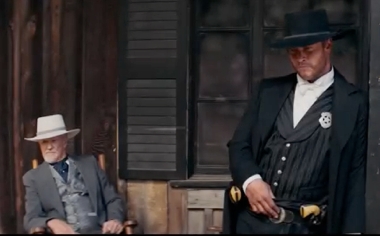
But then along comes Hickok (2017), which 600 IMDB audience members rated a 5.3. Seeing that, you’d think that the two films are comparable—but you’d be wrong. Hickok is a superior film, despite a script that fictionalizes ol’ Wild Bill so much you barely recognize him and his story. Then again, this is a Western, not a documentary, and for a Western it’s better than average.

More

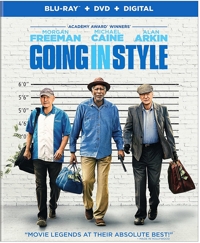
Review of GOING IN STYLE (Blu-ray combo)

Leave a comment

Grade: B-/C+
Entire family: No
2017, 96 min., Color
Crime comedy
Rated PG-13 for drug content, language, and some suggestive material
Warner Bros.
Aspect ratio: 2.40:1 widescreen
Featured audio: DTS-HDMA 5.1
Bonus features: C (director’s commentary)
Includes: Blu-ray, DVD, Digital HD
Trailer
Amazon link

Money-grubbing moneylenders are evil—at least in literature and Hollywood. Whether it was Tom Joad and his fellow Okies trying to start a new life in California after banks foreclosed on them, George Bailey fighting to keep Mr. Potter from buying up the whole town and gouging tenants, or even Bonnie and Clyde becoming bank-robbing folk heroes, any act of resistance has been seen as an act of heroism.

The financial crisis of 2007-08—triggered by banks actively selling subprime mortgages to people who couldn’t afford them—only solidified the notion that banks are the con men, the bad guys. Add the corporate shipping of jobs overseas and the dismantling of pensions that workers paid into but lost, and the idea of the evil moneygrubbers grows even larger.

So how can you possibly go wrong when you cast beloved veterans Morgan Freeman, Michael Caine, and Alan Arkin as 70-somethings who, victimized by the banks and their employer, decide to rob a bank? I mean, the bank and their employer cheated them, so what do they have to lose? If they get caught, they get “three squares” and better health care than they now have, and if they succeed they avoid financial ruin.

Close your eyes and picture the first-act set-up where we’ll get to know each of them, follow their routines, and come to understand what makes them decide that Going in Style is preferable to remaining law-abiding citizens.

Have you got an image of the scenes that you’d see, the situations that would be illustrated?

Good. Because then I don’t have to tell you about the first part of this film. The setup is as generic as can be, and paced so leisurely that it feels like a yawner. Their situations are clichéd, with one about to lose his house (and his daughter and granddaughter are living with him, so they too would be out on the streets), one who needs a kidney transplant and is told he doesn’t have much time left, and a third a family-less fellow who is hit-on by an elderly grocery-store employee (Ann-Margaret). There are no surprises and very few delights in the first third of the film. It’s only when they seek out a “low life” to get advice on how to rob a bank that the interest picks up, and by the third act things are rolling so well that you wish the film had started at that point.

More

Review of KONG: SKULL ISLAND (Blu-ray combo)

Leave a comment

Grade: A/A-
Entire family: No
2017, 118 min., Color
Sci-fi Action-Adventure
Rated PG-13 for intense sequences of sci-fi violence and action and for brief strong language
Warner Bros.
Aspect ratio: 2.40:1
Featured audio: Dolby Atmos TrueHD
Bonus features: B+
Includes: Blu-ray, DVD, Digital HD
Trailer
Amazon link

Best. Kong. Ever.

That was our family’s verdict, with all four members awarding an A or A- to this franchise reboot. Then again, we’re not purists. We’re just movie-lovers, and we loved this movie. The action is non-stop, the CGI monsters and battles are terrific, the location footage shot in northern Vietnam and Oahu is stunning, the characters are fun, and most importantly for an action film with lots of blood and violence and killing, this film doesn’t take itself too seriously. Tonally, it’s right there with the early James Bond films . . . if Bond was on speed and there was no time for romance.

Unlike more unimaginative monster movies, this isn’t just a game of attrition, where you end up with a slow build-up to one death, then another, and another. All hell breaks loose, and it never stops breaking loose. You can’t predict who’s going to get it and when, but how upset can you possibly get when a man falls into the mouth of the great ape and is presumably eaten, when his fall is followed by a quick match cut in which we see a close-up of a soldier taking a crunchy bite out of a sandwich? And when another character is eaten, as he looks up and notices the creature we have yet to see, his last words are “Oh shit,” you’re more prone to laugh first, then shout in release at the action that follows. Which is to say, yes, this is every bit a PG-13 movie, both in language and in violent action, but director Jordan Vogt-Roberts (TV’s Single Dads) tempers it with humor. As a result, what could have been a serious bloodbath is more of a popcorn movie.

More

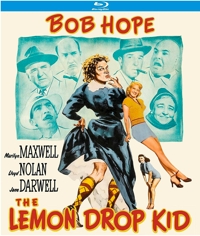
Review of THE LEMON DROP KID (Blu-ray)

Leave a comment

Grade: B
Entire family: Yes
1951, 91 min., Black and White
Comedy
Not rated (would be G)
Kino Lorber
Aspect ratio: 1.33:1
Featured audio: DTS-HDMA 2.0
Bonus features: n/a
“Silver Bells” clip
Amazon link

If the title isn’t a tip-off that this is a Damon Runyon story, the rest of the nicknamed character roster ought to be a dead giveaway: Brainey Baxter, Oxford Charlie, Nellie Thursday, Moose Moran, Straight Flush Tony, Gloomy Willie, Sam the Surgeon, Little Louie, Singing Solly, and Goomba.

Runyon famously wrote about colorful characters he met on Broadway and at the racetracks in Florida—guys and dolls, racketeers and henchmen, horse trainers and grooms, bookies and touts, and just plain down-and-outs.

Like Pocketful of Miracles (1961)—which was also inspired by a Runyon short story—The Lemon Drop Kid is set around Christmas, a film in which the main character wavers between being a selfish Scrooge or an unselfish giver. He’s the only character who has any kind of arc at all; the rest are stock types or foils.

Like the Shirley Temple film Little Miss Marker and the Bob Hope remake, Sorrowful Jones (both based on another Runyon story), it revolves around a debt or a bet. In this case, The Lemon Drop Kid (Bob Hope) touts a horse to a woman holding $10K, and that horse loses. What’s worse, the woman turns out to be the girlfriend of notorious racketeer Moose Moran (Fred Clark).

Naturally, Moose wants his money back, and he gives the Lemon Drop Kid until Christmas to settle the score . . . or else. So the Kid goes to New York and looks up his old girlfriend Brainey Baxter (Marilyn Maxwell) and also racketeer Oxford Charlie (Lloyd Nolan) to see if he can get a loan. When that falls through, the Lemon Drop Kid gets a brainy idea of his own: seeing a Salvation Army bell-ringer dressed as Santa, the Kid decides to ring a bell in a Santa Suit with a kettle and a sign that reads “Save a Life.” Meaning, his own.

More

Older Entries Newer Entries