Home

BARBERSHOP: THE NEXT CUT (Blu-ray)

Leave a comment

BarbershopTheNextCutcoverGrade: C+/B-
Entire family: No
2016, 111 min., Color
Warner Bros.
Rated PG-13 for sexual material and language
Aspect ratio: 1.85:1
Featured audio: DTS-HDMA 5.1
Bonus features: C-
Includes: Blu-ray, Digital HD
Trailer
Amazon link

I missed seeing Barbershop (2002), Barbershop 2: Back in Business (2004), and the spin-off, Beauty Shop (2005). But because it’s been more than 10 years since the last one, I wasn’t at a disadvantage. Barbershop: The Next Cut stands on its own, and though it could stand a fresher plot, the cast (old, plus new) is still entertaining.

My wife and I watched with our two teens, and it surprised us how often we found ourselves laughing out loud at the banter between characters that were sometimes a few hairs short of being total caricatures.

But the plot is both simple and formulaic: Calvin (Ice Cube) still owns a barbershop on Chicago’s south side, where old-timer Eddie (Cedric the Entertainer) does more talking than trimming and Raja (Utkarsh Ambudkar) is the only non-black. To keep the business thriving, Calvin has partnered with Angie (Regina Hall), who runs a beauty shop out of one half of the space. But making money and making jokes take a backseat to their big concern. Every day in the neighborhood there’s a shooting, and the violence between rival gangs has gotten way out of hand—so bad, in fact, that Calvin and the rest of the Barbershop “cutters” are facing the same crisis as the rest of South Side Chicago: they can’t even walk the streets without thinking their lives are in danger. Trigger-happy gang members are taking innocent lives and rapidly making that part of the city uninhabitable.
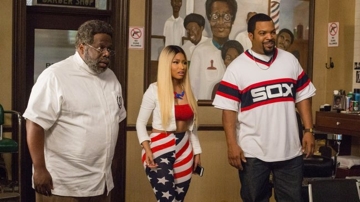
BarbershopTheNextCutscreenIt’s gotten so bad that Calvin and his wife, Jennifer (Jazsmin Lewis) are considering abandoning the shop his father once owned because they are worried their teenage son, Jalen (Michael Rainey Jr.), might not live to see 21 if they remain. Calvin is even looking at properties on Chicago’s safer north side—though he’s keeping that a secret from his cutters, stylists, and regular customers. They include a caterer (Anthony Anderson) who tries to profit any chance he gets; a fast-talking entrepreneur named One-Stop (J.B. Smoove); a goofy nerd (Lamorne Morris); and a hunky cutter (Common) that draws the wrath of his wife-stylist, who also happens to be Calvin’s sister Terri (Eve), when he appears to flirt with stylist Draya (Nicki Minaj), whose rear-end is the “butt” of many jokes. No subject seems off-limits for comedy, including Black Lives Matter and Michelle Obama. And of course there are Bill Cosby and Justin Bieber jokes.

Director Malcolm D. Lee seems comfortable blending comedy and serious issues, though the latter is rolled up in a main plot that feels too easily resolved. Barbershop as social center? Totally believable. Barbershop as town hall meeting site? Also believable. Brokering a ceasefire between the rival gangs, with a free haircut day to draw attention to it? Considerably less believable, but not as hard to swallow as a facile ending. Still, the message is a good one, and the jokes wrap the package nicely.

But parents be warned. Some PG-13 movies come closer to PG and are acceptable for younger-than-teen viewers as well. Barbershop: The Next Cut will have you raising your eyebrows at a few risque scenes that seem closer to an R-rating, as when a man’s wife presents her fully clothed bottom, wiggles it around, and says something like, “Go ahead, put it up there.” Though there are no nude or sex scenes, there are a number of sexual references like that (including talk of big butts and masturbation) which could make for uncomfortable viewing for some families.

Lanaguage: Mild swearwords throughout, along with at least one F-bomb and liberal use of the “N” word.
Sex: Nothing shown, and no nudity, but multiple instances of sex talk
Violence: Talk of a young boy being killed, along with a few gunshots and in-your-face pushing, but no blood
Adult situations: Mostly sex talk and gang confrontations
Takeaway: Rotten Tomatoes critics gave Barbershop: The Next Cut the highest rating of the four franchise films, with the original Barbershop coming in second; our family was split along gender lines, with the males giving it a B- and the females a C+

BATMAN V. SUPERMAN: DAWN OF JUSTICE (Blu-ray combo)

1 Comment

BatmanvSupermancoverGrade: C+/B-
Entire family: No
2016, 151 min., Color
Warner Bros.
Rated PG-13 for intense sequences of violence and action throughout, and some sensuality
Aspect ratio: 2.40:1
Featured audio: Dolby Atmos
Bonus features: C-
Includes: Blu-ray, DVD, Digital HD
Trailer
Amazon link

My teenage son said it best: Batman v. Superman: Dawn of Justice is a good action movie, but not a very good superheroes film. That is, there’s plenty of action, great CGI visual effects, and breakrib (if not breakneck) pacing. But it’s hard to tell the good guys from the bad . . . and doesn’t that Good v. Evil dichotomy drive every superhero film? A little more character development and motivation wouldn’t hurt either, though both of those require a little squinting to see in this 2016 film from Warner Bros.

You almost get the feeling that you’re being had—and not just because of the neurotic, helium-voiced way that Jesse Eisenberg chose to play Lex Luthor Jr., or that you’re stuck with a Jr. in the first place. It’s that the filmmakers thought they could throw everyone into the deep end of the pool and call it a party. They expect that you’ve seen (and remembered) Man of Steel, because if you haven’t, then the opening will make even less sense. Even if just watched Man of Steel there are questions, and I’m not just talking about why WB can’t use the standard abbreviation for “versus.”

BatmanvSupermanscreen1Batman was always a vigilante, but why has he apparently gone rogue against all of society? Why is Superman suddenly so sensitive to public opinion that he’s gotten a megalomaniac complex? Who is shooting at whom, and why, when we see Lois Lane trying to interview a terrorist in the opening Africa sequence? Most importantly, why, pray tell, does Superman threaten Batman, setting up the “v.” conflict? Aren’t both of them on the outs with society? Those are just a few of the nagging questions that surface early.

All of which is to say, Batman v. Superman has one problem, and it isn’t Lex Luthor. It’s that the narrative feels disjointed . . . and how is that even possible, when director Zack Snyder had 151 minutes to work with in this theatrical cut?

Some of the questions are explained and the narrative smoothed out by an extended cut that’s included in this “Ultimate Edition,” but it shouldn’t take 181 minutes to tease out the narration, should it? Especially when the screenplay comes from two guys that in past outings have given audiences terrific, economical scripts: Chris Terrio (Argo) and David S. Goyer (Batman Begins). Snyder, for that matter, directed such previously taut films as 300 and Watchmen. So what happened here?

I can’t even begin to tell you, except that you watch the action thinking that it’s all very cool and that there’s a lot at stake, yet it’s hard to get too involved when there are so many lingering questions. With a superhero film you want to get a handle on how all those interlocking pieces fit together, whether the comic universe is Marvel or DC, and it’s tougher here to do than with any of the Avengers films.

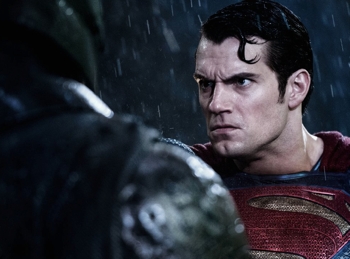
BatmanvSupermanscreen2Here’s what I think happens: The plot picks up a year and a half after the final battle from Man of Steel. Both Batman (Ben Affleck) and Superman (Henry Cavill) feel the other is a threat, despite the fact that Lex Luthor Jr. (Jesse Eisenberg) is mixed up with weapons dealers and trying to get his hands on Kryptonite. Superman is called before a congressional hearing to explain himself, Batman dreams of battling Superman and prepares to act out that dream by stealing the Kryptonite from Luthor, who has kidnapped Superman’s stepmom, Martha Kent (Diane Lane). And Lois Lane (Amy Adams) doesn’t really have much to do after that opening scene except to try to convince Batman that Superman isn’t a bad guy. Oh, and Wonder Woman (Gal Gadot) makes an appearance.

There’s more, of course, but don’t look to bonus features for a fuller explanation. They all seem promotional in nature, and you get the feeling that Warner Bros. was less concerned with making sense out of this film than they were trying to set up future films in the DC Universe.

Action movies and young audiences have a lot in common: they live in the moment and don’t question things. That’s not a bad mindset to adopt when you pop in Batman v. Superman: Dawn of Justice. It may not be a great superhero movie, but with an alien monster and large-scale battle scenes it really is a darned good action flick that bears re-watching . . . and with every viewing you begin to pick up a little more. Good thing, because the extended cut that somewhat smoothes out the narrative is rated R for even more intense sequences of violence. As is, the PG-13 version is adult enough to push this film out of reach of viewers younger than 12 or so.

Language: No F-bombs, but there’s a handful of lesser swearwords
Sex: One bathtub scene with a man and woman, but as with a naked dead man nothing revealing is shown
Violence: Plenty, though bloodless, including gunshots to the head, self-inflicted cuts to the hand, ad the usual explosions and action movie battles
Adult situations: Aside from alcohol use there’s a scene in which a child’s parents are murdered in front of him and a later scene where Doomsday originates that might be a little too powerful for young viewers
Takeaway: I look forward to future conflicts, but so far the clear winner in the Marvel Universe v. DC Universe is Marvel.

KUNG FU PANDA 3 (Blu-ray combo)

Leave a comment

KungFuPanda3coverGrade: B-/C+
Entire family: Yes
2016, 95 min., Color
DreamWorks/20th Century Fox
Rated PG for martial arts action and some rude humor
Aspect ratio: 2.35:1
Featured audio: DTS-HDMA 7.1
Bonus features: C+/B-
Includes: Blu-ray, DVD, Digital HD
Trailer
Amazon link

The Blu-ray box proclaims that Kung Fu Panda 3 is “Certified Fresh” by Rotten Tomatoes, with an average rating of 6.8/10 and 126 critics giving it a “fresh” rating, while 20 pronounced it “rotten.”

Fresh, rotten. With this film it’s splitting hairs.

Tomatometer critics gave Kung Fu Panda 2 an average rating of 6.9, and the original Kung Fu Panda earned an average rating of 7.2. I thought both were better than that, but while I enjoyed and found myself instantly invested in them, that wasn’t the case with the third. In the early going I was squirming like a three year old, wondering when #3 was finally going to find it’s footing and engage the audience. That’s a shame, considering all the high-powered voice talents in this animated sequel— among them, Dustin Hoffman, Angelina Jolie, Jackie Chan, Seth Rogen, Lucy Liu, David Cross, Kate Hudson, Jean-Claude Van Damme, and Wayne Knight.

The opening sequence is all action and no context, and the first 29 minutes are a narrative mish-mash. Only after Kung Fu Panda master Po (voiced by Jack Black) gets a surprise visit from his biological father (Bryan Cranston) does the film finally find its trajectory so you can finally KungFuPanda3screen1start to care. Apparently discovering in previous films that he’s the Dragon Warrior isn’t enough. In this animated adventure Po still has an identity crisis when Master Shifu (Hoffman) tells him there’s more to identity that Kung Fu. He has to learn who is IS. So when his real dad shows up and tells him he will teach him the secrets if he’ll return with him to the hidden village of the pandas (which Po thought were all dead), Master Shifu agrees, and Po’s adoptive duck father, Mr. Ping (James Hong), reluctantly consents.

The new bull villain is almost Marvelesque, but the villains in the first two movies made more sense. In Kung Fu Panda (2008), a former pupil of turtle Master Oogway who chose the dark side had escaped from prison and the powerful leopard was intent on taking his revenge out on the entire Valley of Peace. In Kung Fu Panda 2 (2011), a prequel, an evil peacock named Lord Shen tried to exterminate the panda population in order to negate a prophecy that a panda warrior would be his undoing. Later Po and the Furious Five Kung Fu Masters set out to stop Lord Shen from unleashing a powerful weapon that would make him the new ruler of China.

KungFuPanda3screen2Both of those scenarios were more instantly understandable than what we’re given in the third installment. Kai is an old friend of Master Oogway, and together they apparently healed the secret village of pandas after it was attacked by Lord Shen. The pandas, in return, taught the two how to use Qi. Oogway apparently defeated Kai and banished him to the spirit realm, where, confusingly, a deceased Oogway also floats around among unanchored mountains and Monument Valley formations. Meanwhile, Kai escapes from the spirit world and, using Qi, defeats the Kung Fu masters one by one and obtains their essences, their Qi, which he hangs from his belt like shrunken heads that he then can unleash like super zombies of sorts to do his bidding.

Then we get a little Magnificent Seven as Po and his father and his stowaway adoptive father reach the secret valley and learn that Kai is headed there. In really short order—not much longer than the span of a montage—Po starts to teach the panda peasants how to be Kung Fu masters, and the great defense battle is on. How much you like Kung Fu Panda 3 will depend on how much you’re willing to overlook those first 29 minutes and just watch the film and not think too much about questions and explanations.

Typically it’s adults who want more logic and character development rather than simply colorful action, cutesy characters, and physical humor. As a result, though the first two Kung Fu Panda movies were bona fide family movie night options for the everyone, this one may appeal mostly to the kids, unless you just sit back and enjoy the animation and Blu-ray quality, which is superb. The Rotten Tomatoes critics gave Kung Fu Panda 3 a 6.8, which is just below B range. It’s a B-/C+ on the Family Home Theater scale, and whether you flip that or not, it’s still the weakest entry in the trilogy.

Language: n/a
Sex: Nothing except for an androgynous panda who may be a transvestite
Violence: Everybody was Kung Fu fighting
Adult situations: n/a
Takeaway: Funny how we have idioms to cover everything: third time’s the charm or three strikes and you’re out; after this third film, I’m just not seeing where this franchise could possibly go

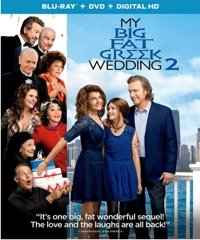
MY BIG FAT GREEK WEDDING 2 (Blu-ray combo)

Leave a comment

MyBigFatGreekWedding2coverGrade: C+/B-
Entire family: No, but darned close
2016, 94 min., Color
Universal
Rated PG-13 for some suggestive material
Aspect ratio: 2.40:1
Featured audio: DTS-HDMA 5.1
Bonus features: D
Includes: Blu-ray, DVD, Digital HD
Trailer
Amazon link

My Big Fat Greek Wedding 2 is cute enough, but as with so many sequels there seems to be a play-it-safe mentality at work: Hit those referential touchstones that remind viewers of the first film, and rely on a familiar plot that feels like comfort food.

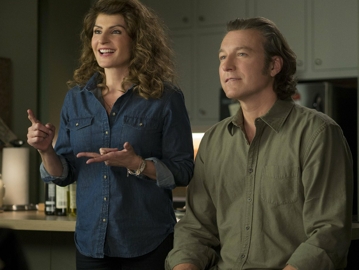
The math doesn’t quite work out, but 14 years after longhaired Anglo Ian (John Corbett) wooed shy and awkward Toula (Nia MyBigFatGreekWedding2screen1Vardalos) away from her you-must-marry-a-Greek family, the pair has a 17-year-old daughter named Paris (Elena Kampouris) who’s facing similar pressures. But that plot is as lukewarm as microwaved food, and it turns out to undercooked.

The main plot centers on the patriarch and owner of the Dancing Zorba Restaurant, where Toula now works. Gus (Michael Constantine) notices all these years later that his and wife Maria’s (Lainie Kazan) marriage certificate isn’t signed . . . meaning they’re not legally married. And the movie tracks the tension between them after they feel themselves suddenly “single.” So basically screenwriter Vardalos turned to a standard sitcom plot, rather than trusting that a new generational culture clash could shoulder the load again.

As a result, this much-awaited 2016 sequel isn’t as entertaining as the 2002 original, but it is, as I said, cute enough. For that, credit the characters that Vardalos created—characters based on her own life. The patriarch, Gus, still thinks of Windex as a panacea, still insists the Greeks invented pretty much everything, and still seems only to tolerate his MyBigFatGreekWedding2screen2non-Greek son-in-law at best. The closeness of the Portokalos family is both celebrated and gently ridiculed to the point where they become a collective character and running joke. They’re fun to watch. Are they also a bit much? Well, in all honesty, the overly familiar main plot wears on you more than they do. I mean, we’ve seen it before on TV shows like I Love Lucy, The Dick Van Dyke Show, Gilligan’s Island, Happy Days, Scrubs, and more recently Good Luck Charlie. That’s how familiar it is. And a second underdeveloped sideplot about the romance going out of Toula and Ian’s life doesn’t help much.

So you walk away from My Big Fat Greek Wedding 2 having been entertained by the characters and the competent screenplay, but thinking it could have had more laugh-out-loud moments and been more original. Such is life in Sequel Land. But you know what? Our family still liked it enough to put it on the shelf so we can watch it again some night.

Language: None at all
Sex: One brief aborted lovemaking session in a car
Violence: None—unless you call getting hit by a ball violent
Adult situations: Male genitals are referred to as “the plucky” and a teen is told to hurry and marry before her eggs dry up; drinking and one episode of drunkenness
Takeaway: Some PG-13 films could be rated R; this one could and maybe should have been PG, because it’s really pretty innocent

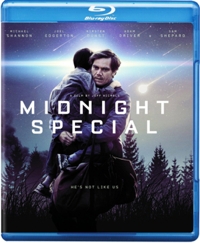
MIDNIGHT SPECIAL (Blu-ray)

Leave a comment

MidnightSpecialcoverGrade: C+/B-
Entire family: No
2016, 112 min., Color
Warner Bros.
Rated PG-13 for some violence and action
Aspect ratio: 2.41:1
Featured audio: DTS-HDMA 5.1
Bonus features: C
Trailer
Amazon link

Midnight Special is a strange movie about a boy with strange powers that are never fully explained, even as the film tries to transcend its limitations to enter Steven Spielberg territory toward the second half.

In giving us a different kind of Close Encounter with a sorta-human version of E.T., writer-director Jeff Nichols (Mud, Take Shelter, Shotgun Stories) hovers over Sixth Sense territory as well. Yet, as much as you keep watching with interest, this 2016 sci-fi drama is uneven and kinda cops out when it comes to explanations.

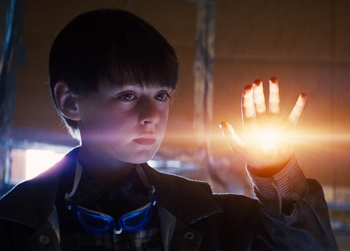
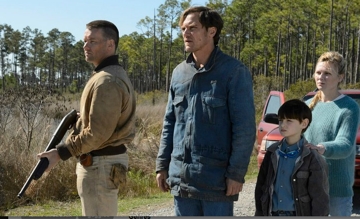
You can picture Nichols’ mind at work: Okay, start with a young boy who has special powers (Jaeden Lieberher)—a boy who was taken from his parents and raised for two years by the leader of a religious cult (Sam Shepard) that thinks he’s the key to life itself. MidnightSpecialscreen1Have them be investigated by the FBI, then have his parents decide they want to rescue him, and, with the help of his best friend, have Dad (Michael Shannon) grab the kid and hits the road. Of course the kid’s powers have to be cool—Light shooting from his hands? Ability to unleash a light attack on people who would harm them?—and then bring in some alien or alternate universe elements to keep viewers guessing. But mostly run with a chase story and lean heavily on Shannon, Joel Edgerton, and Kirsten Dunst to pull off the roles of parents and friend on the run, trusting that viewers will go along for the ride and not ask too many questions.

As I watched this PG-13 rated film with my son, I found myself asking plenty of questions, starting with the title. “Midnight Special” is a traditional American folk song about a train from Houston whose light would shine on a prisoner’s cell as it passed every evening. If you know that and think about it, the title fits. But MidnightSpecialscreen2if you’re not getting the allusion, the title probably makes no sense. The pacing also makes no sense. You’ll be chugging along at a slow pace with not much happening and then WHAM! Something freaky or strange happens to make you go, huh? or wow! Sometimes it’s violence. Sometimes it’s violence that reminds you of cartoons, because characters that seem to get shot point blank just bounce up as if nothing happened. Sometimes it’s a new sci-fi wrinkle. But it’s never character development (there’s no arc to follow), and you don’t really get much in the way of why any of this is really happening. That misguided urge to understate is the film’s chief weakness.

Maybe in some perverse way it’s also the reason why Midnight Special holds your interest as much as it does. You keep watching, hoping to piece everything together. In the end, how much you enjoy this movie may be tied to how much you’re willing to accept the information you’re given and not demand more than that. But the actors also do their part to keep you hanging on, with Shannon especially turning in a fine performance. Star Wars fans will also enjoy watching Adam Driver leave the Dark Side to play a lead investigator.

Midnight Special depends on the element of surprise, so that’s all I’m going to say. I thought it was slightly better than average, but my teenage son was more into it . . . enough to shelve it and watch it again sometime.

Language: No F-words, and less than a handful of others
Sex: None
Violence: People are shot point blank, involved in violent car crashes, and bloodied
Adult situations: Nothing besides the above, plus intense pursuit
Takeaway: Sci-fi thrillers walk a fine line between telling too much and revealing too little, and you’ll either walk away from this shrugging, or you’ll be fascinated enough by the film’s unique elements to give it thumbs up

EDDIE THE EAGLE (Blu-ray combo)

Leave a comment

EddietheEaglecoverGrade: B+/A-
Entire family: No, but . . . .
2016, 106 min., Color
20th Century Fox
Rated PG-13 for some suggestive elements, partial nudity, and smoking
Aspect ratio: 2.39:1
Featured audio: DTS-HDMA 7.1
Bonus features: B
Includes: Blu-ray, DVD, Digital HD
Trailer
Amazon link

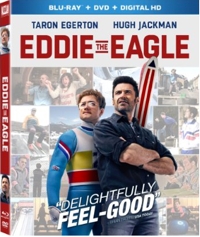
Most of the time you can’t trust the glowing blurbs on Blu-ray and DVD boxes, but USA Today’s description of Eddie the Eagle as “delightfully feel-good” pretty much sums it up. And you don’t have to be a sports nut to enjoy this 2016 comedy-drama.

Eddie the Eagle is the latest sports biopic to celebrate the underdog who wins despite losing. It’s a movie that will remind you a lot of Cool Runnings, which told the story of a group of Jamaicans determined to enter the Olympic bobsled competition with the help of a has-been coach. In fact, it wouldn’t surprise me if writer Simon Kelton and director Dexter Fletcher had that 1993 Disney biopic in mind when they added a disgraced flask-carrying coach to the otherwise mostly true story of Eddie “The Eagle” Edwards, the Brit who was determined to represent his country in the Olympics no matter what sport, and who first took up ski jumping in his early ‘20s. Most competitors had been training since the age of six, so how is that possible? Because Great Britain hadn’t had an Olympic ski jumper since 1929, and all Eddie had to do to qualify for the 1988 Winter Olympics in Calgary was to make a single minimum jump.

If it sounds like a sports film with no competition (and therefore, no interest), far from it. Eddie has plenty of obstacles to overcome. He may have boundless energy, enthusiasm, and dedication, but his athletic ability is
EddietheEaglescreenslightly above average, at best. Mostly, he’s competing against his own limitations, but there are subplots as well. After trying unsuccessfully to make the British Olympic downhill ski team, he thought he found the perfect loophole to allow him to fulfill his dream of competing in the Olympics. But the British Olympic Committee had ideas of their own. Then Eddie thought the battle would end after he was accepted as an Olympic participant, but next came a wave of negative reactions from “legitimate” ski jumpers. Even when he made it to Calgary, there was still the reaction from his unsupportive father to contend with.

Taking a page out of Billy Elliot, the filmmakers concoct a parallel conflict with a disapproving dad who wants his son to face facts and get a legitimate, respectable, paying job. Like Billy, whose dream was to dance rather than box, Eddie is obviously hurt by the lack of support, but undeterred. What makes Eddie such a likeable hero is that he just keeps going, eyes on the prize. While others around him drink, his beverage of choice is milk. While others have full social lives, Eddie has only a fellow outcast—the coach (Hugh Jackman) who is at first reluctant to take him on.

The real Eddie the Eagle was called “Mr. Magoo” by some journalists, and the way that Taron Egerton plays him you can’t tell whether Eddie is in some way disabled or if he’s just a simple man whose I.Q. isn’t the highest. He’s like the kid with glasses who was always picked on at school, or the mutt you rescue rather than entering him in a dog show. But in a world where winning is narrowly defined and you have people like Dance Moms’ Abby Lee Miller complaining that second place is the first loser, Eddie Edwards is a refreshing example of pursuing a dream that’s scaled down. He doesn’t dream of winning the Olympics. He dreams of participating at that level, and in following that dream he’s as inspiring as this biopic is entertaining.

The film may be rated PG-13, but I think children as young as 10 would enjoy this film, since the adult elements are understated. And the 7.1 soundtrack and glorious HD make you feel as if you’re experiencing it right there.

Language: A few mild swearwords and that’s it
Sex: The coach uses a lovemaking analogy to get his pupil to understand that at the moment of liftoff it’s corresponds to orgasm; very brief glimpse of male backside
Violence: Real footage of wicked wipe-outs are shown
Adult situations: Some smoking and drinking, with one instance where the other jumpers get Eddie intoxicated
Takeaway: Like Hoosiers and Cool Runnings, this is one underdog story that should get a lot of replay because the writing is crisp, the performances are engaging, and there are some good messages for youngsters

THE UNSINKABLE MOLLY BROWN (Blu-ray)

Leave a comment

UnsinkableMollyBrowncoverGrade: C+/B-
Entire family: Yes, but . . . .
1964, 135 min., Color
Warner Archive Collection
Not rated (would be PG for some adult situations)
Aspect ratio: 2.40:1
Featured audio: DTS-HDMA 5.1
Bonus features: B-/C+
Trailer
Amazon link

You know the movie that you remember liking enough as a child to want to share it with your family, but then you fire up the popcorn popper and after 15 minutes none of them wants to watch it with you?

The Unsinkable Molly Brown is that kind of movie. As you view it again, to paraphrase Bill Clinton, you can feel their pain. Maybe years ago you overlooked the flaws because of a few catchy songs and a warm-hearted story that offered a happy tear-jerking payoff. But watching it again through their eyes, you can certainly understand why the family left the TV room one-by-one.

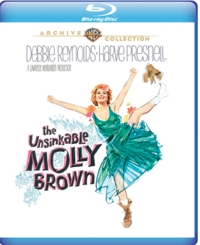
Despite her energy and a Best Actress Oscar nomination, Debbie Reynolds is frankly annoying as Molly Brown, the real historical character that inspired a 1960 Broadway musical and this 1964 film adaptation. She has a beautiful voice, but in The Unsinkable Molly Brown she doesn’t sing as much as she shouts or growls like an angry animal, and her portrayal of a poor uneducated Colorado tomboy will remind some families of Shelly Winters’ performance as the hillbilly mother in Disney’s animated live-action Pete’s Dragon. She’s brassy and she’s grating, so blustery that Winnie the Pooh would never even peek his head out of his hollow-log home if she were out there storming about.

In this film, Molly is the vinegar to Jonny Brown’s oil, but while singer Harv Presnell is so gosh-darned nice as the miner who would do anything for his Molly that it’s impossible for audiences not to like him, his singing is another story. Presnell, the lone holdover from the Broadway cast, is terrific, but the actor’s stand-and-belt operatic style can seem overwrought to contemporary viewers—something that’s not helped at all by two underwhelming songs he’s given, one of which (“Colorado, My Home”) is remarkably weak considering it came from Meredith Wilson (The Music Man).

The real Margaret Brown was raised dirt-poor in Leadville in a two-room log cabin. In actuality she met and married J.J. Brown, an equally poor man who became rich after his engineering led to a rich strike for his employer and he was given 12,500 shares of stock and also made a director on the mining company board. In reality, they bought a mansion in Denver and Margaret became socially active in the Denver Woman’s Club. The “unsinkable” tag came after she was already separated from J.J. and Mrs. Brown was returning from France aboard a new luxury ship—the Titanic. She gained notoriety after passengers told the press how she helped others into lifeboats and tried to convince the crew in her own to return to the site to look for more survivors.

UnsinkableMollyBrownscreenThat’s a great story in itself, isn’t it? But for the Broadway version Richard Morris made a few key changes. In the play and in this film, JJ is a poor miner who strikes it rich not once but twice, and Molly is the unrefined new-money ladder-climber desperate to be accepted into Denver society. Responsible for her rejection is neighbor Gladys McGraw (Audrey Christie), who is so concerned about social acceptance that she keeps her unrefined mother, Buttercup (Hermoine Baddeley), away from her circle of friends and the charity galas she throws.

The first 30 minutes of The Unsinkable Molly Brown can be rough, because it’s all Molly and her adoptive Pa (Ed Begley) drinking and singing and her “wrassling” with brothers and getting a job in a saloon. It’s like watching the hillbilly channel. The next 20 minutes are all about her spurning JJ’s advances until he finally wears her down. It’s when the two move to Denver and Molly becomes slightly less grating that interest picks up, and things get even more interesting when JJ and Molly go to Europe and meet all manner of royalty.

Molly yearns to be something she’s not, and she places such a premium on social acceptance that she would jeopardize her marriage to the one man who really loves her. And she’s not above using people. So really, her character isn’t exactly lovable. But while you do feel for her, it’s JJ who earns your sympathy. The film reaches its moral plateau at a ball where JJ welcomes their old unrefined friends from Leadville with a song (“He’s My Friend”) that Molly eventually embraces. It’s one of three songs that you’ll have in your head for days afterwards.

Is there anything here that families can’t see? Not really. It’s all pretty wholesome, and those who like musicals will still appreciate The Unsinkable Molly Brown. But Reynolds’ performance might be a bit too much for the younger generation to take.

Language: Euphemistic cussing, mostly
Sex: Women dressed like prostitutes do a “dance off” with Molly, JJ watches Molly dress, and there’s talk of Molly’s wedding night
Adult situations: Drinking and brawling, including the catchy song “Belly Up, Belly Up to the Bar Boys”
Takeaway: Critics called The Unsinkable Molly Brown big and bold and brassy when it was first released, and it’s still all that . . . though now those adjectives have a more negative connotation

PRIDE AND PREJUDICE AND ZOMBIES (Blu-ray)

Leave a comment

PrideandPrejudiceandZombiescoverGrade: B-/C+
Entire family: No
2016, 107 min., Color
Sony Pictures
Rated PG-13 for zombie violence, action and brief suggestive content
Aspect ratio: 2.40:1
Featured audio: DTS-HDMA 5.1
Bonus features: B+
Includes: Blu-ray, Digital HD
Trailer
Amazon link

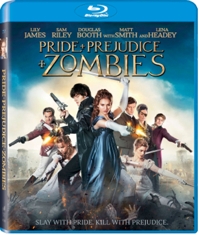
While watching Pride and Prejudice and Zombies, our college freshman groused that you can’t introduce the Four Horsemen of the Apocalypse and then not do much with it. “D for dumb” was the grade he said he’d give the film. Our teenage daughter, who’s more the target audience, said she thought it was a B but admitted it wasn’t as good as she had hoped. My wife, a big Jane Austen fan, agreed. She liked that, minus the zombie sequences, the historical drama stayed fairly close to the book, but she didn’t think this particular Darcy (Sam Riley) charismatic enough to sell the romantic angle. As for me, I found myself less impressed by this variation on a theme than I was by the Bollywood version, Bride & Prejudice.

If Pride and Prejudice and Zombies disappoints—and my family wasn’t alone, given that only 42 percent of Rotten Tomatometer critics liked the film—let me suggest one main reason why. It’s a romance and it’s an action-horror film, and sometimes one genre gets in the way of the other. The concept works against itself.

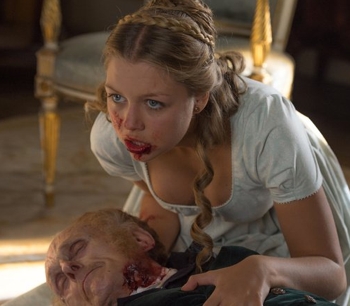
PrideandPrejudiceandZombiesscreen1Though the zombie premise is woven into the plot, the actual insertion of zombie scenes can sometimes feel inorganic or heavy-handed. Hearing myself say that I have to chuckle: of course when you insert battles with zombies they’re going to be jarringly head-snapping (sometimes quite literally). But it does take away from any romantic simmer, and the dramatic, romantic interludes are just enough to make people squirm and wish for more zombie action. I think my daughter nailed it when she said the characters and the historical treatment were good, but the writers could have done more with the plot and included more action. As much as she loves romance, she’s a fan of shows like Supernatural, and the action-violence in Pride and Prejudice and Zombies is both tame and minimal by comparison. Disappointing, in other words.

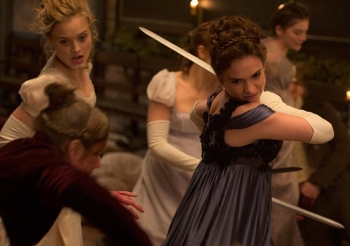
The novel by Seth Grahame-Smith was a parody, but the comic elements seem diminished in this film adaptation from director Burr Steers. In it, Darcy is like a 19th-century version of Homeland Security. In the opening scene, he visits a rich family to expose a rumored, recently infected zombie that, if unchecked, might start another mass outbreak. Meanwhile, Mr. Bennet (the incomparable Charles Dance) sends his daughters to China to learn martial arts and better defend themselves against those pesky zombies, who seem to have no social graces—turning horseback rides and elegant balls into tests of survival.

PrideandPrejudiceandZombiesscreen2You’ll probably need to watch this film several times to grasp an appreciation of the IZS (Integrated Zombie Structure), which includes a trip to the In-Between zone outside of walled London in which zombies feed on pig brains and are somehow kept from going completely savage. Ala Austen there are proposals and good and bad manners. The handsome Mr. Bingley (Douglas Booth) is here, of course, as is Parson Collins (Matt Smith), himself a suitor who indeed “settles” after being turned down by his first choice. And a soldier named Mr. Wickham (Jack Huston) turns up with a story about Mr. Darcy that he’s reluctant (but dying) to tell. And in this version, Darcy’s aunt, Lady Catherine, is a famous zombie killer who wears an eye patch and seems resistant to any idea of a brokered peace with zombies that haven’t gone savage. Got that?

As the main character, Elizabeth Bennet, Lily James (Cinderella) charms not only all the suitors but teenage girls who will recognize in her that rare combination of natural behavior and poise. Without her, this film would languish a lot more in the IZS.

Pride and Prejudice and Zombies took in a worldwide gross of just $16 million against a reported $28 million production budget, despite plenty of advertising and social media buzz. It could be that Austen fans expect romance to be at the core of this classic, no matter what the permutation, and zombies ate away a little too much of that chest-heaving unrequited love.

Language: n/a
Sex: Apart from heaving bosoms (a Victorian trope), there’s one instance where a man and woman tear at each other’s clothes
Violence: A woman’s head is shot off, heads explode, a man’s hand is slashed off, people are stabbed, and there’s plenty of other zombie violence
Adult situations: Lots of pus and decomposing flesh and lots of wine-drinking, once to intoxication
Takeaway: Could have been funnier, could have been more romantic, and could have had more zombie action to satisfy those with a craving . . . .

THEY WERE EXPENDABLE (Blu-ray)

Leave a comment

TheyWereExpendablecoverGrade: B+/B
Entire family: No
1945, 135 min., Black-and-white
Warner Archive Collection
Not rated (would be PG for war action and adult situations)
Aspect ratio: 1.37:1
Featured audio: DTS-HDMA 2.0
Bonus features: n/a
Trailer
Amazon link

War movies probably have more permutations than any other genre, but the most fascinating and family-friendly ones are probably those that were made during WWII when the Office of War Information had to approve content. Most of them were patriotic films aimed at boosting recruitment or morale back home, and as a result probably fewer than a dozen are good enough to entertain today. Some of the best? Wake Island (1942), Action in the North Atlantic, Bataan, Destination Tokyo, Guadalcanal Diary, and So Proudly We Hail! (1943), as well as Thirty Seconds over Tokyo (1944), Objective, Burma!, Pride of the Marines, and They Were Expendable (1945).

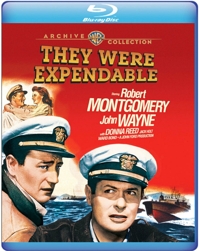
The latter—a black-and-white John Ford tribute to the men who served on America’s flimsy plywood PT-Boats in the Pacific—stars Robert Montgomery, John Wayne, and Donna Reed in a film that tries to capture not just the heroism of the men who fight, but also the boredom and frustration. What makes They Were Expendable doubly interesting is that it details the mostly true story of two officers who were trying to prove the worth of these Motor Torpedo Boat Squadrons, as they were initially called, when they were still an experimental dream like the 1807 steamboat people called “Fulton’s Folly.”

TheyWereExpendablescreen1There are battles in these wartime films, but the violence is dimmed while the spotlight is on service and the day-to-day life of soldiers, sailors, airmen, and nurses. People back home knew their loved ones were at war and that they probably saw action. Did they want to see graphic killing? No, but they did want to get some sense of what life in the military was like and what their loved ones were going through so far from homes, families, and sweethearts. And Ford’s tribute is one of the most authentic from the era.

The stars are fine in their roles, but really it’s the story that holds our attention—though it’s a long one (135 min.). The action picks up in the Philippines, where the military learns that Pearl Harbor has just been attacked. Everyone is given orders to do their part to stop the advance of the Japanese fleet, except for the Motor Torpedo Boat Squadron, which is given the token assignment of messenger and transport duty. The Navy brass can’t see value in the boats, though that doesn’t stop Lt. John Brickley (Montgomery) and Lt. Rusty Ryan (Wayne) from pushing. But even as the Japanese keep taking over more territory, it’s a fight for the Motor Torpedo Boat Squadrons just to get into the fight.

TheyWereExpendablescreen2PT-Boats became famous because of former Pres. John F. Kennedy, whose story is told in the movie PT-109 starring Cliff Robertson and Robert Culp. Watch this black-and-white movie first and then the color 1963 film for a decent double feature. In They Were Expendable Ford is careful to add plenty of detail about life on the small, fast plywood boats that were equipped with machine guns to battle aircraft and torpedoes to launch from the deck at heavier ships. We see the crew patching it up, dealing with boring assignments, and yes, mixing it up with the enemy. Eventually the boats’ value was proven: their small size made them a small target, and their speed and maneuverability enabled them to get in close enough to launch torpedoes and then get to safety.

War or not, the core story is one that everyone—even children—can identify with. Children’s books are full of characters who are disregarded because they’re too small, too insignificant, or too something to succeed. In the nautical vein, there’s Tuffy the Tugboat, the children’s book hero who is scoffed at by the boats who have bigger and more important jobs to do, until one day Tuffy is the only one with the skill set to save the day. That archetype is at work here too, while Reed provides a romantic interest that’s wholesome as can be and secondary to her own heroics as a nurse stationed at Manila and Bataan hospitals. The weepy-eyed sentimentality that creeps into Ford films is here too, but thankfully it’s limited. Still, young viewers not familiar with history might raise their eyebrows when “The Battle Hymn of the Republic” is sung while we glimpse an actor meant to be Gen. Douglas MacArthur. And if they don’t know about his famous “I shall return” promise made to the people of the Philippines as he himself fled to safety, that’s the period of history encompassed by Ford’s mostly fascinating and sometimes stirring film.

Language: Mild swearwords occasionally used
Sex: Nothing at all, wholesome as can be
Violence: No blood or gore or glorifying violence, but boats are blown up and battles are waged
Adult situations: Some drinking and smoking
Takeaway: War movies like Inglorious Basterds and Fury try to be edgy and shocking and rattle viewers out of their complacency; war movies like They Were Expendable look to tell a story that will enlighten and inspire as much as the biopics that came out of the ‘40s and ‘50s, and They Were Expendable is among the best of that type

HERE COMES MR. JORDAN (Blu-ray)

Leave a comment

HereComesMrJordancoverGrade: B/B-
Entire family: No
1941, 91 min., Black-and-white
Criterion Collection
Not rated (would be PG for mild violence)
Aspect ratio: 1.33:1
Featured audio: Dolby Digital 2.0
Bonus features: B+
Trailer
Amazon link

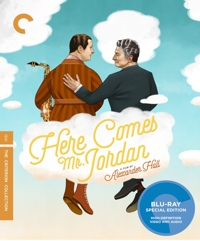
Five years before apprentice angel Clarence would try to convince George Bailey that It’s a Wonderful Life, chief angel Mr. Jordan (Claude Rains) tried to make amends when an underling mistakenly snatched a prizefighter 51 years before he was supposed to die.

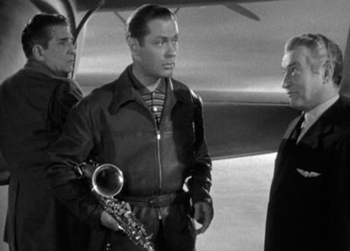
If there’s a more outlandish premise behind a Hollywood comedy, I haven’t come across it. Robert Montgomery (whose daughter, Elizabeth, would star in a supernatural comedy of her own 23 years later—TV’s Bewitched) is cast as boxer Joe Pendleton, whose hobbies are playing the saxophone (badly) and flying his private plane. It’s the latter that gets him into trouble, and when a prickly new angel (Edward Everett Horton) plucks him from the plane before a crash, thinking to spare him the final pain, it turns out that the boxer would really have survived. In heaven, Mr. Jordan instructs the new angel to return Joe to his body. That’s when things get outrageously complicated. It turns out that Joe’s fight manager, Max Corkle (James Gleason), had his body quickly cremated, so there’s no body for him to return to. Mr. Jordan’s solution: find him a suitable body from someone slated to die soon.

If it were a little more fast-paced and the dialogue overlapping, Here Comes Mr. Jordan would play like a screwball comedy. As is, there are plenty of scenes that feel absurdist enough to qualify, and just as much in the way of clever writing. Here Comes Mr. Jordan is a surprisingly solid fantasy-comedy-romance that still entertains, despite some cheesy cloud scenes featuring an airplane transporting people to their final destinations.

HereComesMrJordanscreenMontgomery is amiable enough as Joe, a plain-talking guy set on becoming heavyweight champion of the world. He isn’t about to let some heavenly mistake get in the way of his destiny, and he isn’t about to accept any body that isn’t “in the pink.” But the film turns most interesting when Mr. Jordan convinces Joe to inhabit the body of a crooked millionaire whose wife (Rita Johnson) and private secretary (John Emery) have just drugged and drowned him in his bathtub. It adds a new wrinkle to a familiar genre, and how fun is it to see the two murderers’ faces when Joe-as-Farnsworth walks out of that bathroom? But that’s only the beginning. Complicating Joe’s drive for a championship body is the instant attraction he feels for a young woman (Evelyn Keyes) whose father Farnsworth framed to take the fall for a phony bond swindle, and Mr. Jordan’s prodding to get him to do something about it before the scheming would-be murderers strike again.

Very few films have plots that are unique, and for that reason alone families with older children (with a tolerance for black-and-white movies) may enjoy this screen version of the stage play Heaven Can Wait—also the title of a 1978 Warren Beatty remake. The angel and body-swapping do seem more charming and infinitely better suited to the Forties and black-and-white. When the film was released, America hadn’t yet entered WWII, and Here Comes Mr. Jordan was a pleasant, even hopeful diversion from the threat of war.

Joe Pendleton is blunt and unrefined, often a little slow on the uptake, but he’s also a genuinely nice guy who just wants what’s coming to him. His earnestness and honesty is infectious. When he tries to communicate his situation and gets caught up in other people’s lives, you can’ help but feel for him. That, even more than the unique plot, is what makes Here Comes Mr. Jordan resonate as an example of classic Hollywood filmmaking. It can feel slow-moving at times and the subject matter probably won’t interest children under age 14, but it’s still worth watching, even 70 years later.

Older Entries Newer Entries