

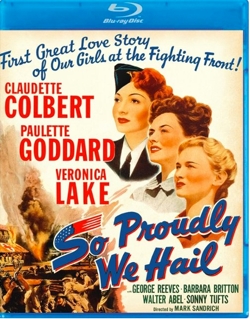
Grade: B/B-
Drama
Not rated (would be PG-13)
Studs Terkel won the Pulitzer Prize for The Good War: An Oral History of World War Two, a title he said was suggested by an army correspondent. “The Good War” was a phrase “frequently voiced by men of his and my generation” because it was the last war fought that was not divisive or controversial, Terkel said. Americans rallied behind the flag after Pearl Harbor, and when everyone is in the same boat, rowing in the same direction, there’s a sense of shared purpose and commitment. That leads to a feeling of solidarity, of shared joys or sorrows that nonetheless bind people into a greater family or community stronger than the individuals themselves. There really is strength in numbers, and patriotism at its workable best is a group activity dependent upon full (or nearly full) participation, not an individual attitude—and certainly not competing attitudes.
All of which is to say, aside from the aesthetics of film, there’s value in watching an old black-and-white patriotic war movie because it can remind us of what patriotism really involves.
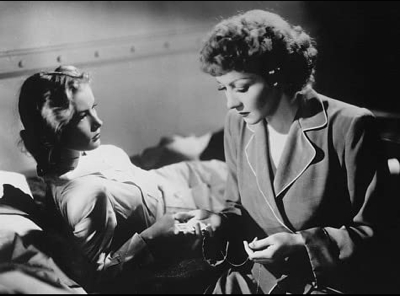
So Proudly We Hail (1943) is an interesting case in point. Most of America’s World War Two movies were about the front-line heroism of fighting men, designed to keep the recruits coming and the people on the home front encouraged, still feeling the commitment and still willing to accept the sacrifices of wartime patriotism. When So Proudly We Hail was first released, Bosley Crowther of The New York Times praised the film’s “shattering impression of the tragedy of Bataan” and producer-director Mark Sandrich’s reenacted battle-action scenes, but complained that “we behold the horror of Bataan through a transparency, through the studiously disheveled glamour of the Misses [Claudette] Colbert, [Paulette] Goddard and [Veronica] Lake.”
To a degree, that’s unfair, because the formula behind every patriotic war movie pulled against the film’s intended realism. I think Sandrich (who would direct Holiday Inn the following year) does a decent job of focusing not only on the professional aspects of military nurses serving in Bataan and Corregidor, but also on their love lives. So Proudly We Hail was billed as the “First great love story of our girls at the fighting front,” and Sandrich does a commendable job of adding romantic involvements to the standard war movie.
More










 Family Home Theater