Home

Review of BELFAST (Blu-ray)

Leave a comment

Grade:  A/A-
Drama, comedy
Rated PG-13

I love movies. Sometimes it’s love at first sight. It was that way in 2018 when I first saw Alfonso Cuaron’s Roma, and it happened again a year later with Taika Waititi’s Jojo Rabbit. Now I feel the same way about Kenneth Branagh’s Belfast, and it makes perfect sense: Belfast feels like a cross between those two films.

Like Roma, Branagh’s film is a loving, artsy, cinematic tribute to his home city. Filmed for the most part in black and white to feed the nostalgia, it begins in color with spectacular shots of Belfast that put to shame anything a tourist bureau could pay an advertising company to design. And soulful, start-to-finish songs by Van Morrison—arguably Ireland’s best export since pubs—help to create the deeply profound outpouring of love you feel when you watch this film.

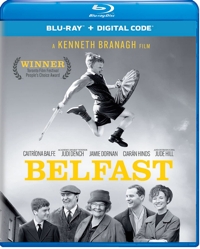
Like Jojo Rabbit, this 2021 film also manages to combine a serious topic with humor and quirky, endearing characters—a feat accomplished, in part, because the story is largely told from the point of view of an exuberant nine year old who doesn’t quite understand everything that’s going on. There’s a boyish fantasy, an imagination at work here too that suggests the amalgam of cultural images that’s rattling around inside his head and helping to shape his world view. That’s evident just from looking at the covers of the Blu-rays, with Waititi’s and Branagh’s young boys soaring above the ground like figures in a Marc Chagall painting. Buddy’s world view is also influenced by pop culture, including American Westerns that the boy watches with extended family—intended by Branagh as a thematic and structural parallel.

In Belfast, our first glimpse of Buddy (Jude Hill) is of him playing in the streets with the other kids as parents watch or dance in the street to a phonograph record. Some children are jumping rope or playing soccer, but others, like Buddy, are having a mock battle, with Buddy wielding a homemade gladiator-style sword and garbage-can lid shield. That play gets real really fast, as a gang of Protestant thugs shows up at the end of this cul-de-sac neighborhood—one Branagh depicts as loving and communal—and starts hurling Molotov cocktails and rocks, bashing windows, and threatening people. So much for nostalgia. So much for an idyllic childhood, as Buddy needs to be rescued by his mother (Caitríona Balfe), who uses his shield not for play but to protect both of their heads from rocks and missiles.

More

Review of GHOSTBUSTERS: AFTERLIFE (Blu-ray combo)

Leave a comment

Grade:  B+
Fantasy-Adventure
Rated PG-13

Ghostbusters: Afterlife (2021) is the kind of film that unapologetically panders to fans of the franchise. Dedicated to the late Harold Ramis, this fourth incarnation features nostalgia-inducing cameos by stars of the original 1984 smash hit:  Dan Akroyd, Bill Murray, Ernie Hudson, Annie Potts, and Sigourney Weaver.

That original cast appeared in a slightly disappointing 1989 sequel, but was absent in the polarizing 2016 all-female reboot starring Melissa McCarthy, Kristen Wiig, Kate McKinnon, and Leslie Jones.

Ghostbusters: Afterlife seems aimed at an audience of both fans who have felt like the franchise owed them one and fans of child-centered mystery-drama-adventures like TV’s Stranger Things or the newer Jumanji films.

So who ya’gonna call to direct a heavily nostalgic picture that aims to please both old and young viewers? How about Jason Reitman (Juno, Thank You for Smoking), son of Ivan Reitman—the man who directed the first two Ghostbuster films.

More

Review of CRUELLA (Blu-ray)

1 Comment

Grade:  B+
Comedy-Drama
Rated PG-13

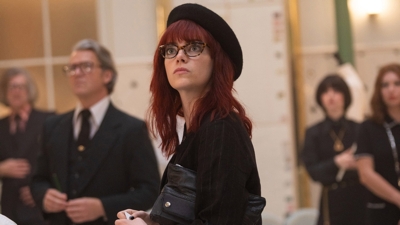
I did not expect to like Cruella as much as I did, because the two previous times Disney tried live-action versions of the popular 1961 animated film 101 Dalmatians they produced doggie doo. That’s not just my opinion. While the original animated film got a 98 percent “fresh” rating at Rotten Tomatoes, the 1996 live-action remake starring Glenn Close as villainess Cruella De Ville earned just a 41 percent rating, and the 2000 sequel did even worse (31 percent).

But RT critics awarded this new origin story Cruella a 74 percent “fresh” rating, while 97 percent of the audience gave it high marks. After watching it, I can see why. It’s smartly written and full of unexpected laugh-out-loud moments. Emma Stone has fun with the titular role without going over-the-top campy—and that’s a tough tone to pull off. Close didn’t even come close.

Stone received a Golden Globe nomination for her performance, and it was well deserved because of the pressure she faced. Essentially Cruella—like Disney’s Maleficent before it—is similar to a superhero origin story. As the lead performer goes, so goes the film.

Disney is trying to tell the stories of their villains with some sympathy, but isn’t that a risky business? Disney villains are notorious and gigglesnort popular because they are villains of a gigantic sort. Maleficent was the fourth highest grossing film of 2014, and Cruella was 15th in 2021 box office revenue. Since Maleficent was also a bit more sinister than Cruella, might that account for the difference? Do audiences still prefer villains to be more villainous than misunderstood?

More

Review of THE PAPER TIGERS (Blu-ray)

1 Comment

Grade:  B-
Action comedy-drama
Rated PG-13

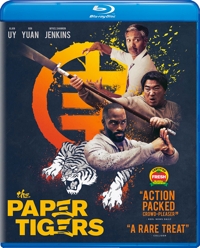
If your family loved Cobra Kai—or even The Karate Kid films that preceded the popular TV series—and you’re looking for another martial arts offering that balances medium-intensity action, drama, and humor, you might consider The Paper Tigers. Yuji Okumoto, who appeared in the second Karate Kid film and also Cobra Kai, was the film’s producer.

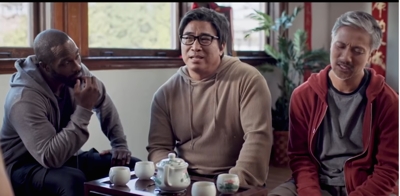
This English-language 2020 martial arts film from director Quoc Bao Tran is as much in the tradition of old-guys-proving-they’ve-still-got-it tradition of films like Space Cowboys (2000) and Old Dogs (2009) as it is the kung fu movies. But don’t fear, younger viewers, there’s young martial arts action too. It’s just that the focus is on three middle-aged men whose bodies have seen better days. In other words, this isn’t your typical Asian martial arts film, though it does have an almost obligatory memorable fight scene.

The Paper Tigers features three likable guys who are just that: guys. Too many martial arts films are all action with nothing but paper characters—kung fu wizards who do little more than kick, block, and punch their way through every scene. The heroes of this film are Everymen, real flesh-and-blood people who just happen to have bonded in the youth when they were “The Three Tigers,” as their master dubbed them. One of the characters happens to be African American and the other two Asian American, but all three are treated as people because “at the end of the day, we wanted to tell a fun, entertaining story that depicted our experience honestly,” Tran told the media.

More

Review of THE BRADY BUNCH MOVIE (2-Movie Collection Blu-ray)

Leave a comment

Grade:  B-
Comedy
Rated PG-13

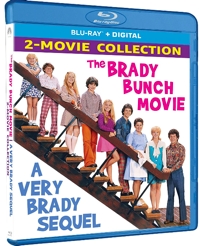
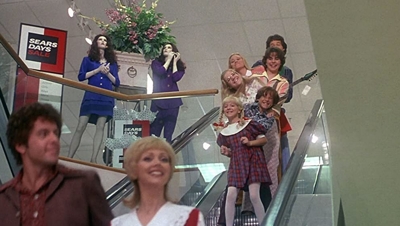
The Brady Bunch was one of the very last squeaky-clean family sitcoms in the old ’50s mold, airing as an anachronism of sorts during the Vietnam War years amid the chaos of Civil Rights, women’s rights, and anti-war protests. But in the Brady household, father Mike, a working architect, was still king of the castle with a den all his own, while his wife, Carol, was a stay-at-home mom who had the luxury of a servant. The children got into all sorts of minor conflicts and mischief, but none of the storylines tackled serious parental concerns of the day. Everything was sibling rivalry and innocent mix-ups. Drugs? Not here. Peer pressure to smoke? Only briefly. Teen pregnancy? Oh behave! And while other teens from the time were raiding their parents’ liquor cabinets, this group was content to raid the cookie jar. No one got into really serious trouble, and there was usually a lesson to be learned . . . from dad. When he wasn’t around, there was always mom or Alice, to help them find their way. The theme song explained the premise:

“Here’s the story . . . of a lovely lady
Who was bringing up three very lovely girls.
All of them had hair of gold, like their mother,
The youngest one in curls.

Here’s the story . . . of a many named Brady,
Who was busy . . . with three boys of his own.
They were four men, living all together,
Yet they were all alone.

Till the one day when the lady met this fellow,
And they knew that it was much more than a hunch
That this group would somehow form a family,
That’s the way we all became the Brady Bunch.”

First telecast on Sept 26, 1969, the show was a surprise hit, no doubt because it felt like comfort food to Americans who snuggled together during a turbulent era to watch and relive happier, more uncomplicated times. Divorce was becoming a widespread phenomenon for the first time, and the show about second-chance family life probably struck a chord with broken families. Plus, the range of the Brady children’s ages (7 through 14, when the show began) was broad enough for a wide range of youngsters to identify with. Airing on Friday nights, the show connected especially with children too young to have a social life, or, like the Bradys, too awkward and introverted.

More

Review of MINARI (Blu-ray)

Leave a comment

Grade:  A-/B+
Drama
Rated PG-13

Minari, a film in Korean and English, earned a Best Supporting Actress Oscar for Youn Yuh-Jung and nominations for Best Picture, Best Actor, Best Director, and Best Original Score. Youn, a legendary actress in the Korean film industry, plays a grandma who travels from Korea to Arkansas at the request of her daughter, who is having a hard time adjusting to her family’s move from California.

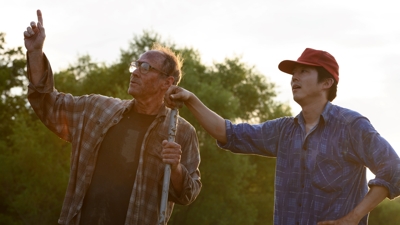
In California, Monica (Han Ye-ri) and husband Jacob (Steven Yeun) were on track to pay off debt by “sexing chicks” and separating males from females. But Jacob wanted more for her and their children Anne (Noel Cho) and fragile young David (Alan S. Kim), so he moved the family to Arkansas to sex chicks for an outfit that also gave Jacob an opportunity to start his own farm specializing in Korean vegetables. 

Leisurely paced, lyrical, and stylistic kin to Terrence Malick’s The Tree of Life, this film hit close to home for the director. Lee Isaac Chung grew up as the young son of Korean immigrants who settled on a small farm in rural Arkansas, and there’s a truthfulness that quietly percolates beneath the surface of Minari—the name of a plant also known as Korean watercress or parsley that the grandma decides to plant on the banks of a nearby creek.

“Minari is truly the best. It grows anywhere, like weeds, so anyone can pick and eat it. Rich or poor, anyone can enjoy it and be healthy. Minari can be put in kimchi, put in stew, put in soup. It can be medicine if you are sick. Minari is wonderful, wonderful!” the grandma Soonja tells David.

Director Chung had said he initially wanted to make a film adaptation of My Antonia but found that avenue closed. He then decided to make a film about his own upbringing in rural Arkansas.

More

Review of FINDING FORRESTER (Blu-ray)

Leave a comment

Grade: B+/A-
Drama/Comedy
Rated PG-13

J.D. Salinger wrote three books, then disappeared into Howard Hughes-style oblivion and inspired at least two films.

In Field of Dreams, Kevin Costner’s character shakes a Salinger type (James Earl Jones) recluse out of his inertia, paranoia, and humanity-avoidance in order to satisfy the voices in his head that also told him to build a baseball field.

In Finding Forrester, aspiring 16-year-old writer Jamal Wallace ends up finding the all-time greatest mentor when on a dare he climbs through the window of a “ghost” who had been watching him and his friends play basketball and, scared off, leaves behind a backpack containing his writer’s notebook.

In a case of life imitating art, Rob Brown showed up for tryouts as an extra on this picture by Gus Van Sant (Good Will Hunting) hoping to earn enough money to pay his cell phone bill. But Van Sant liked what he saw and cast him as Jamal, who soon after that break-in finds his backpack tossed out on the street and his writer’s notebook marked up and critiqued by the older writer. On one page he sees a handwritten scrawl, “I want to support this writer.” And so begins a mentorship between Jamal and famed writer William Forrester that will benefit both parties.

It’s kind of refreshing to see African American youths in their lower-income neighborhoods playing basketball and going to school and hanging out without there being any hint of violence or gang activities—the kind of cinematic clichés that have befallen films having to do with residents of “the hood.” The only f-bomb in this PG-13 film comes from an old white man (Sean Connery as Forrester), and the worst behavior comes from uppity adults associated with the private school that recruits Jamal after his test scores expose him as a bit of a genius. It’s refreshing, too, that none of Jamal’s neighborhood friends resent him for transferring to a private school and, ultimately, playing for a championship that’s televised.

More

Review of THE MARKSMAN (Blu-ray)

Leave a comment

Grade:  B-/C+
Action thriller
Rated PG-13

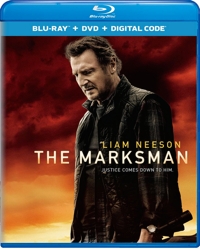
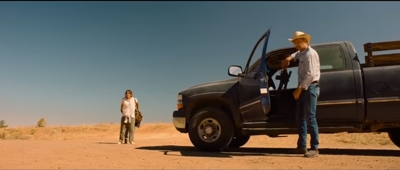
From the first scene where an aging Arizona rancher (Liam Neeson) stumbles onto a cartel “situation” and ends up with a bag full of money, to a scene that’s the equivalent of the Coen Brothers’ “coin toss scene,” The Marksman feels like a cheap knockoff of No Country for Old Men.  And with a little Hunt for the Wilderpeople added for good measure.

What cheapens it isn’t Neeson’s performance, but rather a formulaic approach to ticking off the boxes rather than concentrating on creating characters and relationships with any individuality or depth.

For one thing, first-time director Robert Lorenz spends too much time in the early going just establishing a few facts that could have been hinted at more subtly: 

—Jim Hanson was a Vietnam War veteran who earned a medal for marksmanship

—Jim Hanson is lost and lonely because his wife died of cancer

—Jim Hanson is going to lose his ranch unless he can come up with a lot of money to pay for back mortgage payments

The film is also marred by characters that push past stereotypes into caricature country.

Javier Bardem has nothing to fear from the cartel bad ass that Lorenz gives us here. Mauricio—called “Heffe” and played by Juan Pablo Raba—is too cartoonish to be chilling. He’s just a bad guy who sneers a lot and stares a lot in lingering close-ups. Oh we believe him when he says he’s going to kill the old rancher who drove away with the son of a Mexican woman he already killed at the border. And we believe he’s determined to recover the drug money that the boy’s (now deceased) uncle had taken from him and given to his (now deceased) mother. But Bardem as Anton Chigurh was a one-and-done, just as Heath Ledger’s lizard-tongued Joker was a one-time affair. Try to duplicate it and you’re doomed to fall short.  

More

Review of ONCE UPON A RIVER (DVD)

1 Comment

Grade: B-
Drama
Not rated (would be PG-13 for brief nudity and adult elements)

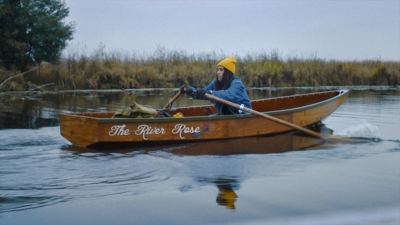
Thus far in her career, Chicago-born musician-actress-filmmaker Haroula Rose is probably best known for her soundtrack contribution to American Horror Story and her involvement as an associate producer for Fruitvale Station. Like the latter, her first directorial feature, Once Upon a River, also tackles a serious subject and endemic problem.

Every 73 seconds, an American is sexually assaulted, with one out of six women the victim of an attempted or successful rape. Youths between the ages of 12 and17 are the most vulnerable. Fifty-five percent of sexual assaults happen at or near the victim’s home, and it isn’t usually “stranger danger”. More often it’s a friend of the family, a neighbor, or even a family member. And in an average year, it’s estimated that there are anywhere from 1.3 to 1.5 million runaway and homeless youths in the U.S.

So yeah, this film deals with serious subjects that can be especially relevant for American teens and their parents. While it treats the material in a frank way, there’s nothing gratuitous or sensationalized. Maybe that’s because Once Upon a River has a strong female presence, both behind the camera and onscreen. In addition to directing, Rose wrote the screenplay based on a novel by Bonnie Jo Campbell and also shared a producing credit. The film was shot by cinematographer Charlotte Hornsby (Hair Wolf), the production design, set decoration, costume design, and makeup were all done by women, and the casting director was also a woman. Onscreen, New York-trained actress Kenadi DelaCerna carries the film with her strong presence as a biracial 15 year old—younger than her usual range.

NPR called the novel’s main character, Margo Crane, “the most realistic underage runaway in modern fiction,” and that’s true for this 2019 film adaptation as well. Margo has been raised by her Native American father (Tatanka Means), who gave up drinking the day the girl’s mother left them to “find” herself (which people were doing in the sixties). The film is set in 1977 in the small fictional town of Murrayville in rural Michigan, where prejudice against Native Americans and the class inequity are apparent. Margo appreciates her father and the skills he taught her—she carries around a book about Annie Oakley and has become a crack shot herself—but she clearly misses having a mother in the house and like any teen wants more than life is currently giving her. More

Review of THE OPENING ACT (Blu-ray)

Leave a comment

Grade: B
Comedy
Not rated (would be PG-13)

As a college English professor I’ve run across a surprising number of students who want to be stand-up comics. Some of them started a comedy club on campus, some did open mics in local comedy clubs, and one even asked for my opinion on a stand-up routine he was filming to send to an Ivy League school for his grad school admissions essay. Even if they’re not aspiring to grab the microphone themselves, college students love stand-up—which is why so many comics do the college circuit. So a passionate movie about stand-up comedy ought to be a hit with college and high school students who have secret (or not-so-secret) ambitions of being a stand-up comic.

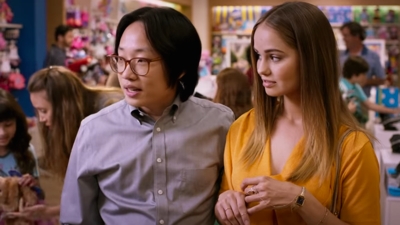
The Opening Act is also plenty fun for the rest of us who have no plans to quit our respectable jobs, as Ken Jeong did (he was a doctor), to become stand-up comics. But as you watch how passionate everyone is about stand-up you begin think, on some level, maybe I could do this too—and that’s because this 2020 film feels like a love letter to stand-up comedy. It’s written and directed by stand-up comic Steve Byrne, it stars stand-up comic Jimmy O. Yang, and all but four of the remaining cast members are stand-up comics. Even guys playing a heckler (Butch Bradley), a cop (Tom Segura), and a taxi driver (Felipe Esparza) are stand-up comics. The only pure actors among the rest of the cast are Debby Ryan (The Suite Life on Deck), Jackie Tohn (GLOW) and two minor roles. Surrounded by so much comedic talent, I can picture them trying to pick up pointers, as The Opening Act‘s main character does throughout the film. More

Older Entries Newer Entries