Home

Review of WILDCATS (1986) (Blu-ray)

Leave a comment

Grade:  B/B-
Comedy
Rated R

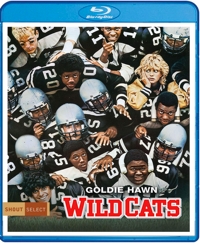
One of my guilty pleasures recently came out on Blu-ray:  Wildcats, starring Goldie Hawn. You know, Kate Hudson’s mom?

Back in the day, Hawn was a huge star, and it didn’t take her long to get there. After a failed TV series (Good Morning World) and two minor roles in films, she landed a plum role opposite Walter Matthau in Cactus Flower and won an Oscar for Best Supporting Actress. Piece of cake, right? Except that after that she was cast in a succession of make-a-buck films that tried to capitalize on her popularity and personality in the ‘70s and ‘80s.
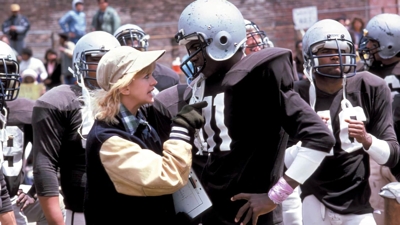
Along with Private Benjamin (1980), Seems Like Old Times  (1980), and Overboard (1987), Wildcats is one of the better formulaic light comedies that Hawn made. In it, she plays the daughter of high school football coach who finally gets the chance to realize her own dream of coaching football . . . at an inner city school.

Right . . . to use the catch-phrase of comedian Nipsey Russell, who plays the principal at that school.

Wildcats would be fun viewing for the entire family if it wasn’t rated R for language (F-bombs included), teen drinking and drunkenness, and brief nudity, because the whole high-school setting and fish-out-of-water, win-them-over storyline is meant to be as upbeat and warm-hearted as it is humorous. It’s hard not to root for Molly as she endures sexism in the workplace, resentment and disrespect from her players, and meddling/bullying from an ex-husband en route to trying to coach a bunch of losers into lovable winners.

More

Review of RAYA AND THE LAST DRAGON (Blu-ray combo)

Leave a comment

Grade:  A-/B+
Animation
Rated PG

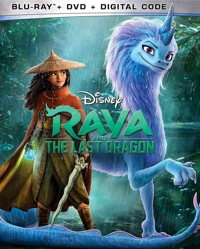
Some twelve weeks after its theatrical debut, Raya and the Last Dragon is the third highest grossing film in the U.S., behind Spiral and Wrath of Man. With a domestic box office of $49.3 million and another $60.6 million international box office revenue, it’s exceeding expectations, and I’d like to suggest one reason why:  Disney animators always seem to up their game, and they did so again with Raya.

The martial arts swordfights in this 59th full-length feature from Disney are the most accomplished I’ve seen so far in the world of animation—presented at a speed you’d normally encounter in the best Ip Man, Bruce Lee, and Jackie Chan movies. Combine that with gorgeous backgrounds and character animations, and Raya and the Last Dragon is another solid effort from the House of Mouse—though the plot itself can seem a bit familiar.

Set in a dystopian fantasy world, Raya and the Last Dragon begins with the backstory of a fictional land (Kumandra) where dragons and people once thrived together until evil spirits (that look a bit like the smoke monster on Lost)terrorized the land and turned dragons and people to stone—except for some people and one dragon, who focused the magic she and other dragons had on a single gem. But you do the math: one gem and five tribes? Of course they fight over it, and the pieces are eventually scattered among those tribes. Hundreds of years later, the Druun return and wreak havoc on the now-separate sections of what was once Kumandra. Raya is the daughter of Chief Benja of the Heart tribe, while her once friend and now rival, Namaari, is the princess of the Fang tribe. But like any fantasy, the story itself seems more complicated than the visual action. Relax and enjoy this simple quest story, as Raya tries to find the last dragon, recover the jewel pieces, and defeat the Druun once and for all. Unless Namaari beats her to it.

Give Disney credit, though, for creating strong female characters without drawing attention to it, without adding a Prince or love interest, and for not making a big deal out of adding two more princesses to the merchandising Pantheon. Give them credit, too, for giving Asians and Asian Americans feisty princesses that look like them—even if Disney took a little flak (what else is new?) for not featuring enough South Asian actors among the voice talents.

More

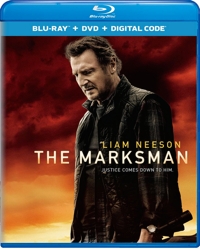
Review of THE MARKSMAN (Blu-ray)

Leave a comment

Grade:  B-/C+
Action thriller
Rated PG-13

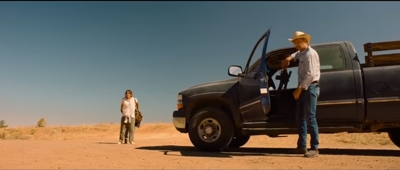
From the first scene where an aging Arizona rancher (Liam Neeson) stumbles onto a cartel “situation” and ends up with a bag full of money, to a scene that’s the equivalent of the Coen Brothers’ “coin toss scene,” The Marksman feels like a cheap knockoff of No Country for Old Men.  And with a little Hunt for the Wilderpeople added for good measure.

What cheapens it isn’t Neeson’s performance, but rather a formulaic approach to ticking off the boxes rather than concentrating on creating characters and relationships with any individuality or depth.

For one thing, first-time director Robert Lorenz spends too much time in the early going just establishing a few facts that could have been hinted at more subtly: 

—Jim Hanson was a Vietnam War veteran who earned a medal for marksmanship

—Jim Hanson is lost and lonely because his wife died of cancer

—Jim Hanson is going to lose his ranch unless he can come up with a lot of money to pay for back mortgage payments

The film is also marred by characters that push past stereotypes into caricature country.

Javier Bardem has nothing to fear from the cartel bad ass that Lorenz gives us here. Mauricio—called “Heffe” and played by Juan Pablo Raba—is too cartoonish to be chilling. He’s just a bad guy who sneers a lot and stares a lot in lingering close-ups. Oh we believe him when he says he’s going to kill the old rancher who drove away with the son of a Mexican woman he already killed at the border. And we believe he’s determined to recover the drug money that the boy’s (now deceased) uncle had taken from him and given to his (now deceased) mother. But Bardem as Anton Chigurh was a one-and-done, just as Heath Ledger’s lizard-tongued Joker was a one-time affair. Try to duplicate it and you’re doomed to fall short.  

More

Review of MAMBO MAN (DVD)

Leave a comment

Grade: B/B-
Drama
Not rated (would be PG)

Good art of any kind expands your world or your mind—often both. And films that show us a way of life, a way of perceiving life in another region or country can be more than fascinating. They can be instructional on a subliminal level. If you’re the kind of person who drives through a small town and looks in the windows of houses and shops wondering what it would be like to live there, the fictional Mambo Man is your kind of movie. And if you loved Buena Vista Social Club because it was awash with Cuban music, well, Mambo Man is your kind of movie too.

This 2020 Cuban film is full of fantastic images of life as it’s lived in in mostly rural Cuba, and the wonderful cinematography by Luis Alberto and Gonzalez Garcia is further enhanced by near-constant non-diegetic Cuban music that, along with several performances written into the screenplay, really capture the essence of life on this Caribbean island just 105 miles from Key West.

Edesio Alejandro and Mo Fini co-directed this film, which was shot mostly in the southeastern cities of Bayamo and Santiago de Cuba. Fini is the founding director of Tumi Music, which has produced more than 300 Latin CDs and videos, so it’s no wonder that music plays as much of a role in Mambo Man as the scenery and cinematography. Some scenes include live music performed by such legendary Cuban musicians as Candido Fabre, Maria Ochoa, Alma Latina, David Alvarez, and Arturo Jorge. The soundtrack features members of the Buena Vista Social Club—among them Grammy winner Eliades Ochoa, Juan de Marcos Gonzalez of the Afro-Cuban All Stars, Omara Portuondo, and many others that fill the screen with a rich tapestry of songs. More

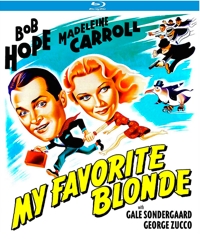
Review of MY FAVORITE BLONDE (Blu-ray)

Leave a comment

Grade: B/B-
Comedy
Not rated (would be PG)

Comedian Bob Hope received a record five honorary Oscars and also has a record four stars on the Hollywood Walk of Fame. But those awards are dimmed by the Congressional Gold Medal he received, the Presidential Medal of Freedom that Pres. Lyndon B. Johnson awarded him, the Medal of Liberty he got from Pres. Ronald Reagan, the National Medal of Arts he received from Pres. Bill Clinton, the knighthoods he received from two Popes, and the honorary knighthood that Great Britain bestowed upon him. In fact, Hope has almost as many high honors as he does films—and he starred in 54 of them during a career that spanned nearly 80 years.

Yeah, you’re probably thinking, but are his films any good? For the most part, Hope’s films fall in the three-star category (out of four). And speaking of stars, five-star Gen. Dwight D. Eisenhower presented Hope with the Medal of Merit “in recognition of his wartime contributions to morale on the homefront as well as on virtually every war front.” Which is to say, besides entertaining the troops, as he did his entire life starting in 1941, Hope also starred in a number of wartime films that both entertained audiences and reinforced patriotic themes.

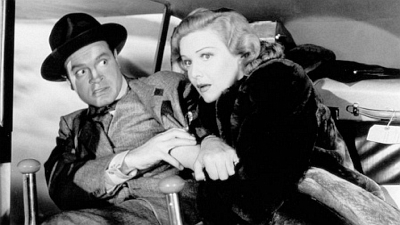
My Favorite Blonde is one of those WWII-era films. This 1942 black-and-white comedy features Hope in a familiar role: a vaudevillian who unwittingly finds himself in the middle of an adventure or intrigue. This time Larry Haines (Hope) and his trained roller-skating penguin Percy are headed for Los Angeles, where the movies want to sign the penguin—not his trainer. But that was before he ran into British secret agent Karen Bentley, or rather she planted a scorpion brooch on him containing the flight plans for 100 American bombers. Back then Americans weren’t as paranoid as they are now, but there was still a sense that a “fifth column” might be operating as underground spies in the U.S.A. German agents (led by screen veteran Gale Sondergaard) are in pursuit, and as irrational as it seems for plans for a European war to start out in New York City, move to Albany, then Chicago, and finally L.A., what entertains about Bob Hope movies is less the plotting than it is Hope’s character, antics, and interaction with a woman that he eventually gets—if Road picture crooner-crony Bing Crosby isn’t co-starring. More

Review of THE CROODS: A NEW AGE (Blu-ray combo)

Leave a comment

Grade: B-/C+
Animation
Rated PG

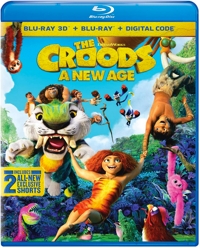
They say you’re only tall or short compared to who’s standing alongside you, and the Croods seem a little cruder in The Croods: A New Age.

When this prehistoric family meets the Bettermans, who live a better existence that feels like a cross between the Garden of Eden and The Flintstones’ Bedrock, the Croods’ lack of couth really stands out. Kind of like the Clampetts in swanky Beverly Hills. In fact, what could have been a clever commentary on evolution instead becomes more of a familiar poor/rich, rural/urban comedy.

DreamWorks animators have produced another visual feast, with typically stellar animation. But, as is often the case with full-length features that come from big studios who don’t have a mouse and a history of animation evolution that traces back to the beginning of cartoon time, there’s something just slightly off.

It’s not a bad movie, mind you, and the kids actually will love this one because of the bright colors, the crazy characters, and the manic antics that tend to dominate. There are some fun creatures and thrill-ride sequences. But adults may find themselves trying to put their finger on what’s missing—what keeps this okay-to-good movie from being a truly good one.

Endearing characters? Maybe. I don’t know if it’s the way they’re drawn, the dialogue, or the way the actors were directed, but everyone seems to be overwrought this outing and there’s as much constant jabbering and conflict as there is in a typical Real Housewives episode.

Heart? Possibly. There’s a touching family-first love-who-you-are message embedded here, but sometimes the decision to DO EVERYTHING BIG AND LOUD AND MANIC short circuits the feelings that those messages are intended to create. The warm-and-fuzzy moment feels tacked on when everything else is 50 Shades of Crazy. More

Review of ONCE UPON A RIVER (DVD)

1 Comment

Grade: B-
Drama
Not rated (would be PG-13 for brief nudity and adult elements)

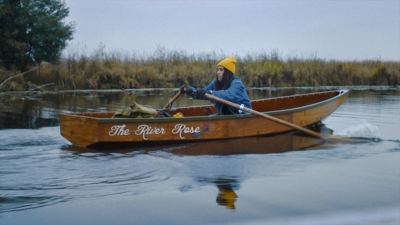
Thus far in her career, Chicago-born musician-actress-filmmaker Haroula Rose is probably best known for her soundtrack contribution to American Horror Story and her involvement as an associate producer for Fruitvale Station. Like the latter, her first directorial feature, Once Upon a River, also tackles a serious subject and endemic problem.

Every 73 seconds, an American is sexually assaulted, with one out of six women the victim of an attempted or successful rape. Youths between the ages of 12 and17 are the most vulnerable. Fifty-five percent of sexual assaults happen at or near the victim’s home, and it isn’t usually “stranger danger”. More often it’s a friend of the family, a neighbor, or even a family member. And in an average year, it’s estimated that there are anywhere from 1.3 to 1.5 million runaway and homeless youths in the U.S.

So yeah, this film deals with serious subjects that can be especially relevant for American teens and their parents. While it treats the material in a frank way, there’s nothing gratuitous or sensationalized. Maybe that’s because Once Upon a River has a strong female presence, both behind the camera and onscreen. In addition to directing, Rose wrote the screenplay based on a novel by Bonnie Jo Campbell and also shared a producing credit. The film was shot by cinematographer Charlotte Hornsby (Hair Wolf), the production design, set decoration, costume design, and makeup were all done by women, and the casting director was also a woman. Onscreen, New York-trained actress Kenadi DelaCerna carries the film with her strong presence as a biracial 15 year old—younger than her usual range.

NPR called the novel’s main character, Margo Crane, “the most realistic underage runaway in modern fiction,” and that’s true for this 2019 film adaptation as well. Margo has been raised by her Native American father (Tatanka Means), who gave up drinking the day the girl’s mother left them to “find” herself (which people were doing in the sixties). The film is set in 1977 in the small fictional town of Murrayville in rural Michigan, where prejudice against Native Americans and the class inequity are apparent. Margo appreciates her father and the skills he taught her—she carries around a book about Annie Oakley and has become a crack shot herself—but she clearly misses having a mother in the house and like any teen wants more than life is currently giving her. More

Review of THE COURT JESTER (Blu-ray)

Leave a comment

Grade: B+/A-
Adventure Comedy
Not rated (would be G)

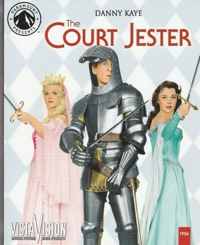
The Robin Hood legend gets a makeover and a different focal character in The Court Jester (1956), one of Danny Kaye’s best. Along with Bob Hope’s The Princess and the Pirate, it’s also one of the classic costume comedies from the Technicolor era.

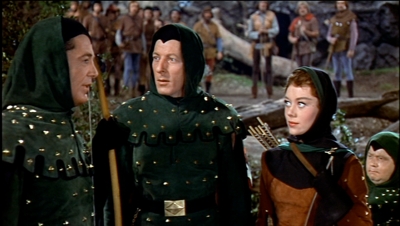
Once you get past a slightly corny title-sequence song sung onscreen by Kaye, this medieval musical comedy-adventure is full of pageantry and fun. Kaye plays Hubert Hawkins, a minstrel among merry men who hide in the forest and serve a Robin Hood figure known as The Black Fox. Aside from providing entertainment, Hawkins’ main job is to attend to the true king of England—a baby that somehow escaped the slaughter ordered by King Roderick the Tyrant (Cecil Parker) by his henchman, Lord Ravenhurst. That includes changing diapers and pulling said diaper down to reveal a “purple pimpernel” (a takeoff on The Scarlet Pimpernel) to each subject, who then kneels.

Despite his own timidity, Hawkins yearns for a more active and manly job. He finally gets his chance when he’s ordered to team with the swashbuckling Maid Jean (Glynis Johns) and take the child to safety after the group’s forest lair had been discovered. What follows is a clever plot with more twists than a French braid and running gags involving mistaken identity, slapstick, tongue twisters, and snappy catch-phrases.

At $4 million, The Court Jester was the most expensive comedy filmed to date, and it has a lot of elements that still make it appealing for family viewing. Colorful costumes by Edith Head really pop in high definition and bring to life the grandeur of Hollywood’s romantic vision of castles and courtly intrigues. There’s a petulant princess (Angela Lansbury, Bedknobs and Broomsticks) who refuses to marry a blustery Scotsman just so her father can form a political alliance. That princess has an attendant (Mildred Natwick) who is also a sorceress capable of hypnotizing people. And there is a troupe of little persons (billed as Hermine’s Midgets) that perform acrobatics and clever stunts that factor heavily in the family-friendly action. The American Legion Zoaves from Jackson, Michigan even make an entertaining appearance in a sequence where a knighthood ceremony is comically rendered. More

Review of THE MAN WHO WOULD BE KING (Blu-ray)

Leave a comment

Grade: B+/A-
Adventure
Rated PG (but see below)

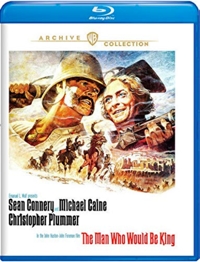
Rudyard Kipling adventures have always been popular with Hollywood and its audiences. The Jungle Book, Captains Courageous, Soldiers Three, Rikki-Tikki-Tavi, Wee Willie Winkie, and Kim were a part of every youngster’s coming of age in the last half of the 20th century. But filmmakers ignored Kipling’s The Man Who Would Be King until the legendary John Huston took up the challenge in 1975.

Maybe that’s because “The Man Who Would Be King,” one of the stories published in Kipling’s The Phantom Rickshaw and other Eerie Tales (1888), is a little more adult than this film’s PG rating would suggest. The heroes are amoral at best, and in addition to adult situations there are a few grisly elements.

If your family saw and enjoyed The Road to El Dorado, that 2000 animated adventure was also based on “The Man Who Would Be King,” but softened for family audiences. This feature from the director of The Maltese Falcon, The Treasure of the Sierra Madre, The African Queen, and The Misfits stays pretty close to Kipling’s original tale.

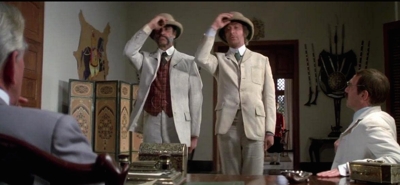
The story follows the exploits of two former British soldiers who had fought in India and Bharat and now crave adventure more than a return to England, retirement, or respectability. They’re rogues, really, who seem nice enough yet don’t give killing a second thought. They’re also motivated by greed and self-interest—not exactly the kind of heroes that Hollywood gravitated towards. But the anti-hero that had become popular in the late ‘60s paved the way for audiences to watch Peachey Carnehan (Sir Michael Caine) and Daniel Dravot (Sir Sean Connery) with fascination, if not admiration. More

Review of MISTER ROBERTS (1955) (Blu-ray)

Leave a comment

Grade: B+
Comedy-Drama
Not rated (would be PG)

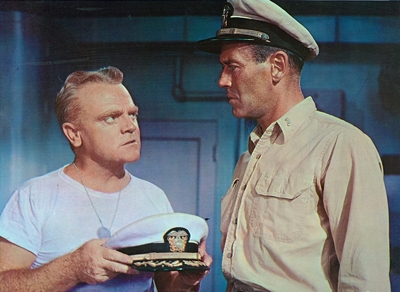
Mister Roberts (1955) is set during the waning days of World War II, but it’s not a war movie. There are no battles, no strategic planning sessions, and no missions. That’s a problem for Chief Cargo Officer Doug Roberts (Henry Fonda, reprising his Broadway role), who desperately wants to see action. Stuck on a cargo ship stationed off a small island in the Pacific far away from the fighting, Roberts’ serves his country by procuring and delivering such commodities as toilet paper and toothpaste to other ships that are headed for combat.

It’s not like he’s itching to become a hero or put his life in danger. He just feels like he ought to be serving in the “real” war instead of being anchored where on one side he watches a task force slipping by under the cover of darkness, and on the other side his men aboard the appropriately named Reluctant discover some excitement one morning by training their binoculars and spyglasses on a group of nurses who just landed at the local hospital.

In addition to fighting tedium, Roberts and the crew have to deal with a tyrannical captain (James Cagney) who prizes the palm tree he received from the admiral for delivering the most cargo in the Pacific. But the captain has his sights set on something more: a big promotion. Like the factory boss who refuses to give his line workers a break because they’re so productive the company would lose money, he keeps his crew on the ship. Always. No leave. No shore liberty. And the time off they get for good behavior? Ten minutes of swimming.

If the crew collectively feels like the exaggerated characters we met in the musical South Pacific without the songs, it’s no coincidence. Joshua Logan had a hand in writing the screenplays for both of the cinematic adaptations. Tonally Mister Roberts isn’t all that different either. It’s a light story with mostly comic moments and several serious ones. More

Older Entries Newer Entries