

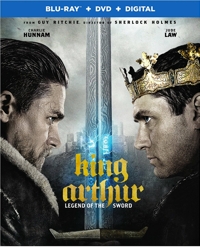
 Grade: C+
Entire family: No
2017, 126 min., Color
Fantasy-Adventure
Rated PG-13 for sequences of violence and action, some suggestive content, and brief strong language
Warner Bros.
Aspect ratio: 2.40:1
Featured audio: Dolby Atmos TrueHD
Bonus features: B-
Trailer
Amazon link
Guy Ritchie and the King Arthur legend? Sounds like a match made in heaven, doesn’t it? After all, the director who gave us Lock, Stock, and Two Smoking Barrels and The Man from U.N.C.L.E. sure breathed new life into another legendary but staid franchise, Sherlock Holmes, reinvigorated and reinvented in partnership with star Robert Downey Jr.
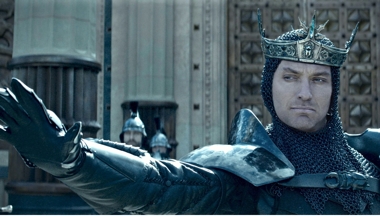 For King Arthur: Legend of the Sword he had hunky and charismatic Sons of Anarchy alum Charlie Hunnam to work with, and Jude Law playing the bad guy on the throne. So what could possibly go wrong?
Well, when a film begins with giant elephants with pyramids on their backs filled with soldiers and all of them attacking a castle, it certainly gets your attention—kind of like those rock monsters did in the otherwise believably biblical epic of Noah. Then there’s more action, and people talking quickly about things you’re not grasping, and more outrageous things happening, and scenes quickly changing, and before you know it you’re feeling like some of those soldiers in the opening battle, falling hundreds of feet into a moat below and drowning in confusion.
There are some absolutely marvelous sequences in King Arthur: Legend of the Sword, but because confusion reigns with an even tighter fist than King Vortigern (Law), you don’t have enough context to really appreciate what’s happening. It probably doesn’t help that Ritchie employs some of the self-conscious techniques he used in his smart crime dramas: like guys telling a story and we see it in narrative flashback as they speak, then someone will ask a question and the story will change or something will happen that’s even more visually outrageous, like the flashback reversing when one of the listeners says, “Whoa, back up.” It’s clever and postmodern and fun and all, but it also adds to the confusion rather than helping to resolve it. Ritchie’s technique often involves throwing a lot at viewers and then later explaining what they saw, but even the explanations fall short when you watch this film for the first time. I suspect it will take two or three viewings to make complete sense of the film.














 Family Home Theater