Home

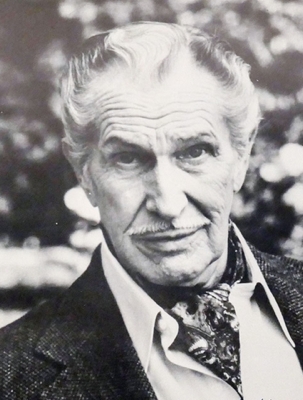
Flashback: Vincent Price talks about high art . . . and low art

Leave a comment

On October 20, 1985, I had the good fortune to interview Vincent Price for a non-profit journal of the arts that I edited at the time, an award-winning magazine called Clockwatch Review. The interview took place on a Sunday morning at Price’s suite at the Pfister Hotel in Milwaukee, where he was in town to film a commercial. We had breakfast together while we talked, with Price, always the gentleman, pouring tea for me. He had just written a book about American art, and since he received a BA in art history from Yale in 1933, it seemed a good place to start before talking about his films. The following is an excerpt from an interview that was published in Clockwatch Review Vol. III Number 1 (1985).

How would you characterize American art? You said we’ve just begun to find an identity?

You know, in my profession, when they removed the censorship from the movies, the movies just went completely overboard in language, plot, sex, and violence . . . which is unfortunate. Because while some of the movies technically are wonderful, they are boringly realistic. And there is a kind of thing in the greatest drama—Ibsen and the realists—where there is a form which is brilliant, artistic, and yet somehow beyond life, larger than life.

It seems to me that one of our problems as American artists was that we were playing to the lowest common denominator. Television is the prime example of it, and I lump television and motion pictures and theater and everything else all in one thing. To me, art is everything. Everything that man does, as discriminated from the works of nature. The ultimate expression of man is art, and since I believe that everything man does is art, I believe in that ultimate expression of man’s doing.

Great art is communication to the few, unfortunately. It is not communication to the many. Your magazine will never have the circulation of the Enquirer [laughs]. The Enquirer is probably a perfect example, or Laverne & Shirley on television or Rambo in movies. I watched one of the Rambo-type movies last night, and it was the most puerile piece of writing I’ve ever seen in my life. It was just rounds of ammunition, but no rounds of dialogue.

More
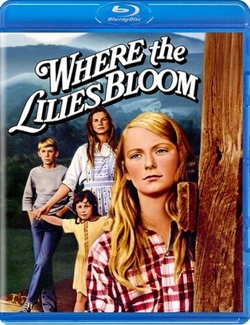
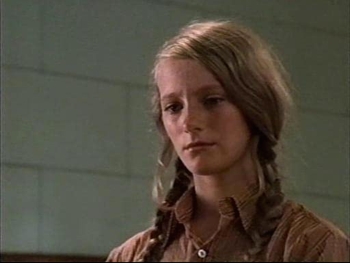
Review of WHERE THE LILIES BLOOM (Blu-ray)

Leave a comment

Grade:  B-
Drama
Rated G

Coming-of-age juvenile novels, especially ones documenting life below the poverty line, have spawned an awful lot of films. Where the Lilies Bloomis part of that informal tradition, adapted for the big screen in 1974 after the success of another poor sharecropper story, Sounder (1972).

Where the Lilies Bloom is based on a book by Vera and Bill Cleaver and tells the story of a dirt-poor family living pretty much off the grid in the Appalachian mountains of North Carolina. The mother of the family, still known in the area as the best root and herb doctor there ever was, died four years before the action of this film begins, and the father has that telltale cough and the kind of “spells” that suggest poor Roy Luther (Vance Howard), isn’t far behind.

That puts the focus on the children—in particular, on the second oldest daughter, Mary Call (Julie Gholson), because the oldest is a bit of a dreamer like her father and not the take-charge doer that their mother had been. With the father more and more out of the picture, Mary Call takes on the responsibility of leading the family . . . at the age of 14. That includes following her father’s wish that she keep neighbor Kiser Pease (Harry Dean Stanton) away from her older sister Devola, because Kiser is living in the family’s old house that he got “legal like” by paying the taxes that Roy had allowed to lapse—presumably because of grief following the death of his wife. Although Kiser is a persistent suitor, Mary Call is a bulldog that won’t let him near the place, even though he legally owns the sharecropper’s shack they now call home. Mary Call also has to raise younger brother Romey (Matthew Burril) and baby sister Ima Dean (Helen Harmon).

The story is narrated from Mary Call’s point of view, and like her more famous rural counterpart, John Boy Walton, she is good at writing and encouraged by a teacher to make something “more” of herself by leaving the hill country. But that’s the future. Mary Call is more concerned with the present. To earn a living, the children trudge up the mountain as generations of Luthers before them had done, pulling and pushing their wagon. Using their mother’s notebook as a guide, they pick all sorts of mountain herbs and roots to sell to the local pharmacist in a town far from their shack. And the focus of this film is as much on the family’s daily lifestyle as it is on plot.

More

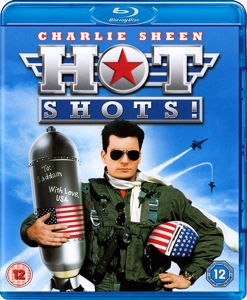
Review of HOT SHOTS! and HOT SHOTS! PART DEUX (Blu-ray)

Leave a comment

Grade:  C+ and B-
Comedy
Rated PG

With Maverick raking in close to $600 million in total gross and drawing praise from critics and viewers, many fans have started re-watching the original Top Gun. But if you’re also a fan of silly parodies, why stop there? You might as well add the Top Gun parody to your home video library. It’s available with the sequel (Hot Shots! Part Deux) on both domestic and imported Blu-rays.

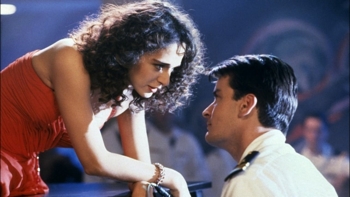
Hot Shots! (1991) was the first parody Jim Abrahams directed without Jerry and David Zucker after the three parted ways following silly successes like Airplane!, The Naked Gun, and Top Secret! As far as parodies go, you should be warned that none of the three found the same level of success as when they worked as a team. But there are still some laughs to be had. Many of the laughs here come from Lloyd Bridges’ performance as Admiral Tug Benson, who is hilariously clueless and never present, though he’s standing right there. Hot Shots! is mostly a takeoff on Top Gun, but other films that get spoofed include An Officer and a Gentleman, 9 1/2 weeks, Dances with Wolves, Superman, and The Fabulous Baker Boys. And Bridges plays a version of a character fans will recognize from Airplane!

Charlie Sheen does a pretty good job of deadpanning the leather-jacketed, bike-riding role Tom Cruise made famous, with Cary Elwes (The Princess Bride) serving as his main fighter-pilot rival, Kent Gregory. The film follows Harley’s reluctant return to flying—reluctant because, like his father before him, he was responsible for another flier’s death. And things don’t bode well for his new partner, “Dead Meat” (William O’Leary). When things heat up “somewhere in the Mediterranean,” Harley and Kent are picked to join the mission to knock out Saddam Hussein’s nuclear weapons factory, with secondary targets being an accordion factory and a mime school (one of the funnier lines from co-writers Pat Proft and Abrahams). Complicating matters? Harley’s fragile psychological state and an evildoer of the capitalist kind (Efrem Zimbalist, Jr.) who is trying to sabotage the planes for personal gain.

More

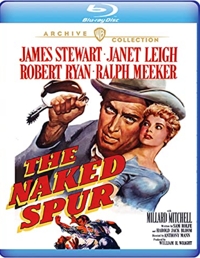
Review of THE NAKED SPUR (Blu-ray)

Leave a comment

Grade:  B+/B
Western
Not rated (would be PG)

Some people consider classic Westerns to be paint-by-numbers, but the numbers are pretty darned good for Jimmy Stewart and director Anthony Mann. Of the 18 Westerns that Stewart appeared in, five were made with Mann, and four of those rank among Stewart’s top eight. Not bad, considering that Stewart also made four Westerns with the legendary John Ford and one with genre wizard Delmer Daves. The Naked Spur (1953) was the third film that Stewart and Mann made together, following Winchester ’73 (1950) and Bend of the River (1952) and preceding The Far Country (1954) and The Man from Laramie (1955).

Winchester ’73 is the best of the bunch, but The Naked Spur isn’t far behind. Mann got some great performances out of Stewart because he encouraged him to play characters that went against type. Sure, they’re basically nice guys, but they’re not meek, they’re not befuddled, and they’re not so darned goody-goody sure of themselves all the time. Under Mann’s direction, Stewart played characters with a tormented past that is kept tightly lidded, with occasional breakthroughs—rougher, rawer, darker characters than people were used to seeing, yet still one that’s likable, whom you root for and want to see win.   

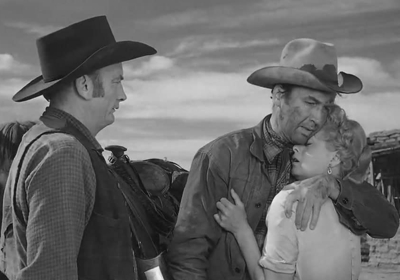
Mitchell and Stewart

In terms of storytelling, Mann manages to have it both ways. He showcases the raging rivers and formations of the Rocky Mountains and San Juan Mountains, while also zeroing in on five characters who, because they are together the whole time, feel as if they could be on a stage, the drama is so contained and psychological. The assist for making the scenery feel like a sixth character goes to cinematographer William C. Mellor, who won Oscars for his black-and-white work in A Place in the Sun and The Diary of Ann Frank and captures both the stage-like intimacy on the trail and also the grand location scenery in glorious Technicolor.

More

Flashback: Gore Verbinski on pirates, Johnny Depp, Keith Richards, and the end of an era

Leave a comment

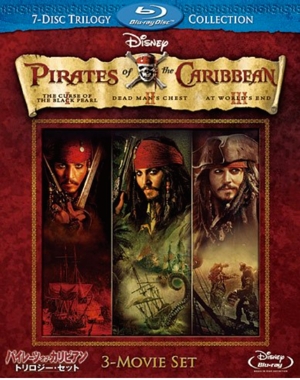
There had to have been times when director Gore Verbinski was tempted to give himself a little poke with a cutlass . . . or at least pinch himself to make sure it all hasn’t been just a six-year dream. After all, in 1997, if you’d have told the director of Mousehunt that he would go on to revive the Hollywood pirate movie and produce a blockbuster trilogy for Walt Disney that would spawn legions of fans and a cottage industry of movie-related merchandise, he probably would have laughed. Verbinski’s budget for Mousehunt was reportedly $38 million. The budget for Pirates of the Caribbean: The Curse of the Black Pearl (2003) was estimated at $140 million, and that was just the beginning. Dead Man’s Chest (2006) had a budget of $225 million, and At World’s End (2007) took a whopping $300 million to produce. These were blockbusters in every sense of the word.

But Verbinski was clearly the right man for the job. He took a Disney theme-park attraction and turned it into one of cinema’s wildest and most successful rides. And he introduced Johnny Depp as Capt. Jack Sparrow, an unusual pirate who marched to the beat of a different rum.

In two sessions with journalists on November 15 and 20, 2007, Verbinski answered questions in an online forum while bonus features from the DVD played on a small screen. Journalists submitted questions, then Verbinski decided which ones to answer. Different journalists participated in each session, and the rapid-fire questions and answers reflect that.

Gore Verbinski on set

Since these group interviews, Disney has kept the franchise moving forward, with Rob Marshall directing On Stranger Tides, Joachim Rønning and Espen Sandberg directing Dead Men Tell No Tales, and Rønning enlisted again to direct an as-yet untitled sixth film in the franchise without Johnny Depp. But Verbinski and Depp laid the groundwork, as this interview attests.

The maelstrom scene proved to be a major success, but also offered up major effects obstacles. Was there ever a moment you didn’t think it was going to work out?

Definitely. The biggest issue hit us about eight weeks prior to the release. We were suffering from a scaling issue that seemed insurmountable. The physics of a whirlpool this size overwhelmed the team at ILM. The path we were heading down was not achieving the desired results, so it all had to be reworked. The initial rendering backgrounds were used as out-of-focus plates for close-ups, which bought us time by getting 100 or so shots in the pipeline and allowed us to completely rethink and re-render the maelstrom for all of the wide shots. This is the exact opposite of how you would normally go about producing this sequence. John Knoll and the team at ILM ultimately pulled it off, but it was a real nail-biter.

More

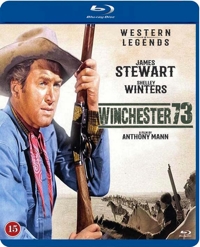
Review of WINCHESTER ’73 (1950) (Blu-ray Import)

Leave a comment

Grade:  B+
Western
Not rated (would be PG)

One of Anthony Mann’s most highly regarded Westerns, Winchester ’73 feels like the perfect film for this year’s Fourth of July celebration. Not only does it take place around the Fourth and show a 100-year celebration in that most fabled of American towns, Dodge City, but it also helps to explain the paradox of America’s gun-crazy culture.

The 1950 film stars James Stewart in one of his best Westerns . . . and that’s saying something, because he’s made quite a few good ones. Winchester ’73 was the first that Stewart made since 1939’s Destry Rides Again, and it started a string of Westerns he would star in over the next half-decade:  Broken Arrow, Bend of the River, Carbine Williams, The Naked Spur, The Far Country, and The Man from Laramie. Five of those films were with director Anthony Mann, whom The Guardian called a “master of the genre.”

Winchester ’73 is set just after the battle that was popularly known as Custer’s Last Stand. Indians now have repeating rifles, thanks to gunrunners who have no qualms about selling weapons that will be used on settlers and U.S. Cavalry . . . as long as they can make a tidy profit. The Indians that wiped out Custer and his command had better rifles than the cavalry, and America was just learning about Little Bighorn shortly before the nation’s big Centennial celebration. It threw a damper on celebrations in the East, but not in Dodge City, where a genial Wyatt Earp confiscates the guns of newcomers Lin McAdam (Stewart) and Frankie “High-Spade” Wilson (Millard Mitchell, who would play the big studio boss in Singin’ in the Rain). Lin is tracking down Dutch Henry Brown, with whom he has a personal beef—one that will result in gunplay. As they reluctantly hand over their weapons, the audience is shown the inside of the lawmen’s office that’s completely packed with rifles and handguns and gun belts full of ammunition. Earp explains, it’s impossible to keep law and order in a wild town like Dodge if they allow people to keep their guns. “You’ll get them back when you leave town,” he says.

More

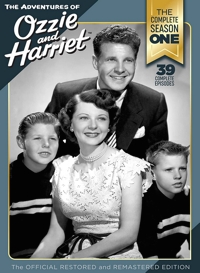
Review of THE ADVENTURES OF OZZIE AND HARRIET: COMPLETE SEASONS ONE & TWO (DVD)

1 Comment

Grade:  B-/B
TV Comedy
Not rated (would be G)

Until It’s Always Sunny in Philadelphia pushed past them in 2021, with its 14 seasons The Adventures of Ozzie and Harriet held the record for longest-running live-action television sitcom. And it still holds the record for most live-action sitcom episodes, with 435 filmed between October 1952 and April 1966. 

That’s pretty amazing, considering that the rival family sitcom I Love Lucy got all the love back in the day. Lucy earned 25 Primetime Emmy nominations and eight wins, while Ozzie and Harriet got justthree nominations and no wins. Lucy became the most watched TV show in America for four out of its six seasons, while Ozzie and Harriet managed to crack the Nielsen Top 30 just once (in 1963-64).

Call it another case of slow-and-steady wins the race. Lucy relied on manic, slapstick situations and comedy of character, while Ozzie and Harriet offered the kind of gentle everyday situational family-life comedy that made The Adventures of Ozzie and Harriet a popular radio show from 1944-54. Looking back, it was as close as early classic TV programming came to the kind of loosely scripted reality shows that are popular now. Almost all of the episodes were scripted variations of real incidents from the lives of the Nelson family:  father Ozzie, mother Harriet, and sons David and Ricky. The opening title shot of a home exterior was actually the Nelsons’ home, and though interior shots had to be filmed on a soundstage, producers meticulously recreated the look of the interior of the Nelsons’ home. Ozzie was a stickler for realism, and the plots that viewers watched were often reenactments of family incidents or situations, with Ozzie directing 382 episodes and also writing 261 of the show’s scripts. The boys were 16 and 12 years old when the TV show began, so America watched David and Ricky grow up.

More

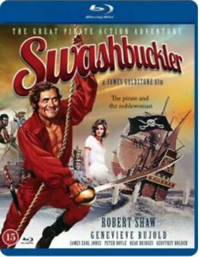
Review of SWASHBUCKLER (1976) (Blu-ray)

1 Comment

Grade:  B+
Action-Adventure/Comedy
Rated PG (see below)

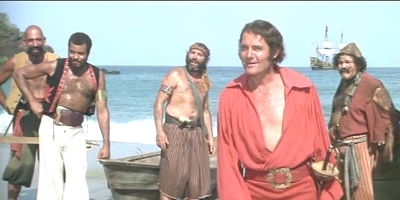
Pirates of the Caribbean fans who are looking toward the future and wincing at the prospect of Margot Robbie replacing Johnny Depp might find some comfort in looking backwards. I didn’t know it until I watched this all-region Blu-ray import, but the 1976 pirate movie Swashbucker was an obvious influence on Disney’s theme-park-ride-turned-film-franchise. 

The first third of Swashbucker has the same comic tone and breakneck action of the first Pirates of the Caribbean film. The basic premise for the opening scene is here too:  Drums beat as a pirate is about to be hanged. But then a pirate ship comes around the corner, a pirate captain swings onto the hanging platform to rescue his second in command, and as they escape you almost expect one of them to say “You will always remember today as the day you almost caught . . . Nick Debrett, who sails with Captain Ned Lynch.”

Elements of the basic premise and structure are here, too. The kindly and fair governor of Jamaica has been deposed by an ambitious man and now is imprisoned. His daughter would have been as well, had she not fought and escaped. After that the three main characters who interact and drive the film are Jane Barnet (Genevieve Bujold), Nick Debrett (James Earl Jones), and Ned Lynch (Robert Shaw)—just as Disney’s films would depend upon the triangle of Elizabeth Swan, Will Turner, and Jack Sparrow.

More

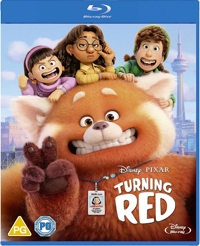
Review of TURNING RED (Blu-ray)

1 Comment

Grade:  B+
Animation
Rated PG

Turning Red is film that can seem uncharacteristically strident for Disney-Pixar. You’ve already heard the complaints: it deals with a young girl’s first menstruation, it “glorifies” juvenile disobedience, and the main character can be a bit much to take.

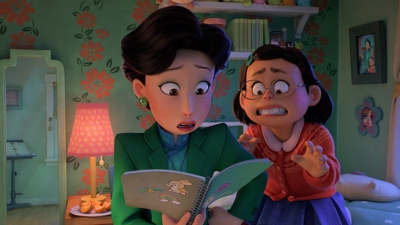
The first period criticism is way overblown, because it’s really just a mother’s assumption that briefly pops up. When Meilin “Mei” Lee is embarrassed, she does what many kids do:  she turns red. But her red is a giant version of the red panda.  It confuses her. It frightens her. She tries to hide it, especially from her over-protective and aggressive mom. That’s when Ming assumes her daughter is having her first period, but quickly learns it’s an animal transformation instead. 

So the “period” thing is nothing more than a brief blip on the radar screen. Parents worried about young children “getting an education” prematurely can relax. It’s subtle enough that the very young ones won’t even pick up on what’s happening, and those old enough to perceive what Meilin’s mother is talking about are old enough to ask their parents about it. Or maybe the parents would prefer to do things the old-fashioned American way and refrain from talking about something until it actually happens? You know, like Stephen King’s Carrie in the shower, who loses her mind thinking she’s dying?

I personally think any film that give families the chance to talk about important life changes and events is a good thing, and that includes the minutiae. In Turning Red, for example, Meilin has a crush on a boy, and that might be a conversation-starter for parents to talk to their children about crushes.

As for glorifying juvenile disobedience, I’m going to go out on a limb here and say that Meilin isn’t the first adolescent to sneak out of the house. I mean, even Disney’s Pollyanna did that, and her name is always equated with a goody-goody attitude.

More

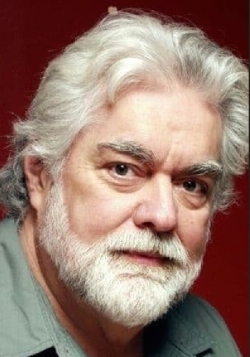
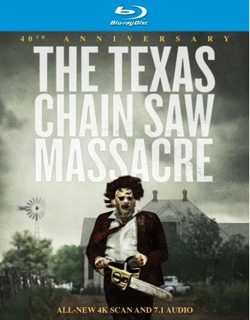
Flashback: Gunnar Hansen on playing Leatherface in Texas Chainsaw Massacre

Leave a comment

Fans of the horror genre know some of the milestones. In 1960, Alfred Hitchcock, wanting to prove that a good movie could be made with a small budget, adapted the novel Psycho for the big screen, arguably creating the first slasher film. In Night of the Living Dead (1968), George Romero brought zombies into everyday American life—no longer something that existed only in Transylvania or as a curse from the past. Then, in 1972, Last House on the Left featured murderers as the horror, an inhuman human element that made it all the more shocking. But another big milestone came in 1974 when Tobe Hooper created The Texas Chainsaw Massacre. That film redefined the horror genre by jumping right into the deep end of the pool and creating a sense of menace from start to finish. And who can forget Leatherface? The masked, chainsaw-wielding psychopath started a new trend in horror films. After that, we’d see a succession of masked horror villains in Michael Myers (Halloween, 1978), Jason (Friday the 13th, 1980), and Freddy Krueger (Nightmare on Elm Street, 1984). The genre would never be the same.

With Dark Sky Films releasing an ultimate two-disc version of the classic 1974 film, which heavily relied on a single, hand-held camera, James Plath (then of DVD Town) talked with Hansen about his role as that memorable chainsaw horror villain, Leatherface.

Born in Reykjavik, Iceland, Hansen moved with his family to the U.S. when he was five years old. The family lived in Maine until he was 11, then moved to Texas, where Hansen completed high school and earned a degree in English and Scandinavian Studies from the University of Texas. Having participated in a few theatrical productions, Hansen heard about Tobe Hooper’s auditions and decided to try for a part. After playing the mentally disturbed killer in The Texas Chainsaw Massacre—his first acting credit—he would appear in 30 more short films and features. In addition, he wrote stories and documentary scripts, among them Portrait of an Island (1990), Maine: America’s Coast (1995), and Ralph Stanley: An Eye for Wood (2015). He also wrote a memoir titled Chain Saw Confidential. Hansen died in 2015 at the age of 68.

The interview took place by phone on August 18, 2006.

Are you basking in the glow of the new release—the renewed notoriety—or have you always found yourself, because of this role, sort of notorious?

I think this movie has always remained strong because of the fan base. The great thing to me about a re-release is that the attention brings in a new fan base—people who are younger and may have heard about Chainsaw, but when Chainsaw isn’t getting a lot of attention they’re not inclined to look at it.

Jimmy Buffett once sang, “I don’t want the fame that brings confusion, where people recognize you on a plane.” You’ve certainly not had that problem

It’s been great for me.

What are people’s reactions when they find out? And how do you bring it up?

Well, it’s nice for me, because of course nobody recognizes me, and I’m pretty private. So I like the idea that it’s a separate thing. People are very surprised when they find out. Obviously, at a horror fan convention it’s different. But when I’m just on the street and I’m introduced to somebody, they’re always taken aback . . . and they really don’t know what to say. I’ve asked my friends, “PLEASE don’t tell them I was in the Chainsaw Massacre as the first thing you say about me. Surely there’s something else that’s interesting enough,” because the problem with telling them that first is that they truly don’t know what to say. They’re shocked. And I find it’s better that they find that out maybe as the second or third thing.

More

Older Entries Newer Entries