

In the summer of 1996, the nationally recognized literary magazine Clockwatch Review: a journal of the arts was planning a special Western issue and mailed a series of questions to a number of actors that had appeared in Western films or television shows. Three—Charlton Heston, Will Hutchins, and Michael Pate—responded, while another, Hugh O’Brian, preferred to talk by phone during a later October 6, 1996 interview. That special issue of Clockwatch Review never left the corral, but it seemed a durned shame to waste the actors’ responses to James Plath’s questions.
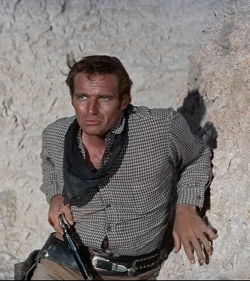
Heston, who died in 2008, was quick to point out that he didn’t appear in many Westerns, but one of his most memorable roles was Will Penny (1968), an aging cowboy who takes a job at a large cattle spread and finds that things are changing rapidly. He also appeared in such Westerns as The Savage (1952), Arrowhead (1953), Pony Express (1953), Three Violent People (1956), The Big Country (1958), Major Dundee (1965), The Last Hard Men (1976), and The Mountain Men (1980).
The Australian-born Pate, who also died in 2008, had a film career as a character actor that spanned 40 years. He appeared in such TV series and films as Broken Arrow (1956), The Adventures of Jim Bowie (1957), Zorro (1958), Sugarfoot (1958), Westbound (1958), The Adventures of Rin Tin Tin (1959), Black Saddle (1959), Wanted: Dead or Alive (1959), Zane Grey Theater (1956-60), Maverick (1961), Tales of Wells Fargo (1960-61), Laramie (1960-62), Have Gun Will Travel (1957-62), The Rifleman (1958-62), Rawhide (1959-64), and Gunsmoke (1957-64). He also played Chief Puma in McLintock!, the rousing 1963 John Wayne Western, and 10 years earlier played Chief Vittorio in Hondo, which also starred Wayne.
Hutchins, still living, co-starred in two Elvis Presley films but is best known for his signature role as “Sugarfoot” Tom Brewster in a one-hour Western series that ran from 1957-61. But he also appeared in TV episodes of Maverick (1960), Cheyenne (1961), Bronco (1961), and Gunsmoke (1963), as well as the later Western films The Shooting (1966), Maverick (1994), and Gunfighter (1999).
O’Brian, who died in 2016, was best known for playing famed Western marshal Wyatt Earp in TV’s The Life and Legend of Wyatt Earp (1955-61). He also played Earp or himself as Earp in cameos on The Danny Thomas Show (1956), Alias Jesse James (1959), The Secret World of Eddie Hodges (1960), Paradise (1989), Gunsmoke: The Last Apache (1990), The Gambler Returns: The Luck of the Draw (1991), and Wyatt Earp: Return to Tombstone (1994). Other Westerns he appeared in include Little Big Horn (1951), Buckaroo Sheriff of Texas (1951), Cave of Outlaws (1951), The Raiders (1952), The Battle of Apache Pass (1952), The Cimarron Kid (1952), The Lawless Breed (1952), Seminole (1953), The Man from the Alamo (1953), The Stand at Apache River (1953), Taza, Son of Cochise (1954), Saskatchewan (1954), Broken Lance (1954), Drums Across the River (1955), “Billy and the Bride” on TV’s Stage 7 (1955), The Virginian (1962), and The Shootist (1976), John Wayne’s last film. O’Brian founded the Hugh O’Brian Youth Leadership Foundation, which has sponsored more than a half-million students since the nonprofit youth leadership program began in 1958.
Did you WANT to play a western hero/sidekick/villain, or did you resist?
Heston: Of course I wanted to play in Westerns, though so far I’ve made less than a dozen.
Hutchins: I played all three: Sugarfoot, a reluctant hero; the notorious Canary Kid, Sugarfoot’s nemesis; and Warren Oates’ sidekick in The Shooting. Loved all three.
Pate: Of course. Didn’t every youngster in the Western world of the ‘20s, ‘30s, ‘40s, ‘50s, and the ‘60s—the decade they stopped making Westerns, real Westerns that is, with the exception perhaps of Lonesome Dove. I hated the Unforgiven, but don’t tell Clint. In those far-off, halcyon days, every young fella played cowboys and Indians—but I doubt any one of them ever wanted to be an Injun!
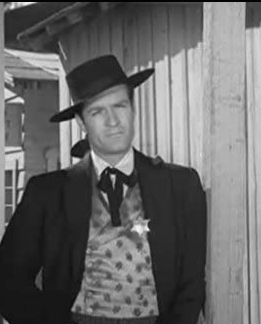
O’Brian: The wardrobe was a major fight, because they wanted me to wear a light-colored hat. They showed me what the hell they had laid out—they wanted me to wear the Gene Autry, Roy Rogers type clothes, the singing cowboy look—and I said, “Oh shit, forget that,” and I went and picked out what I felt Wyatt Earp wore. I looked at all the pictures and stuff and I picked out the black, flat-brimmed hat because I saw a picture that he had a similar hat and I picked it. And it was a frock coat and vest because that’s what the guy that owned the drug store wore, or the guy that owned the hardware store, or the mayor, because that was the wardrobe for a businessman. There weren’t any uniforms in those days. I mean, the only thing that came close to it was the badge.
More




 Family Home Theater